
SENEGAL GOVERNMENT
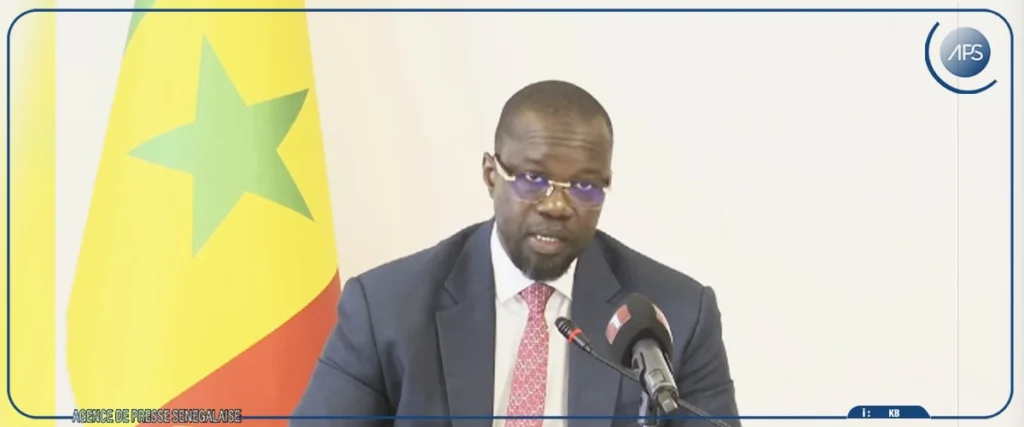
Dakar — The Senegalese Prime Minister has directed all government ministries to expedite the completion and operationalization of ongoing infrastructure projects nationwide. Speaking at a high-level interministerial meeting in Dakar, he emphasized the urgent need for swift action to break through bottlenecks affecting 62 key projects.
Maritime and port infrastructure priorities
The Prime Minister specifically highlighted maritime and port projects, calling on the Minister of Fisheries and Maritime Economy to fast-track the launch of several critical developments. Key initiatives include the Foundiougne-Ndakhonga port expansion, the upgraded fishing quay at Ndangane Sambou (central Senegal), the modernized Soumbédioune landing site, and the processing facilities in Rufisque (western Senegal). Additionally, dredging operations managed by the National Maritime Affairs Agency in Kaolack and Fatick regions were singled out for immediate action.
Major stalled projects identified
A comprehensive review revealed 62 stalled infrastructure projects across multiple sectors, ranging from education and healthcare to transportation and agriculture. Among them are the El Hâdj Ibrahima Niass University of Sine-Saloum, regional digital open spaces, airport terminals in Saint-Louis, Matam (northern Senegal), and Kolda (southern Senegal), the Nadayane container terminal (western Senegal), and the cold storage facilities and memorial dedicated to the Le Joola disaster. The reconstruction of the Aristide Le Dantec Hospital in Dakar was also flagged for urgent completion.
Quality and cost standards
The Prime Minister underscored the importance of maintaining stringent quality and cost benchmarks throughout the finalization process. A dedicated interministerial committee will be formed to oversee the resumption and completion of these projects, implementing necessary financial, administrative, and legal measures to ensure compliance with national standards.
Technical oversight for utilities and connectivity
Ousmane Sonko also raised concerns about the technical readiness of water, electricity, and telecommunications networks serving these infrastructure sites. He instructed all ministers to incorporate robust technical planning in future projects, ensuring adequate utility infrastructure, sustainable operational models, and long-term maintenance frameworks.
Youth and citizenship centers under deadline
Several youth and citizenship centers currently under construction in Tivaouane, Mbour (western Senegal), Linguère, Ranérou (northern Senegal), Bambey, Diourbel, Kaolack (central Senegal), and Tambacounda (eastern Senegal) were highlighted. The Prime Minister set a firm deadline of November 30, 2026, for the completion of equipment installation and operational readiness, calling on the Ministries of Youth, Finance, Budget, and Local Governments to prioritize these facilities.
Agricultural and agro-industrial development
The interministerial meeting also addressed the progress of 11 Naatangué village farms in Fatick, Kaolack, Louga (northwestern Senegal), Thiès (western Senegal), and Tambacounda, alongside agropoles in Mpal (northern Senegal), Adéane, Dioulacolon, and Mbellacadiao (southern Senegal). The Prime Minister urged ministries overseeing agriculture, industry, finance, and local governments to forge sustainable public-private partnerships to accelerate project completion while aligning with community needs.
Innovative financing and asset optimization
To unlock additional investment resources, the Prime Minister proposed exploring diverse financing models, including long-term leases, concessions, rehabilitation schemes, administrative assignments, and other public-private partnership frameworks tailored to maximize infrastructure value. He emphasized the need to evaluate the most effective options for youth centers, digital open spaces, women’s facilities, and agropoles to ensure optimal returns and service delivery.
Similarly, he recommended a strategic review of national stadiums and other sports infrastructure, advocating for public-private partnerships where feasible to enhance their operational efficiency and community impact.
Environmental, diplomatic, and defense assets
The Prime Minister extended his directives to include national parks such as Niokolo-Koba, Hann, the Saloum Delta, and Djoudj, as well as urban reserves like Technopole and Lake Rose (western Senegal). He called for the development of a national framework to optimize or repurpose these natural and urban assets responsibly.
He also tasked the Ministry of African Integration, Foreign Affairs, and Senegalese Abroad with proposing mechanisms to enhance the value of Senegal’s diplomatic and consular real estate holdings abroad, ensuring alignment with national interests and host country regulations. A follow-up interministerial meeting will be convened to establish a formal valuation doctrine for these assets.
The government further examined the real estate and land portfolios of postal services, railway and airport authorities, highways, public universities, hospitals, and military installations. The Prime Minister instructed relevant ministries to explore optimal strategies for recycling or valorizing these public assets, including potential private sector involvement where applicable to maximize their utility and economic contribution.


More Stories
Niger: Tiani faces fallout from special forces anger after Russian intervention
Mali : 17 morts dans les rangs des dozos, le JNIM accentue sa pression
Sahel : le pari des juntes tourne-t-il à l’échec sécuritaire ?