- Top News
- Current Affairs
Senegal bolsters borders amid rising Mali insurgency threat
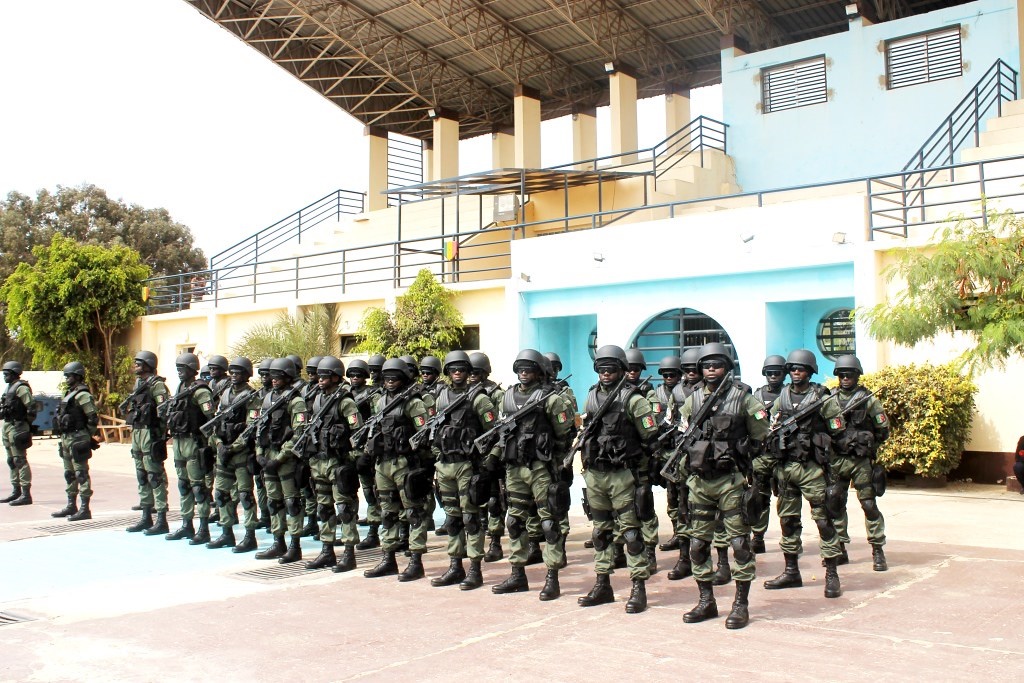
With over 400 km of shared border with Mali and deep commercial ties to the country, Senegal is taking decisive steps to address growing security concerns from its eastern neighbor and the broader Sahel region. The government is quietly reinforcing its counter-terrorism measures while monitoring developments closely.
Dakar remains cautious about its border security strategy, opting for a low-profile approach despite escalating threats. Officials have not commented on Senegalese transporters stranded in Mali or recent attacks on trucks since the April 25 incident, but a Foreign Affairs Ministry representative confirmed ongoing monitoring: «Our priority is constant vigilance, especially regarding transporters. So far, no repatriation requests have been received, but we remain fully attentive to the situation.»
The Senegalese government has significantly invested in strengthening border security infrastructure, particularly in the Tambacounda and Kédougou regions of southeastern Senegal. Recent measures include the April 8-9, 2026 inauguration of three new operational bases for the Groupe d’Action et d’Intervention Rapide (GAR-SI 2) in Saraya, funded by the European Union.
GAR-SI and CICO: The backbone of Senegal’s security strategy
The newly established bases represent a key component of Senegal’s enhanced counter-terrorism framework, designed to address transnational threats. According to national gendarmerie authorities, these facilities will «shorten response times, bolster reaction capabilities within GAR-SI 2’s operational zone, and improve proximity to local populations». Military officials describe them as the «sharp eyes of Senegal’s counter-terrorism and cross-border crime prevention system.»
A senior military officer explained the strategic importance of these bases: «With 420 km of border to secure with Mali, we cannot deploy troops every kilometer. Instead, we focus on critical transit points. The new bases enable rapid intervention when needed. GAR-SI is a highly effective operational tool, well-equipped to handle such threats.» The officer noted that two units are currently operational—one in Kidira and another in Kédougou (Saraya)—which conduct combined patrols to monitor the border.
Coordinated patrols along vulnerable border zones
Beyond GAR-SI’s operational bases, Senegal’s strategy relies heavily on the Cadre d’Intervention et de Coordination Interministériel (CICO), an inter-ministerial body that coordinates the national response to terrorist threats. In the event of an attack, CICO ensures all necessary resources are mobilized—ambulances, hospitals, police, gendarmerie, military helicopters, and more. «Coordinating this entire response is complex. CICO was created to streamline all actions related to counter-terrorism operations.»
The security apparatus has seen continuous expansion, including the establishment of a legion headquarters in Kédougou, the launch of a new investigative unit, and additional technical infrastructure. While Senegal has not been directly targeted by insurgent violence, it ranks among the highest defense spenders in Sub-Saharan Africa. Between 2020 and 2025, the country accounted for 8.8% of regional arms imports—second only to larger nations. Key acquisitions include Puma M36 armored personnel carriers from South Africa, designed to withstand IEDs and mine attacks, directly addressing lessons learned from Sahel conflicts. Significant defense contracts with Turkey were also finalized in 2025.
Beyond military strength: The role of social and cultural resilience
Experts emphasize that Senegal’s resilience against insurgent infiltration is not solely rooted in military might. Professor Bakary Sambe of the Timbuktu Institute highlights the country’s strong social cohesion as a critical shield against radicalization. In Kédougou, a strategic border region, ethnic and religious communities—including Bassari, Bédik, and Fulani—maintain harmonious relations reinforced by intermarriage and mutual respect. «This cultural cohesion acts as a powerful barrier against divisive tactics used by groups like JNIM», Sambe explains. He also underscores the role of religious leaders and Sufi brotherhoods in preventing radicalization, even in eastern border areas where their influence is less pronounced. Collaboration between religious authorities and the government is seen as a cornerstone of Senegal’s resilience strategy.
A cultural and religious shield against extremism
Unlike neighboring Mali and Burkina Faso, where insurgent groups have exploited tensions between pastoralists and sedentary communities, Senegal’s social harmony makes it difficult for extremist factions to gain traction. «Where there is harmony and shared values, radical ideologies struggle to take root», Sambe notes. He also points to the essential role of religious leaders in fostering stability. While Sufi influence is less dominant in eastern border regions, their absence of widespread radicalization and active collaboration with state authorities reinforce Senegal’s defenses. Religious leaders are widely regarded as key actors in the national counter-radicalization strategy.
Senior officials acknowledge the challenges posed by porous borders and the interwoven nature of regional communities. In a May 2 interview with local media, President Bassirou Diomaye Faye stressed the need for continental and regional collaboration to combat terrorism. «The threat does not spare any nation—from Nigeria to the United States. No country is immune. This demands collective action, intelligence sharing, and unified strategies.» He praised the establishment of the ECOWAS standby force but called for stronger inter-organizational cooperation following the departure of Sahel states from the regional bloc.
Senegal advocates for regional collaboration in counter-terrorism
The President emphasized that Senegal cannot remain indifferent to Mali’s challenges. «We share a common history, a shared motto, and a united past at independence. What affects Mali affects Senegal, as we are one people.» He reaffirmed the nation’s solidarity with Mali, stating: «The Malian people can always count on the active support of both the Senegalese government and its citizens. We are ready to contribute through dialogue to restore peace in Mali. Not everything can be shared publicly, but patrols and intelligence exchanges between our countries continue unabated.»