
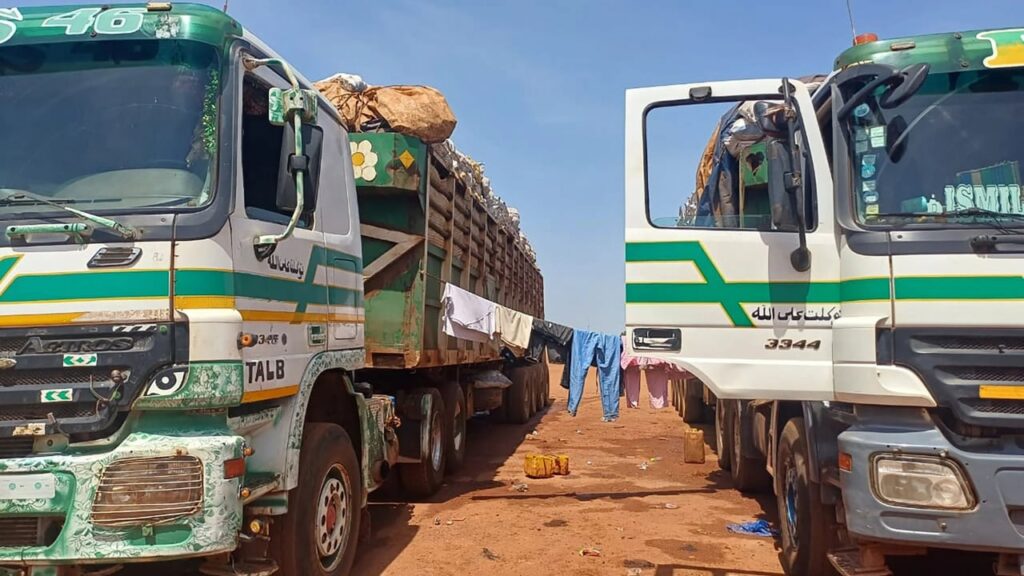

Traffic along the Dakar-Bamako corridor has come to a standstill following renewed tensions at the Senegal-Mali border. Trucks carrying essential goods, including food and fuel, remain stranded near the crossing point of Kidira, a critical transit hub for regional trade. The disruption has sparked concerns over supply shortages in both countries.
The halt in movement comes after Groupe de soutien à l’islam et aux musulmans (JNIM) intensified security operations in the area, citing ongoing instability. Border officials confirmed that no vehicles have been permitted to cross since early this week, forcing transporters to seek alternative routes or delay deliveries indefinitely.
Regional trade under strain
The Dakar-Bamako route is one of West Africa’s busiest trade arteries, linking the economic hub of Dakar in Senegal to Bamako in Mali. Daily cross-border activity typically includes shipments of agricultural products, manufactured goods, and petroleum products. The current impasse threatens to disrupt supply chains across multiple sectors, with ripple effects on local markets.
Transporters report mounting losses as goods pile up at the border. « We’ve been waiting for days, and there’s no sign of when we’ll be allowed to proceed, » said a driver who preferred anonymity. Many fear the delays could extend into next week, exacerbating food and fuel price volatility.
Government responses and humanitarian concerns
Senegalese and Malian authorities have yet to issue formal statements regarding the border closure. However, informal channels suggest negotiations are underway to restore safe passage. Meanwhile, humanitarian organizations warn that prolonged disruptions could deepen food insecurity, particularly in Mali’s northern regions.
Local traders in both countries are scrambling to adjust. Some have rerouted shipments through coastal ports, while others are exploring air freight options—though these alternatives come with significantly higher costs. The situation remains fluid as stakeholders await clarity on the border’s reopening.
Impact on essential goods
- Food supplies: Staples such as rice, wheat, and cooking oil face potential shortages in Malian markets.
- Fuel shortages: Gasoline and diesel deliveries are delayed, risking disruptions to transportation and power generation.
- Manufactured goods: Imported products, including electronics and pharmaceuticals, are stuck in transit.
Economic analysts highlight the fragility of West Africa’s trade networks, where border closures can trigger cascading effects. The Dakar-Bamako corridor alone supports thousands of livelihoods, from truck drivers to small-scale traders. Restoring normalcy will require coordinated efforts from governments and regional bodies.



More Stories
Niger: Tiani faces fallout from special forces anger after Russian intervention
Mali : 17 morts dans les rangs des dozos, le JNIM accentue sa pression
Sahel : le pari des juntes tourne-t-il à l’échec sécuritaire ?