
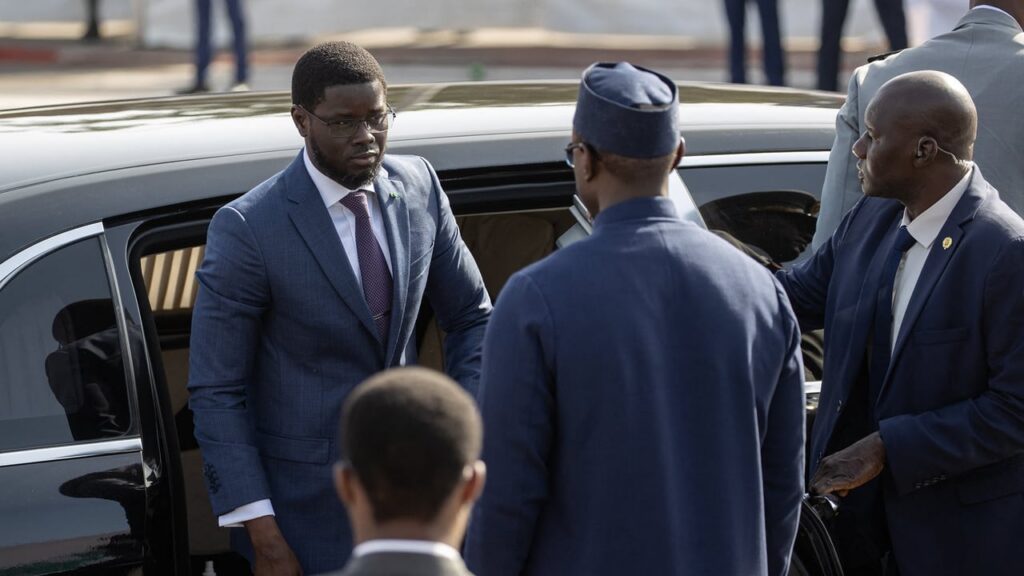

In the shifting landscape of Senegalese politics, the dynamic between Bassirou Diomaye Faye and Ousmane Sonko has become a focal point of national discourse. As Faye navigates the complexities of governance, Sonko’s influence looms large, creating a delicate balance of power that shapes the country’s future trajectory.
the rise of bassirou diomaye faye in Senegal’s political arena
Since assuming office, President Bassirou Diomaye Faye has faced both challenges and opportunities in consolidating his leadership. His administration’s efforts to address economic disparities and strengthen democratic institutions have sparked debates about the pace and scope of reforms. With Sonko, the influential Prime Minister, often seen as a key ally-turned-rival, the political stage in Senegal is marked by strategic maneuvering and high-stakes negotiations.
key policy initiatives under faye’s leadership
- economic revitalization: Faye’s government has prioritized job creation and foreign investment to reduce unemployment, particularly among youth—a persistent issue in Senegal.
- institutional reforms: Efforts to combat corruption and enhance transparency have been central to Faye’s agenda, aiming to rebuild public trust in government institutions.
- social welfare expansion: New policies focus on healthcare, education, and housing to improve living standards for all citizens, especially marginalized communities.
ousmane sonko’s enduring influence despite legal setbacks
Ousmane Sonko remains a polarizing figure in Senegalese politics. Despite legal challenges that have temporarily sidelined him, his political movement, Pastef, continues to wield significant influence. Sonko’s rhetoric resonates with a substantial portion of the electorate, particularly the youth, who view him as a champion of anti-establishment reform.
sonko’s political strategy and public perception
- grassroots mobilization: Sonko’s ability to mobilize supporters through rallies and social media campaigns has kept his movement vibrant and relevant.
- policy critique: His vocal opposition to existing economic policies has positioned him as a counterbalance to Faye’s administration, appealing to those frustrated with slow progress.
- legal battles: Sonko’s ongoing legal troubles have fueled perceptions of political persecution, further galvanizing his base.
balancing power: the faye-sonko relationship
The interplay between Faye and Sonko is a defining feature of Senegal’s current political climate. While both leaders share a common goal of transforming Senegal’s socio-economic landscape, their approaches often diverge, creating tension within the ruling coalition. Observers question whether this rivalry will strengthen governance or undermine stability.
potential scenarios for Senegal’s political future
- collaborative governance: A unified approach between Faye and Sonko could accelerate reforms and solidify public support for transformative change.
- escalating tensions: If disagreements persist, infighting could weaken the administration’s effectiveness and erode confidence in its agenda.
- electoral implications: The 2027 elections may hinge on how this relationship evolves, with Sonko’s movement potentially reshaping the political landscape.
public sentiment and media narratives
Media coverage and public opinion in Senegal reflect the polarized views on Faye and Sonko. While Faye’s supporters praise his bold initiatives, critics argue that progress is too slow. Meanwhile, Sonko’s detractors highlight his legal issues, while his advocates see him as a necessary disruptor of the status quo.
key themes in senegalese political discourse
- youth unemployment: A top concern, with both leaders proposing different solutions to address the crisis.
- corruption and governance: Public skepticism toward institutions remains high, driving demand for accountability.
- regional stability: Senegal’s role in West Africa’s geopolitical landscape adds urgency to its domestic reforms.
As Senegal stands at a crossroads, the delicate dance between Bassirou Diomaye Faye and Ousmane Sonko will determine the nation’s path forward. Whether their collaboration strengthens the country’s democratic foundations or their rivalry deepens divisions remains to be seen.


More Stories
Ousmane Sonko’s firm stance on Senegal’s FMI agreement demands full transparency
Senegal’s institutional crossroads: the unfolding dynamic between Ousmane Sonko and Bassirou Diomaye Faye
Minister abdourahmane diouf reignites feud with ousmane sonko over special credits reform