Senegal’s debt strategy: exploring alternatives to IMF support
The issue of Senegal’s debt is once again at the heart of economic discussions in Dakar. Decision-makers, economists, and public officials are examining financing and restructuring options that go beyond traditional reliance on the International Monetary Fund (IMF), amid tight budget constraints and the urgent need for economic revival.
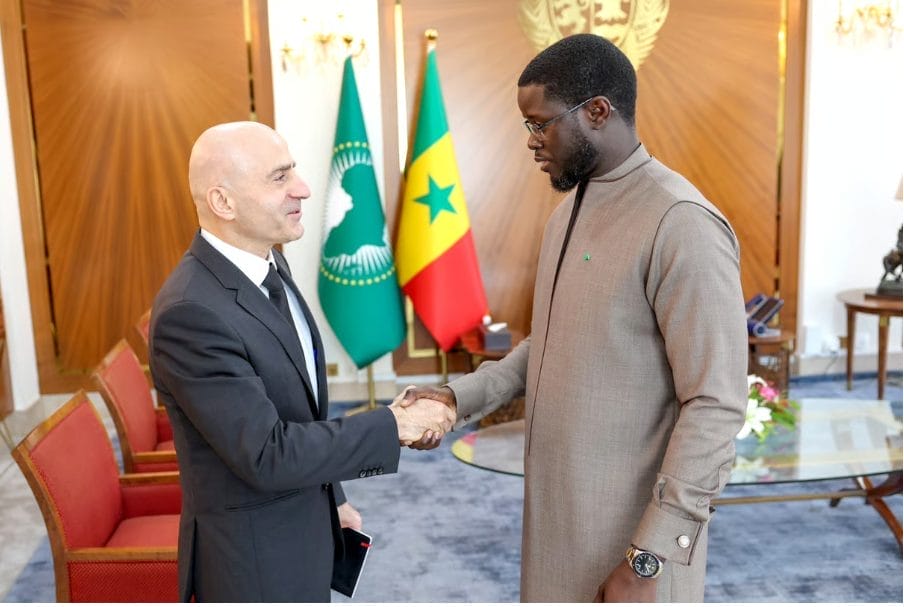
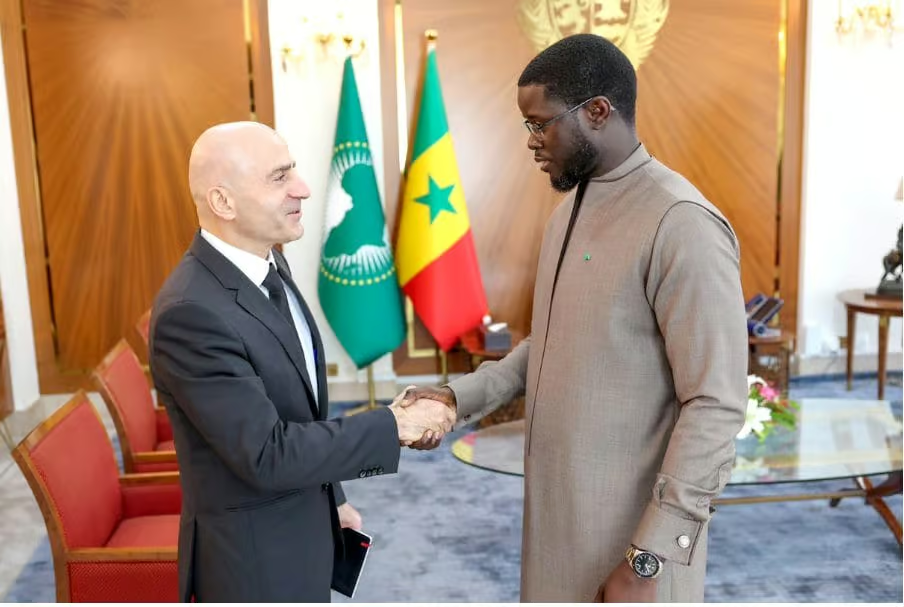 Bassirou Diomaye Faye, meets Edward Gemayel, head of the IMF mission for Senegal in Dakar, August 28, 2025 © DR
This reassessment comes as Senegal seeks to maintain its financial flexibility while reassuring international markets, regional partners, and investors. As a member of the West African Economic and Monetary Union (WAEMU), Senegal operates within a shared monetary framework where debt sustainability and fiscal discipline are closely monitored across the subregion. These considerations are aligned with guidelines from the Economic Community of West African States (ECOWAS), the African Union, and the African Development Bank.
what alternatives are being considered for Senegal’s debt?
Discussions are centered on diversifying funding sources. Key proposals include:
- Increased borrowing from the WAEMU regional market
- More effective mobilization of domestic savings
- Development of thematic bonds
- Optimal use of concessional financing, which offers more favorable terms than commercial loans
The goal is to reduce the cost of debt servicing, which places a heavy burden on public spending, while avoiding drastic adjustments that could negatively impact households and businesses.
Experts also emphasize the importance of broadening tax revenues without stifling economic activity, improving transparency in public finances, and prioritizing investments. In several African countries, rising debt repayments have limited government capacity to fund critical sectors such as infrastructure, education, and health. The situation in Senegal is closely watched beyond its borders, as it reflects a broader challenge facing African economies: how to restore liquidity without over-reliance on multilateral assistance programs.
balancing financial sustainability and economic growth
The pursuit of alternative financing solutions reflects Senegal’s determination to navigate its debt challenges without compromising long-term growth. By exploring options beyond the IMF, the country aims to preserve policy space, maintain investor confidence, and ensure that public spending continues to support essential social and economic development programs.