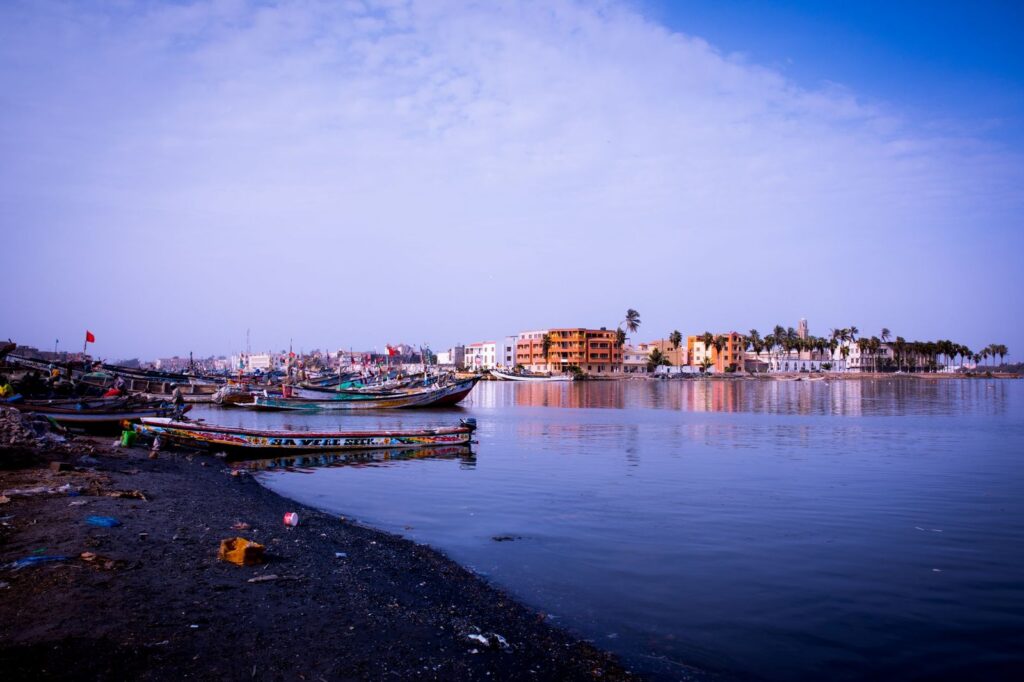
The World Bank has committed a significant financial package totaling 340 billion FCFA to Senegal, with the details of this support recently outlined by the Presidency. This announcement, made public in Dakar, is part of ongoing efforts to recalibrate financial arrangements between the Senegalese state and its traditional development partners. It comes as authorities actively seek to bolster their budgetary flexibility and secure concessional resources for the medium term. The substantial sum, noteworthy in the context of the national budget, now directs focus towards the specific projects it will fund and any attached conditions.
Multilateral support clarified by the Presidency
The Senegalese Presidency’s communication aims to bring clarity to the funding structure, especially at a time when public discourse often questions debt sustainability and the relationship with Bretton Woods institutions. The executive branch intends to dispel speculation regarding the allocation of these funds and the direction of public policies that will be underpinned by this assistance. By transparently presenting the financial package’s architecture, Dakar seeks to demonstrate its firm control over its economic agenda.
This institutional clarification emerges during a unique period. Senegal has recently engaged in rigorous discussions with the International Monetary Fund, against a backdrop of revelations concerning the nation’s actual debt burden. In this dynamic, the World Bank, a long-standing partner, represents a more predictable source of financing, whose disbursements are crucial for the state treasury and for advancing key structural projects.
A strategic boost for Senegal’s economic trajectory
For Senegalese authorities, this 340 billion FCFA represents more than just a treasury injection; it sends a strong signal to markets and investors, particularly as the country’s sovereign risk premium remains under scrutiny by rating agencies. A renewed partnership with the World Bank enhances the external credibility of the government led by President Bassirou Diomaye Faye and Prime Minister Ousmane Sonko.
The nation’s financing requirements remain considerable. From maintaining vital infrastructure and expanding social safety nets to driving energy transition initiatives and investing in human capital, the executive faces complex choices. Multilateral assistance, typically offered with lower interest rates than commercial markets, provides invaluable breathing room. Such support helps manage debt service while preserving crucial margins for public expenditure.
However, these financial contributions are never without implications. World Bank disbursements are accompanied by specific demands concerning governance, public finance management, and sometimes sectoral reforms. The new Senegalese administration, which took office in 2024 with a platform advocating for sovereign rupture, must navigate these realities. Balancing political assertion with fiscal discipline stands as a major test for the current five-year term.
Multilateral cooperation and financial sovereignty in focus
The issue of financial sovereignty subtly underpins this entire arrangement. Since assuming power, the ruling coalition in Dakar has expressed a clear desire to redefine relationships with external partners, including reviewing certain inherited contracts. Simultaneously, it cannot forgo the concessional resources vital for funding the economic and social recovery plan announced by the government.
Practically, the utilization of the 340 billion FCFA will be closely monitored by oversight bodies and civil society. Transparency regarding disbursements, performance indicators, and the tangible impact on citizens will shape the political interpretation of this operation. Furthermore, effective coordination among various donors, particularly with the African Development Bank and the French Development Agency, will play a decisive role in ensuring the efficiency of supported projects.
Beyond the monetary figure, this announcement crystallizes broader debates about Senegal’s development model and the role of multilateral institutions within the nation’s financial framework. The Presidency provided these details to inform the public about the nature and scope of the commitment secured from the World Bank.


More Stories
Can Marseille stop the bleeding after yet another loss to PSG?
Mbappé’s move to PSG: was it a snap decision made on the pitch?
What price did Niger’s junta pay for survival after the August mutiny?