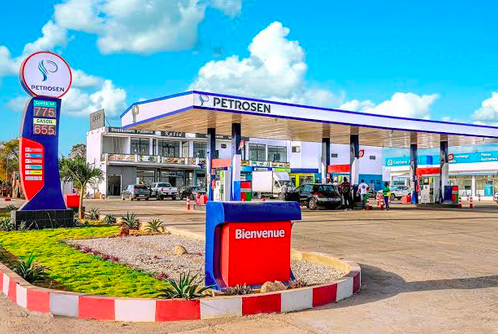
The new governance strategy of President Bassirou Diomaye Faye is reshaping Senegal’s strategic economic sectors, with the recent overhaul of leadership in key extractive institutions signaling a deliberate break from partisan control. This decisive move marks a departure from the previous administration’s policy of placing party-aligned figures in public enterprises, instead prioritizing technical expertise and sector-specific experience.
Restructuring Petrosen and Somisen: a strategic pivot
In a bold reshuffle announced on July 1, 2026, the President replaced the leadership of the National Petroleum Company of Senegal (Petrosen Holding) and the Mining Company of Senegal (Somisen). Alioune Gueye, former coordinator of the Pastef party in the United States, was replaced by Thierno Seydou Ly at Petrosen Holding. Similarly, Ngagne Demba Touré, once a leader of the party’s youth wing, stepped down from Somisen, with Mamady Touré taking the helm.
Industry insiders report that the outgoing leaders were notified of their dismissal through press reports rather than official channels, highlighting the abrupt nature of the transition. A well-placed source within government circles noted, “The decision was inevitable; the only uncertainty was when it would happen.”
End of the Pastef era in public enterprises
While the presidency has not issued an official statement on the motivations behind this restructuring, observers point to growing tensions between the Head of State and the President of the National Assembly, Ousmane Sonko. Both Alioune Gueye and Ngagne Demba Touré were closely associated with Sonko’s political circle, and their removal is widely seen as a move to distance the administration from party influence in critical economic institutions.
This shift contrasts sharply with the early days of Faye’s presidency in 2024, when Sonko was given significant leeway to appoint party members to ministerial and public enterprise positions. The recent changes reflect a broader strategy to depoliticize key sectors, particularly in the extractive industries, where technical competence is now prioritized over political loyalty.
Technocratic leadership to bolster investor confidence
The new appointees bring a strong technical background to their roles. Thierno Seydou Ly, a petroleum engineer with experience at TotalEnergies, takes over Petrosen Holding, while Mamady Touré, a geology engineer and former head of a specialized engineering and training firm, leads Somisen. Their expertise is expected to enhance Senegal’s credibility with international partners, especially as the administration reviews extractive contracts signed under the previous government.
According to insiders, the new leadership is also expected to adopt a more diplomatic approach in negotiations, reducing the risk of political friction that could deter foreign investment. “The President’s message is clear: competence and stability are the priorities,” a close observer noted.
Potential targets for further restructuring
With this latest move, attention is now turning to other public institutions. Figures with close ties to Ousmane Sonko, such as Waly Diouf Bodiang, Director General of the Autonomous Port of Dakar, and Fadilou Keïta, head of the Deposit and Consignment Fund (CDC), are considered potential candidates for future leadership changes. Their proximity to Sonko may place them in the crosshairs as the administration continues its campaign to professionalize public governance.