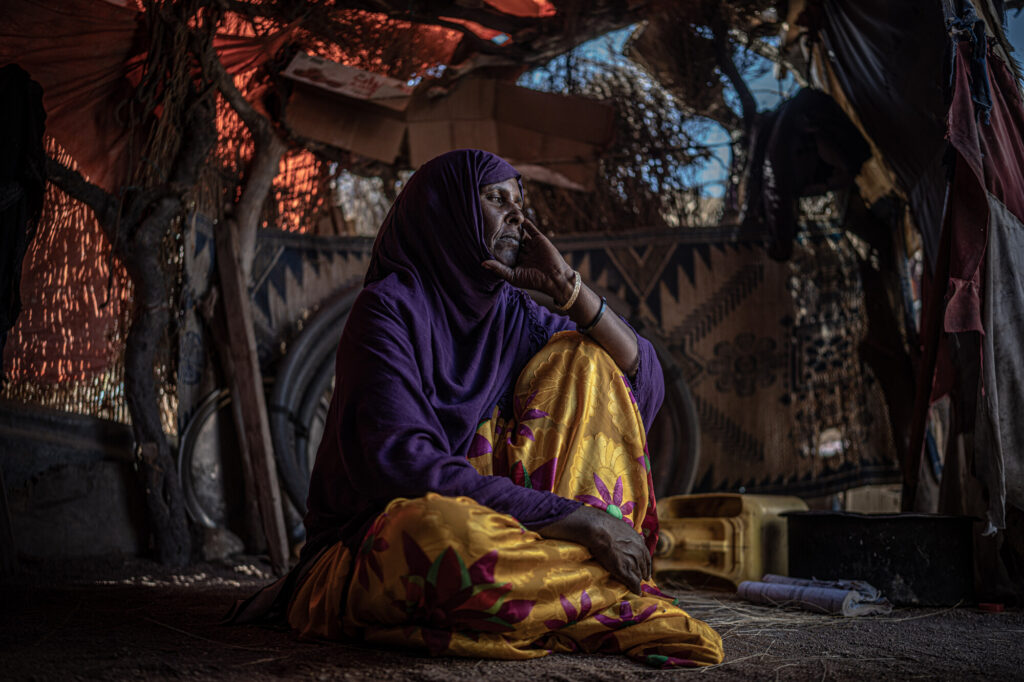
emergency conditions in the Sahel and horn of africa
The Sahel and Horn of Africa regions are grappling with a convergence of crises—extreme poverty, deep-rooted inequalities, climate change, and economic fallout from the Covid-19 pandemic. These challenges are compounded by soaring food, fuel, and fertilizer prices.
In the central Sahel (Mali, Niger, Burkina Faso), 7.2 million people face acute food insecurity in 2024. Meanwhile, in the Horn of Africa, 31.5 million people in Ethiopia, Kenya, Somalia, and South Sudan are battling hunger, exacerbated by severe drought conditions. In Somalia and South Sudan, one in every two individuals is affected.
— key figures —
1 in 2 people
are starving in Somalia and South Sudan.
45.74 million
require urgent humanitarian aid in Ethiopia, Kenya, Somalia, and South Sudan.
24 million
lack access to clean water in Somalia, Ethiopia, and Kenya, fueling outbreaks of cholera and measles.
Oxfam delivers critical aid in the Horn of Africa and Sahel, focusing on water, sanitation, and health. These emergency interventions are paired with long-term resilience programs to help communities adapt to climate challenges.
— deeper insights —
the escalating hunger crisis in the Sahel and horn of africa
unprecedented humanitarian needs in the Sahel and horn of africa
Two humanitarian emergencies dominate Africa today. The central Sahel crisis—spanning Mali, Niger, and Burkina Faso—is worsening faster than anywhere else globally. In this region, 25% of the population, or 24 million people (including Chad), urgently require shelter, water, food, healthcare, education, and protection.
At the same time, an estimated 31.5 million people across Kenya, Ethiopia, South Sudan, and Somalia face severe acute food insecurity. In Somalia alone, 6.5 million individuals (40% of the population) are in this dire situation, with thousands already experiencing famine or on the brink.
South Sudan, located west of these nations, is part of the broader Horn of Africa. Here, over half the population—7.7 million people—grapple with acute food insecurity.
Acute food insecurity occurs when people’s lives or livelihoods are at immediate risk due to inadequate access to food.
Famine represents an even more severe level, marked by extreme deprivation of food and basic needs despite desperate coping strategies. Internationally recognized classifications define famine by critical rates of acute malnutrition and mortality.
a climate-driven humanitarian disaster
Mali is experiencing its worst food and nutrition crisis in a decade, with conditions worsening due to early pastoral and agricultural seasons, depleted reserves, uneven pasture renewal, price surges, and ongoing insecurity. Similar pressures in Niger slashed cereal production by nearly 40%, as recurring climate shocks and conflicts devastate harvests. If global warming exceeds 2°C, staple crops like millet and sorghum could see an additional 25% production drop. In Burkina Faso, warming may further reduce cereal output by 15% to 25%.
Climate change intensifies hunger globally, particularly in low-income nations. Extreme weather events increasingly strip vulnerable populations of their ability to cope with shocks and future crises.
The Somalia, South Sudan, Ethiopia, and Kenya are enduring their worst drought in memory. 2023 marked the sixth consecutive year of failed or insufficient rains in some areas, with grim forecasts for 2024. As a result, famine levels in Somalia and South Sudan are expected to peak in April 2023.
Paradoxically, when rains finally arrive, parched soils cannot absorb them, triggering devastating floods. In 2023 and early 2024, heavy rains caused catastrophic flooding, killing dozens and affecting 350,000 people across Ethiopia, Kenya, and Somalia in March 2023. These floods submerged over 1,000 hectares of farmland, crippling agricultural economies and compounding drought impacts.
Climate models predict drier-than-normal long rains for March–May 2024 in parts of Ethiopia, Kenya, South Sudan, and Somalia, prolonging drought conditions.
how food insecurity deepens inequality in sub-saharan africa
The Sahel boasts immense human and developmental potential but faces a multidimensional crisis. Deep-seated inequalities fuel conflicts across political, humanitarian, economic, environmental, climate, food, and security domains. Women, especially female farmers, bear the brunt of food insecurity, climate change, and discrimination. For example, patriarchal norms in Mali deny most women land ownership—despite 50% of women working in agriculture, only 5% hold titled land.
Oxfam prioritizes reducing inequalities affecting women and girls—the most vulnerable groups—through grassroots initiatives like a project with ATAD:
“The project gives landless women the chance to cultivate shared plots. We are 50 women working together… ATAD provides seeds, and I’ve learned sustainable farming techniques.”
Luda Alizeta Sawadogo, Burkina Faso farmer
 Alizeta Sawadogo, a 55-year-old widow and mother of eight from Burkina Faso, has spent her life farming cereals. Shrinking harvests due to climate change forced her to adapt. With support from ATAD and Oxfam, she gained access to a collective farm plot and learned drought-resistant horticulture, diversifying her livelihood.
Despite rising food insecurity, funding for the ten most climate-vulnerable nations—including Burkina Faso and Niger—remains critically low. Oxfam research reveals that between 2000 and 2021, donors provided just $20 billion of the $31.6 billion requested by UN appeals for extreme weather events, covering only 40% of needs.
Meanwhile, G7 nations and Russia account for 85% of global emissions since 1850—850 times the combined emissions of Kenya, Ethiopia, Somalia, and South Sudan.
oxfam’s sustainable solutions to hunger and climate crises
on-the-ground action
Between March 2022 and April 2023, Oxfam assisted 850,000 people in the Horn of Africa. Working with local partners, we deliver life-saving aid in Ethiopia, Kenya, Somalia, and South Sudan, aiming to reach 1,309,694 drought-affected individuals in 2024—including 420,000 in Somalia and Somaliland.
Oxfam’s Horn of Africa interventions include:
- Food assistance: When markets allow, we provide cash, vouchers, or food aid to meet basic nutritional needs. We also support agricultural projects with drought-resistant seeds, tools, livestock vaccination, and climate-smart training.
- Water access: We ensure communities have clean water, sanitation, and hygiene supplies to reduce health risks.
- Protection: Initiatives range from hygiene product distribution in Kenya to sewing machine training and soap production.
policy demands
Oxfam advocates for policies linking inequality, food crises, and climate change. Urgent action is needed to address both climate and hunger emergencies.
A 1% tax on annual fossil fuel profits could generate $10 billion—enough to cover most UN humanitarian funding gaps for food insecurity. Debt cancellation for vulnerable nations would free resources to combat climate change. France must also ensure humanitarian plans are fully funded to meet urgent needs.