
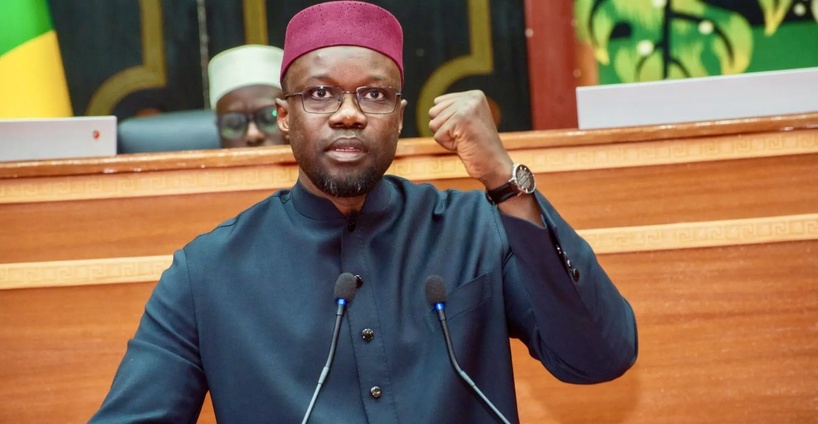
Prime Minister Ousmane Sonko of Senegal will take center stage at the National Assembly this Friday at 10:00 GMT for the fifth session of Questions d’Actualité, a pivotal institutional exchange that serves as a barometer for government performance. This high-stakes event will scrutinize macroeconomic strategies, political dynamics, and pressing national issues.
The timing of this session is particularly significant, unfolding against a backdrop of intense public debate over the recent amendments to electoral laws, specifically Articles L.29 and L.30 of the Electoral Code. These revisions, which impact eligibility and civic rights, have sparked widespread controversy. Critics argue the changes were engineered to pave the way for Sonko’s potential 2029 candidacy, despite his insistence that he is already eligible for all elections in Senegal. Since the law’s adoption and enactment by President Diomaye Faye, the opposition has intensified its scrutiny of the government’s motives.
The upcoming session will also address the everyday challenges faced by Senegalese citizens. Sonko, accompanied by his entire cabinet, is expected to tackle pressing concerns such as the rising cost of living. Discussions will likely focus on state measures to stabilize prices for essential goods and energy. Additionally, the economic agenda will dominate, with potential updates on ongoing negotiations with the IMF, the progress of the economic recovery plan, and preparations for the upcoming budget.
The dialogue will extend to sector-specific priorities, including the implementation of family security allowances, the progress of the agricultural campaign, and the government’s support for Tabaski preparations. A notable aspect of the session will be the dynamic between Sonko and President Diomaye Faye, described by Sonko as a ‘soft cohabitation’—a term reflecting a collaborative yet distinct political partnership.

More Stories
Ousmane Sonko’s firm stance on Senegal’s FMI agreement demands full transparency
Senegal’s institutional crossroads: the unfolding dynamic between Ousmane Sonko and Bassirou Diomaye Faye
Minister abdourahmane diouf reignites feud with ousmane sonko over special credits reform