
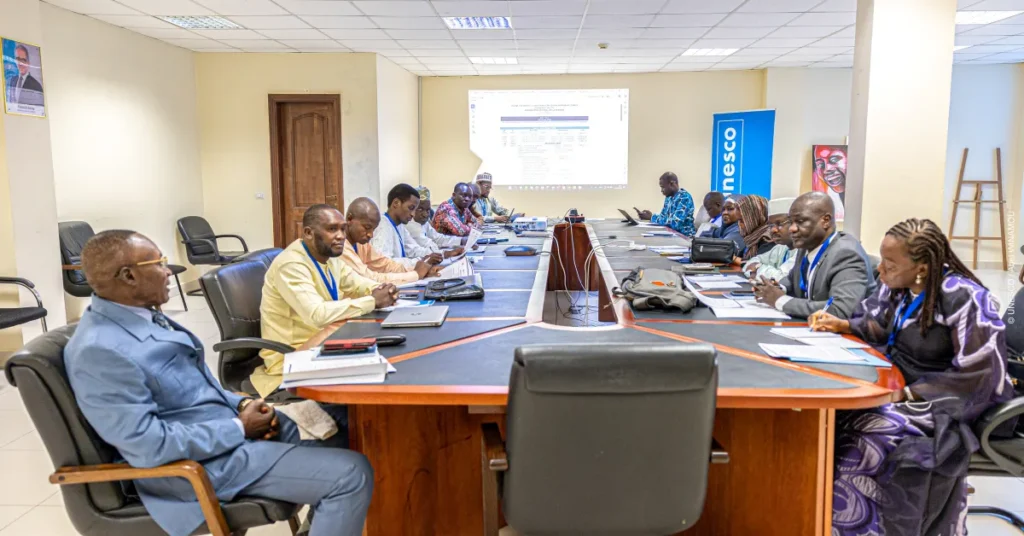
A high-level delegation from Chad recently concluded a study mission in Yaoundé, focused on integrating information and communication technologies (ICT) into the national education system. Hosted by the UNESCO Regional Office for Central Africa, the five-day program ran from April 20 to 24, 2026, and brought together educators, policymakers, and technical experts to exchange best practices in digital learning transformation.
The initiative aligns with Chad’s broader efforts to modernize its education sector, as outlined in key national frameworks such as the 2022–2026 National Development Plan, the Tchad Connexion 2030 vision, the National Teacher Policy (PNET), and the Programme de Refondation de l’École Tchadienne (PRET). Supported by the Global Partnership for Education and implemented with assistance from UNESCO and UNICEF, these strategies aim to create an inclusive, equitable, and high-quality education system for all.
digital innovation as an educational catalyst
Despite significant structural challenges, the integration of ICT is seen as a critical lever to enhance teaching quality, expand access to education, and improve governance within Chad’s education sector. The PRET initiative emphasizes a gradual digital transformation, prioritizing solutions that are accessible, low-tech, and adaptable to local realities in both formal and non-formal education settings.
The study mission was designed to leverage Cameroon’s recognized expertise in digital education. The delegation engaged in institutional meetings, technical visits, and collaborative workshops with Cameroonian counterparts, focusing on curriculum development, teacher training mechanisms, digital tools, institutional coordination, and partnership frameworks that support systemic change.
key insights and actionable outcomes
The mission’s program included technical discussions at the Ministry of Basic Education (MINEDUB), where delegates explored pedagogical models, curricular adaptations, infrastructure development, and teacher support systems. Participants also examined Cameroon’s digital education ecosystem, including teacher training programs, digital platforms, and institutional coordination mechanisms.
Grounded in a rigorous methodology—combining document analysis, stakeholder interviews, field observations, and collaborative sessions—the mission aimed to identify transferable best practices and tailor them to Chad’s context. Expected deliverables include a comprehensive mission report, actionable recommendations, and a prioritized implementation plan to guide Chad’s digital education integration efforts.
building resilient education systems through regional cooperation
This initiative underscores the UNESCO Regional Office’s role as a catalyst for innovation and cooperation among Central African states. By fostering peer learning and the adaptation of proven solutions, the mission contributes to the resilience and digital transformation of education systems across the subregion. The exchange of expertise and structured collaboration mechanisms are designed to create sustainable pathways for sharing knowledge and accelerating progress in the digital age.




More Stories
Niger: Tiani faces fallout from special forces anger after Russian intervention
Crisis in Niger, IMF agreement in Sénégal, and Moroccan elections: Five essential stories
RDC-Israël : un rapprochement aux enjeux multiples