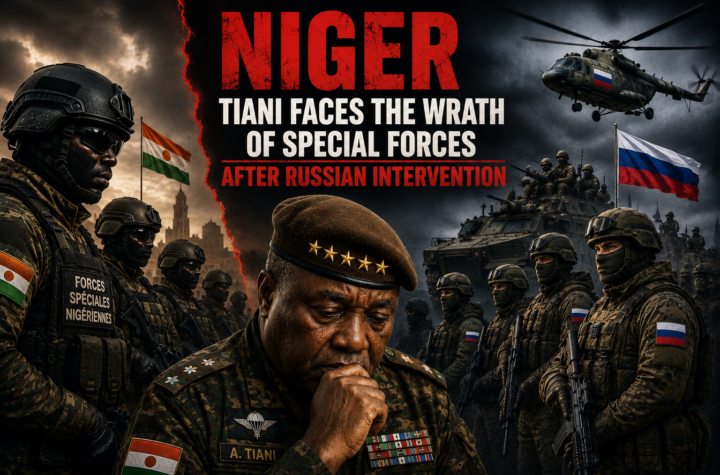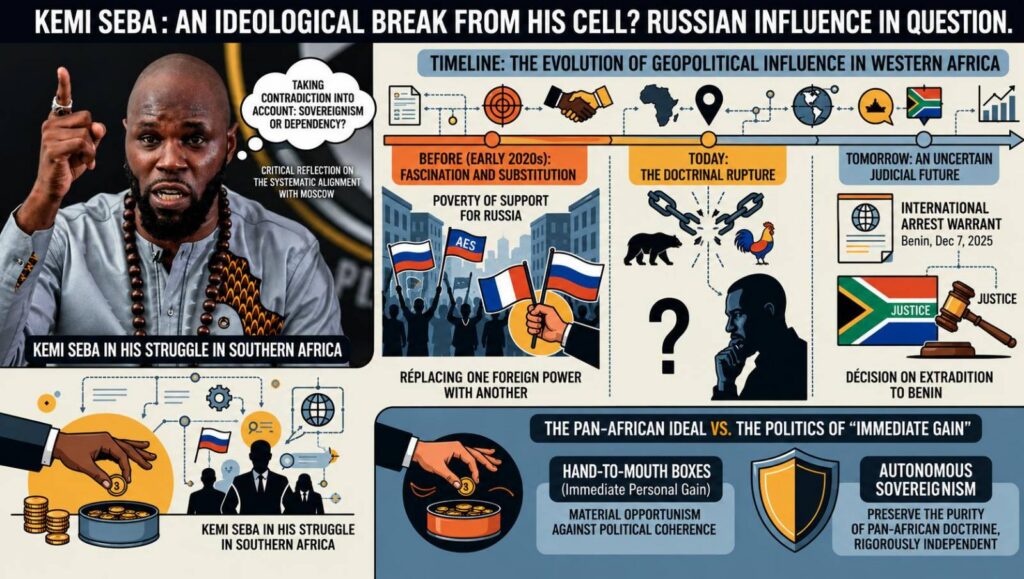
In recent years, Africa’s political landscape—particularly within the Sahel region—has witnessed a striking display of symbolism. Public demonstrations advocating sovereignty have increasingly featured Russian flags and slogans overtly supportive of Moscow. For a vocal segment of activists, Russia has emerged as an indispensable alternative to long-standing Western powers, perceived by many as oppressive or exploitative.
Yet this growing fascination with Russian influence raises fundamental questions, especially when it emanates from movements claiming absolute independence. Now, a prominent figure in contemporary Pan-Africanism, Kemi Seba, appears to be undergoing a doctrinal shift from his prison cell in South Africa, challenging the very dynamics he helped popularize.
From sovereignism to new forms of dependence
While seeking fresh international alliances is a valid diplomatic pursuit for any state or political movement, the temptation to replace one foreign power with another represents a profound ideological inconsistency. Many observers argue that substituting French influence with Russian dominance does not signify true emancipation but merely a shift in dependency—one empire for another.
Kemi Seba’s evolving stance suggests he has recognized this contradiction. The Pan-Africanist ideologue now questions the merits of an uncritical alignment with Moscow, rejecting the notion of embracing a new protectorate, even if it opposes Western dominance.
Pan-African ideals versus the politics of immediate gain
This reassessment highlights a growing divide within sovereignist movements. While some support for Russia stems from a genuine desire for geopolitical rupture, other motivations appear rooted in material interests rather than ideology.
Kemi Seba strongly opposes this opportunism, which he describes metaphorically as the pursuit of « ragoût boxes »—a reference to the prioritization of short-term personal gain over long-term political coherence. By resisting this mercenary approach to ideology, he seeks to uphold the purity of a Pan-Africanism defined by strict autonomy.
A suspended political and judicial future in Pretoria
This period of doctrinal reflection coincides with a critical personal juncture for the activist. Following an alleged coup attempt in Cotonou on December 7, 2025, Kemi Seba faces an international arrest warrant issued by Benin’s government and remains incarcerated in South Africa.
His fate is no longer merely ideological but legal. The South African judiciary must soon rule on Benin’s extradition request. Will this enforced prison term mark a definitive rupture in his Pan-African discourse or merely a reconfiguration? The coming weeks will be decisive not only for Kemi Seba’s political future but also for the movements he inspires.