
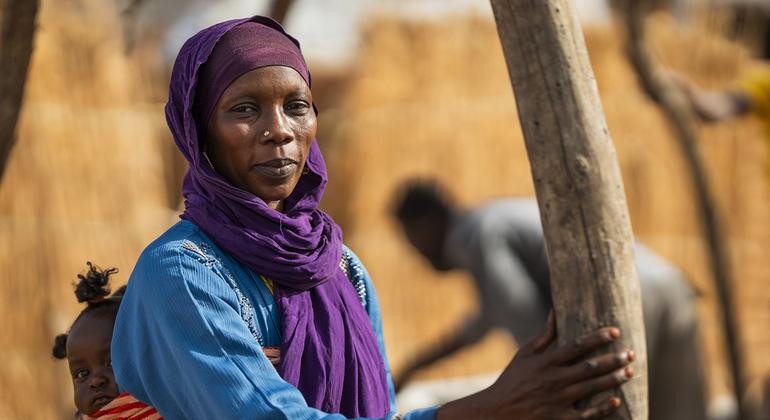
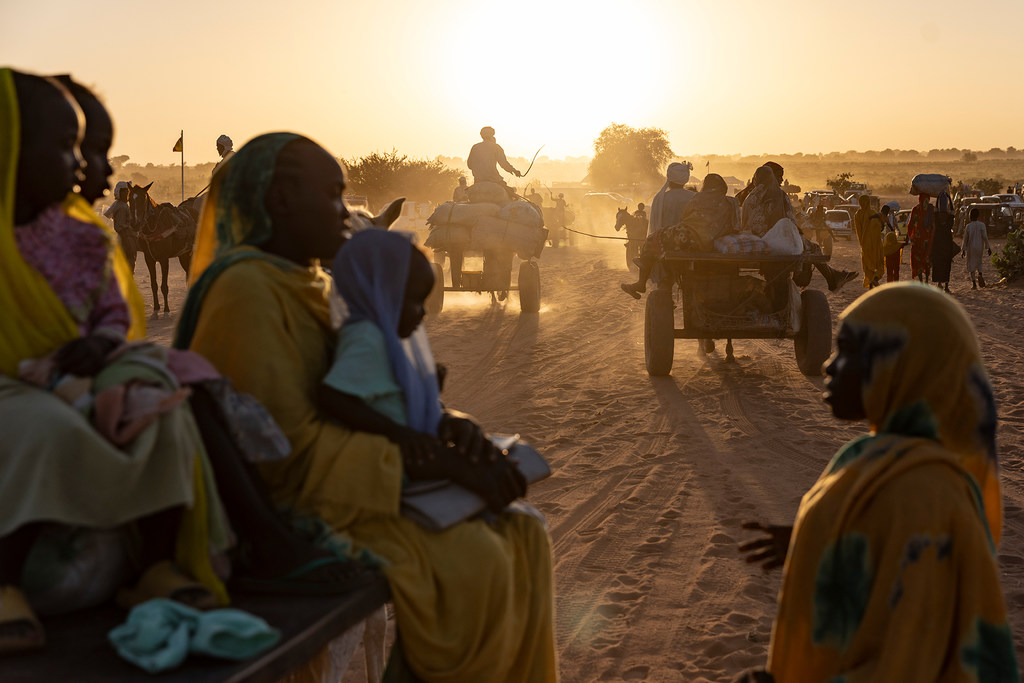
The Republic of the Chad has emerged as a critical haven for refugees fleeing Sudan’s brutal conflict, yet this act of solidarity has stretched the Chad government’s resources to their limits. With over 900,000 Sudanese refugees crossing into eastern Chad since the war erupted in April 2023, the country now shelters the highest number of displaced people per capita in Central Africa.
While international aid has brought modest improvements in humanitarian conditions, Chad remains one of Africa’s most fragile nations. Nearly four million Chadians—over a third of the population—still require emergency assistance, underscoring the strain on local communities.
why the crisis in Chad matters
The Chad refugee crisis highlights the country’s deep structural vulnerabilities. As a landlocked nation with over 200 ethnic groups and 100 languages, Chad struggles with extreme poverty, with more than 42% of its people living below the poverty line. The arrival of more than 1.5 million refugees—mostly women and children—has intensified pressures on food security, healthcare, and infrastructure.
The shrinking Lake Chad, a vital cultural and ecological landmark, has been devastated by climate change, leaving millions vulnerable to food shortages. In 2024 alone, devastating floods destroyed over 432,000 hectares of crops—equivalent to 600,000 football fields—and affected nearly two million people. Cholera outbreaks and rising malnutrition rates, including an estimated two million children at risk of acute malnutrition in 2025–2026, paint a dire picture of the humanitarian emergency.
security threats and regional instability
The security situation is equally alarming. Militant groups like Boko Haram continue to destabilize the Lake Chad basin, displacing an additional 250,000 people. In northern Chad, illegal charcoal trade, gender-based violence, and child labor further exacerbate the crisis. With 87% of the refugee population consisting of women and children, the need for protection and support has never been greater.
humanitarian response and international support
Since the conflict began, Chad’s government and the UNHCR have resettled 67% of Sudanese refugees into new camps and host communities, where they receive critical aid. The United Nations and partners are scaling up efforts, with the OCHA 2026 Humanitarian Action Plan allocating $986 million to support 3.4 million people—including $540 million dedicated to refugees.
In a recent statement, UN spokesperson Stéphane Dujarric emphasized priorities: « We will focus on the hardest-hit regions, particularly the east, Lac Province, and parts of the south. » The plan aims to reduce needs by 42%, though challenges persist.
a refugee’s journey of resilience
Radwa Abdelkarim, a 37-year-old mother of six, fled to Chad in June 2023 after her home in Sudan was destroyed. « The war took everything—our money, our loved ones, our neighbors, » she recalled. « Some were killed, others disappeared. »
With support from the UNHCR, she launched a small bakery in Farchana refugee camp, later expanding into two grocery stores and a restaurant. Today, she employs 12 fellow refugees, embodying the spirit of solidarity. « I help women rebuild their lives, » she said. « No one should be left behind. »


More Stories
Niger: Tiani faces fallout from special forces anger after Russian intervention
Crisis in Niger, IMF agreement in Sénégal, and Moroccan elections: Five essential stories
RDC-Israël : un rapprochement aux enjeux multiples