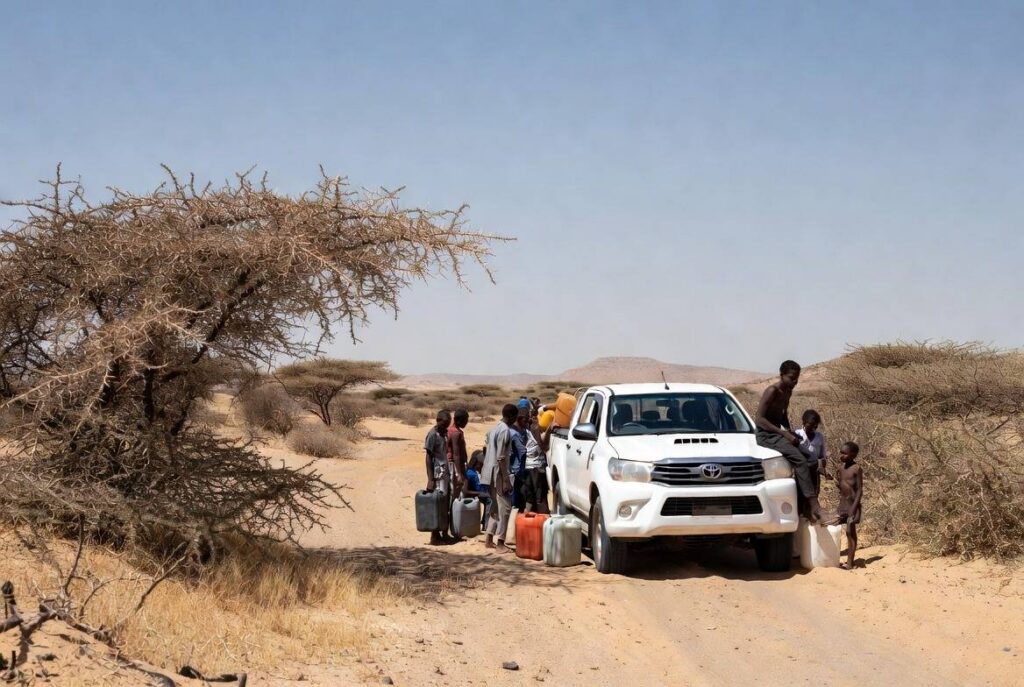
A landscape of breathtaking grandeur yet profound peril, the northern desert region of Niger has once again borne witness to profound human tragedy, largely unseen by the international community. While media attention frequently centers on maritime disasters in the Mediterranean, the arduous crossing of the Sahara increasingly claims lives, establishing itself as an equally fatal stage for thousands seeking refuge and a new future.
The year 2025 proved no exception to this grim reality. Data compiled by Alarme Phone Sahara, an organization dedicated to migrant alerts and support, indicates that a minimum of 35 individuals perished within the vast Nigerien desert over the past twelve months. Humanitarian workers on the ground universally characterize this figure as ‘incomplete’ and significantly underestimated, given the immense scale of the territory, which renders accurate victim counts exceptionally challenging.
A journey fraught with peril
For West African nationals, including those from Mali, Guinea, Senegal, and Burkina Faso, whose ultimate destination is often Libya or Algeria en route to Europe, the city of Agadez serves as the final urban outpost. Beyond this point lies the unforgiving expanse of the Ténéré.
The recurring causes of these successive fatalities remain tragically consistent year after year:
- Mechanical Failures: Overloaded and poorly maintained vehicles, typically pick-up trucks, frequently break down in remote, desolate areas.
- Abandonment by Smugglers: Driven by the fear of military patrols, certain smuggling networks cruelly abandon migrants in the middle of the desert to evade detection and arrest.
- Extreme Conditions: Without navigational aids, and enduring temperatures that can soar to nearly 50°C, severe dehydration and exhaustion prove lethal within mere hours.
“The desert offers no quarter. When a vehicle fails and water supplies dwindle, life expectancy is measured in hours. Many bodies are swallowed by the shifting sands before any alarm can even be raised,” a local activist, speaking anonymously, revealed.
The unintended consequences of security measures
Human rights organizations contend that this silent catastrophe is a direct outcome of the criminalization of migratory routes. Despite the ruling junta in Niamey repealing the 2015 law criminalizing migrant trafficking in late 2023, routes have remained clandestine and have become increasingly hazardous.
To circumvent surveillance by Nigerien security forces, smugglers are now utilizing ever more remote and circuitous tracks, drastically escalating the risks of disorientation and loss.
Civil society’s urgent plea
In response to this pressing crisis, organizations such as Alarme Phone Sahara are endeavoring to document these tragedies and establish alert systems, leveraging local vigilante networks to save lives. However, limited resources and restricted access to certain military zones severely impede the effectiveness of rescue efforts.
As long as the fundamental drivers of exile persist and legal avenues for migration remain inaccessible, the sands of Niger will continue to conceal the profound human cost of the pursuit for a better life. For the families of victims, often left without any news, the Nigerien desert remains an open wound, a place where their loved ones vanished without a trace.