The ambush at Gaskindé remains one of the most controversial episodes in Burkina Faso’s recent history, a military disaster that reshaped the nation’s political landscape and continues to cast a shadow over its security challenges. On September 26, 2022, a military convoy carrying vital supplies to the besieged town of Djibo was ambushed in Gaskindé, a locality in northern Burkina Faso. The attack, claimed by the Group for the Support of Islam and Muslims (GSIM), an Al-Qaeda-affiliated jihadist faction, resulted in at least 37 fatalities, including 27 soldiers, and left dozens more wounded.
From tragedy to political upheaval
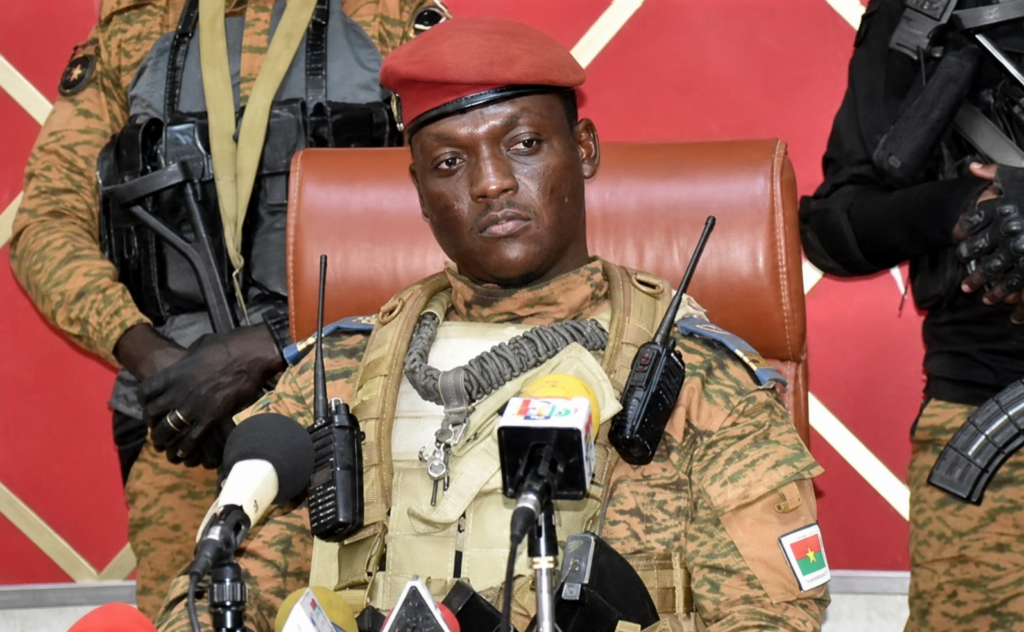
The attack did not merely inflict human losses; it triggered a seismic shift in Burkina Faso’s government. Four days later, on September 30, 2022, Captain Ibrahim Traoré overthrew the transitional leader, Lieutenant Colonel Paul-Henri Sandaogo Damiba, in a swift coup d’état. The rapid succession of these events fueled persistent questions about the precise circumstances of the Gaskindé ambush and its political fallout.
A stalled investigation and lingering doubts
In the hours following the attack, military authorities announced the launch of internal inquiries to determine how a convoy could have been so precisely targeted. Key concerns arose:
- The striking precision of the attackers’ preparation;
- The insurgents’ detailed knowledge of the convoy’s route;
- Gaps in the security arrangements;
- The possibility of internal leaks or complicity.
These issues warranted thorough investigations, potentially implicating high-ranking military personnel. However, the coup interrupted the process before any findings could be made public, leaving critical questions unanswered.
Institutional opacity fuels distrust
In a democratic society, a crisis of this magnitude typically triggers transparency: independent probes, detailed reports, accountability, and judicial follow-up. Yet in Burkina Faso, these measures have been conspicuously absent. Three factors continue to fuel public skepticism:
- The lack of an official, comprehensive account of the investigation’s findings;
- The absence of publicly disclosed disciplinary or legal actions against potential internal culprits;
- The families of the victims being denied clarity on how their loved ones died.
This deficit of transparency has eroded trust between citizens and the military, breeding speculation and undermining institutional credibility.
The political dimension of Gaskindé
The ambush has become a central argument for the failure of Damiba’s government to restore security. Traoré justified his takeover by citing the worsening insurgency, yet the new regime has not resolved the mystery surrounding Gaskindé. Why, critics ask, did a crisis used to justify a change in leadership not prompt full disclosure once the power transition was complete?
A change in leadership offers an opportunity to address past failures honestly. By failing to clarify the events of Gaskindé, the military government risks reinforcing perceptions of inconsistency—demanding accountability from predecessors while shrouding its own actions in ambiguity.
Transparency as a pillar of governance
Governments that claim to break from past practices are expected to demonstrate transparency—not only in denouncing predecessors but in addressing unanswered questions. The unresolved case of Gaskindé has become a recurring critique: how can authorities demand scrutiny of others when they themselves avoid scrutiny?
This opacity fosters suspicion, undermining the credibility of Burkina Faso’s institutions and complicating efforts to unite the nation against terrorism.
Internal failures and the roots of insecurity
Counterinsurgency efforts in countries like Burkina Faso reveal a pattern: jihadist groups often exploit systemic weaknesses such as intelligence failures, corruption, infiltration, or command dysfunction. Gaskindé’s ambush fits this troubling trend. A military convoy of such size should not have been so vulnerable unless critical flaws existed in planning or execution.
Addressing insecurity requires more than battlefield victories; it demands rigorous self-examination within military institutions. Trust among soldiers, their leaders, and the population cannot endure when national tragedies remain shrouded in uncertainty.
The unfulfilled duty of truth
Nearly four years after the ambush, Gaskindé remains a raw wound in Burkina Faso’s political conscience. Families of the victims, frontline soldiers, and citizens alike deserve a full accounting of what happened. This is not merely a political issue—it is a matter of justice, memory, and public responsibility.
History demonstrates that nations cannot build lasting stability on unresolved tragedies. The story of Gaskindé will continue to haunt Burkina Faso until a credible, independent, and transparent investigation provides the answers long overdue since September 2022. Only then can the families of those lost find closure, and the nation regain a measure of trust in its institutions.