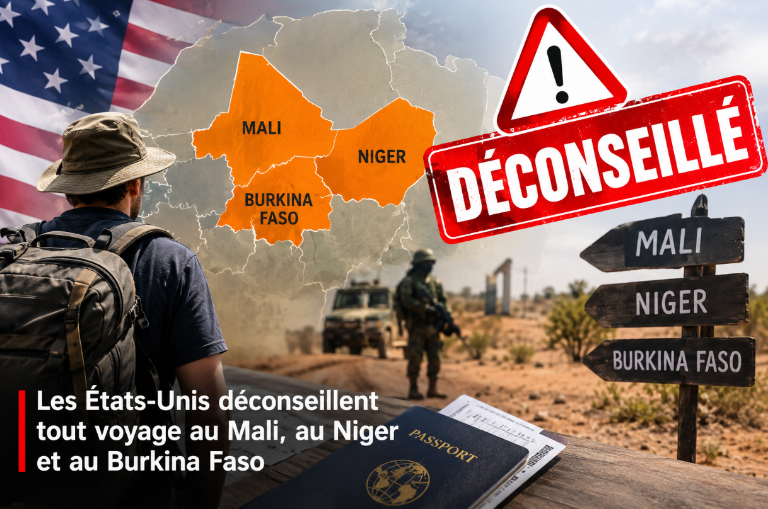
The United States has once again escalated its warnings for travelers heading to Mali, Niger, and Burkina Faso, placing all three nations under its highest travel advisory level. The move underscores the severity of security risks—including terrorism, kidnappings, and violent crime—that continue to destabilize the region, affecting residents, businesses, and foreign operations alike.
Why the US classifies these Sahel nations as “do not travel” zones
In 2026, Washington officially designated Mali, Niger, and Burkina Faso as Level 4 “Do Not Travel” destinations. This classification reflects the real-world consequences of ongoing violence, with armed groups linked to extremist organizations carrying out attacks that disrupt daily life, threaten economic stability, and endanger foreign nationals.
The decision follows repeated incidents in which civilians, security forces, and international workers have become targets. Regions once considered relatively stable are now hotspots for ambushes, kidnappings for ransom, and territorial control by militant factions.
Mali’s growing crisis: a battleground for extremists and military
In Mali, the authorities advise against all travel, even non-essential trips. The U.S. State Department points to rising terrorism risks linked to Al-Qaïda and ISIS-affiliated groups, which have intensified attacks on military convoys, rural roads, and even urban areas. Bamako, the capital, is not immune; officials have imposed movement restrictions on American diplomatic staff, confining them to the city center.
Outsiders face severe dangers—kidnappings remain rampant, and crime has surged in poorly patrolled zones. For foreign visitors or workers, the lack of quick consular support in case of an incident compounds the threat.
Niger’s border regions: a hotspot for instability and restricted movement
Niger remains a critical flashpoint, with the U.S. warning that terrorism, kidnappings, and violent crime make travel across the country inadvisable. The northern and western border areas are especially volatile, where militants exploit weak governance and porous borders to launch raids and smuggle weapons.
Niamey offers limited safety, but even within the capital, risks persist. The U.S. government has reduced mobility for its personnel, and emergency consular assistance outside major cities is severely constrained. For businesses operating in the region, this creates logistical nightmares and financial losses.
Burkina Faso’s spiral of violence: from jihadist threats to economic fallout
Armed groups have expanded their reach in Burkina Faso, launching attacks in mining zones, rural communities, and urban centers like Ouagadougou. Kidnappings, particularly of Western workers and executives, have become alarmingly frequent, forcing companies to suspend operations or relocate staff.
State security forces struggle to contain the spread of violence, and the U.S. has prohibited its officials from venturing beyond the capital. The economic toll is mounting: tourism declines, foreign investments dry up, and local markets face disruptions from insecurity.
Beyond the warnings: ripple effects on Africa’s economy and global ties
While Mali, Niger, and Burkina Faso dominate headlines, the U.S. has also raised alarms for other African nations. Nigeria, the Central African Republic, Chad, and parts of the Cameroon and Mozambique face lower-tier but serious advisories due to terrorism, kidnappings, or regional conflicts.
These warnings translate into higher costs for global trade routes, delayed humanitarian aid, and shrinking opportunities for international cooperation. Companies weighing investments in the region must weigh the risks of canceled contracts, interrupted supply chains, and personnel hazards.
What travelers and businesses must know before considering the Sahel
The U.S. State Department emphasizes that conditions in Mali, Niger, and Burkina Faso can shift with little notice. An area deemed safe one week may become a no-go zone after an attack or a militant takeover.
If travel is unavoidable, experts recommend:
- Monitoring official advisories frequently—risk levels are updated as situations evolve.
- Prioritizing urban centers with strong security, though even these are not risk-free.
- Reviewing insurance policies and emergency plans, including evacuation routes and consular support limitations.
- Engaging local security experts to navigate checkpoints, roadblocks, and militant presence.
The Sahel’s instability isn’t just a travel dilemma—it’s a regional crisis with consequences for global security and commerce. For now, the safest path for outsiders may be to avoid Mali, Niger, and Burkina Faso entirely.