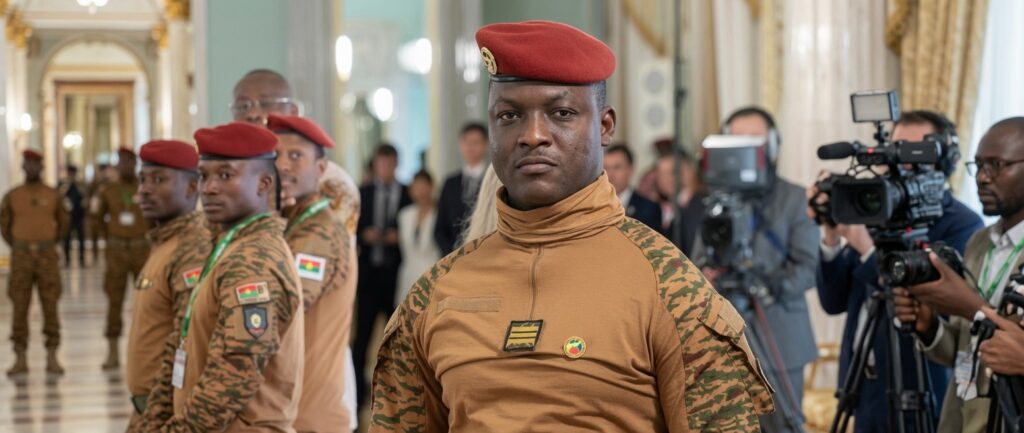
With the unanimous passage of a constitutional amendment reinstating the death penalty, Burkina Faso’s military junta under Captain Ibrahim Traoré has taken a decisive step toward consolidating authoritarian control in Ouagadougou. Framed under the chilling slogan ‘Sentimentalism is over’, this move reinstates capital punishment—abolished in 2018—under the guise of national firmness and betrayal of state security. Yet beneath the veneer of sovereignty and anti-treason rhetoric lies a calculated political tool designed to permanently sideline rivals, notably former transitional leader Lieutenant Colonel Paul-Henri Sandaogo Damiba.
From legal reform to personal vendetta
The timing of this legislative overhaul is no coincidence. By reviving the death penalty, Traoré’s regime is crafting a legal framework specifically tailored to ensure Damiba’s swift execution. Charges of high treason and conspiracy against state security already hang over him, and with the abolition of pardons and clemency, the government signals its intent to make Damiba a public example—sending a chilling message to opposition forces and dissenters within the armed forces.
The irony is inescapable: those who once celebrated coups as patriotic renewal now wield the law as a weapon of vengeance. This is the tragic paradox of Burkina Faso’s recurring instability.
Ironies of history: Damiba’s own weapons turned against him
Circumstances have come full circle with stunning irony. The current regime’s relentless pursuit of Damiba exposes the contradictions at the heart of Burkina Faso’s repeated coups d’état:
- Double standards in legitimacy: In January 2022, Damiba overthrew elected president Roch Marc Christian Kaboré using military force—a move his supporters labeled a “patriotic surge.” Eight months later, Traoré applied the same script to remove Damiba, now branding his methods as treason.
- A court of public opinion rewritten by arms: What was once hailed as a democratic lifeline now becomes a capital crime when wielded by another faction, revealing how power—not justice—dictates outcomes.
The spiral of political revenge and national instability
By rejecting clemency and embracing capital punishment as a political tool, the current authorities are not asserting strength—they are perpetuating a dangerous cycle. Using criminal justice to settle scores at the highest levels of the military entrenches instability and fuels the very instability they claim to fight.
History’s lesson is clear: those who today brandish the sword of vengeance may tomorrow find themselves on the receiving end. In Burkina Faso’s climate of perpetual coups, the executioner is never far from becoming the executed.
What’s next for Burkina Faso’s political future
The return of the death penalty signals more than a judicial change—it reflects a regime willing to sacrifice justice for control. As Damiba faces the ultimate sentence, the nation braces for further unrest and a deepening divide between state and citizen, power and principle.
Beyond Ouagadougou: the cost of a culture of impunity
The implications stretch beyond the capital. A state that uses death as a political weapon undermines public trust, chills dissent, and risks radicalizing both civilian and military factions. In a country already scarred by military rule and violence, this law risks becoming the final nail in the coffin of democratic aspirations—and the beginning of an era defined by fear.