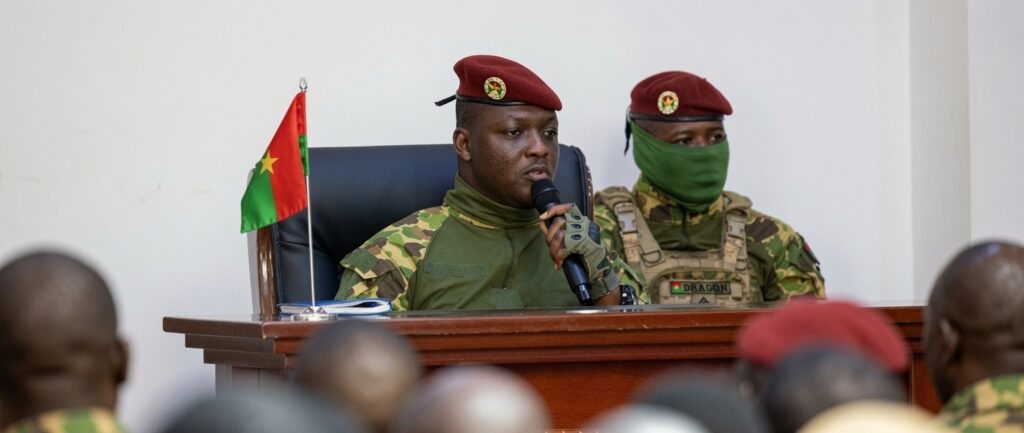
The humanitarian toll of Burkina Faso’s security deadlock
As terror attacks intensify across Burkina Faso, the transitional government faces a brutal reckoning. Villages remain under siege, supply routes are cut off, and civilians bear the brunt of a conflict spiraling beyond control. The stark reality has forced Ouagadougou to confront the limitations of its military strategy—and the urgent need for new solutions.
From Moscow to Ankara: the failure of a one-sided military gamble
The Burkina Faso junta’s abrupt pivot from decades of Western-allied security cooperation to a Russian-backed military partnership promised decisive action. Yet despite the deployment of Russian paramilitary advisors and the arrival of combat equipment, the promised victories have failed to materialize. Attacks have surged, and critical regions remain under terrorist control, exposing the hollowness of a strategy built on borrowed firepower and overconfidence.
The juncture’s gamble on Moscow’s firepower has left the country more vulnerable than before. Critical supply chains for food and medicine have collapsed in besieged areas, while the military’s operational capacity remains stretched thin. The Sahel’s unforgiving terrain and the adaptability of militant groups have exposed the flaws in relying solely on external actors for security.
Turkey emerges as the reluctant lifeline for Burkina Faso
With the Russian alliance proving insufficient, Burkina Faso has now turned to Türkiye in a desperate bid for support. At the first-ever bilateral political consultations in Ankara, Burkinabe diplomats made persistent overtures, seeking not just diplomatic solidarity but tangible military aid. The focus has shifted to acquiring Ankara’s battle-tested drones and defense systems, seen as a potential game-changer in countering insurgent advances.
The urgency of Burkina Faso’s appeal reflects a broader truth: when sovereign ambitions outpace military capabilities, even hardened regimes must seek help. The junta’s appeal to Ankara underscores the failure of its self-reliance narrative, revealing a leadership caught between ideological posturing and harsh battlefield realities.
The limits of Burkina Faso’s sovereignist illusion
The military leadership’s insistence on self-sufficiency has collided with the Sahel’s brutal truths. Promises of rapid stabilization have evaporated, leaving behind a trail of displaced families and shuttered communities. The government’s shift toward Turkish support—a pragmatic but humiliating concession—highlights the fragility of a strategy that prioritized symbolism over substance.
As Burkina Faso’s security vacuum deepens, the junta’s outreach to Ankara marks a turning point. The question no longer revolves around ideology but survival. With militants gaining ground and the civilian toll rising, the transitional government faces a stark choice: double down on failed alliances or embrace uncomfortable alliances to regain control.
What Burkina Faso stands to gain—-and lose—-in its Turkish partnership
- Drones and modern surveillance systems: Ankara’s proven track record in counterinsurgency operations, particularly in Africa, offers Burkina Faso access to advanced aerial strike capabilities and real-time intelligence.
- A pragmatic but imbalanced relationship: Unlike its Russian partnership, which came with political strings attached, Turkish aid may offer military support without overt geopolitical demands—though this could come at a cost over time.
- Potential delays and dependencies: Even with Turkish assistance, logistical hurdles, training needs, and supply chain bottlenecks could delay the deployment of critical equipment, leaving communities at risk in the near term.
The long shadow of Burkina Faso’s military miscalculations
The junta’s failed security gambles have left the country at a crossroads. The transition’s early vow to restore stability through external alliances—first Russia, now Türkiye—has instead exacerbated the crisis. Each misstep has eroded public trust, deepened economic strain, and pushed more civilians into the crossfire.
With no immediate end to the violence in sight, Burkina Faso’s leaders must confront a painful truth: their military strategy has been outmaneuvered by reality. The shift to Türkiye, while necessary, is a tacit admission of failure—and a risky gamble on a new patron in an increasingly volatile region.