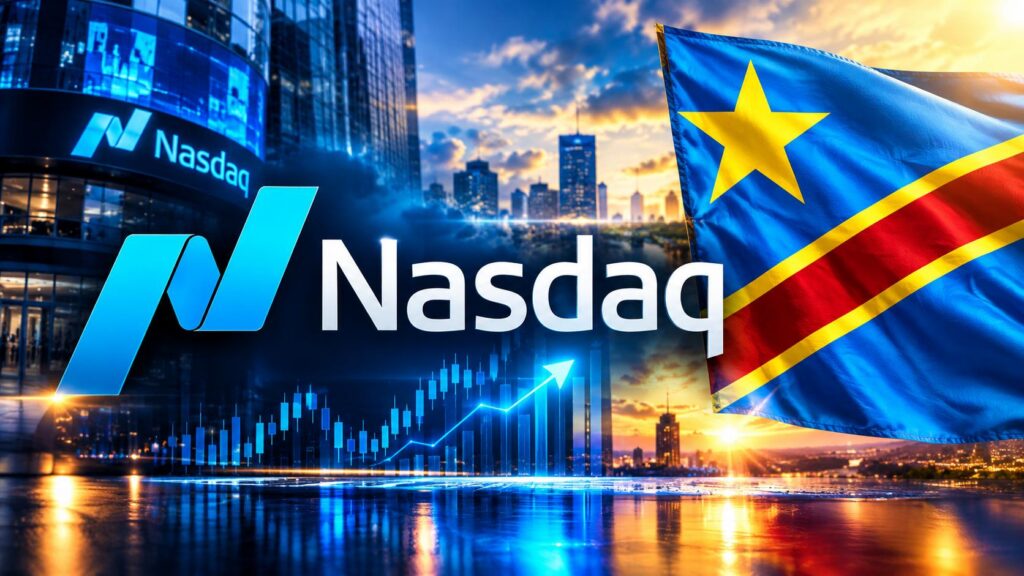
The Republic of the Congo has made a groundbreaking financial move that could have far-reaching consequences for both domestic citizens and international investors. By listing $1.55 billion in sovereign bonds on Nasdaq Dubai, Brazzaville is not just diversifying its funding sources—it’s reshaping how African debt is perceived and accessed on the global stage.
Why this dual listing matters for Congo’s economic future
In February 2026, the Congolese government will issue a $700 million bond with a 9.5% coupon rate, maturing in January 2035. Just three months later, in May 2026, a second $850 million bond carrying the same high yield will come due in 2036. Both tranches, already admitted to the London Stock Exchange, now enjoy a strategic secondary market presence in Dubai, targeting sovereign wealth funds and institutional investors across the Middle East.
This dual-listing strategy is more than a financial transaction—it’s a calculated effort to stabilize public finances while unlocking new revenue streams for critical infrastructure and social programs. For Congolese citizens, the immediate benefit is reduced pressure on domestic capital markets, allowing more resources to flow into healthcare, education, and job creation.
Dubai emerges as a key gateway for African debt
Nasdaq Dubai’s admission of these bonds cements its role as a critical bridge between emerging African economies and Middle Eastern investors. The exchange’s chief executive, Hamed Ali, highlighted the move as a milestone, stating:
« Welcoming the Republic of the Congo as the first sub-Saharan sovereign issuer on our platform underscores Dubai’s growing influence as a global financial hub. This cotation doesn’t just connect African debt to Middle Eastern capital—it signals a shift in how international investors view risk and opportunity in the region. »
With total debt listings on Nasdaq Dubai now exceeding $147.5 billion—and sovereign bonds accounting for 43% of that volume—the Congolese initiative sets a precedent. African nations now have a clearer path to accessing liquidity without over-reliance on traditional Western markets.
Economic ripple effects: what’s at stake for businesses and citizens
The high-yield bonds (9.5%) may attract institutional investors, but their real-world impact extends beyond financial returns. By securing long-term capital at competitive rates, the Congolese government can:
- Reduce budget deficits without resorting to short-term, high-interest borrowing.
- Attract foreign direct investment into key sectors like energy, mining, and agriculture.
- Stabilize currency fluctuations by diversifying funding sources away from volatile local markets.
- Fund critical infrastructure projects, from road networks to digital connectivity, improving daily life for millions.
For businesses, the move could ease access to credit as local banks gain confidence in sovereign-backed instruments. Meanwhile, international firms eyeing the Congo’s untapped markets—from renewable energy to manufacturing—may now see a more predictable financial environment.
What this means for Africa’s debt strategy going forward
The Congo’s debut in Dubai isn’t an isolated experiment. It’s a blueprint for other African nations looking to break free from cyclical debt traps while tapping into high-growth capital pools. Countries with similar fiscal challenges may now consider dual listings to:
- Widen their investor base beyond traditional Western institutions.
- Leverage Middle Eastern liquidity, where appetite for higher-risk, higher-reward assets is growing.
- Reduce dependence on IMF programs by accessing alternative financing routes.
The ripple effects could redefine Africa’s debt narrative entirely, shifting the focus from crisis management to strategic growth financing.
Looking ahead: will other African nations follow suit?
If the Congo’s gamble pays off, expect to see a wave of sovereign bond listings in Dubai, Nairobi, or even Lagos. The success of these high-yield instruments could prove that Africa’s debt markets are not just viable—but a high-stakes opportunity for both issuers and investors.
The real question isn’t whether other nations will copy Congo’s model, but how soon they’ll adapt it to their own economic realities. One thing is certain: the global financial landscape for African debt is about to change.