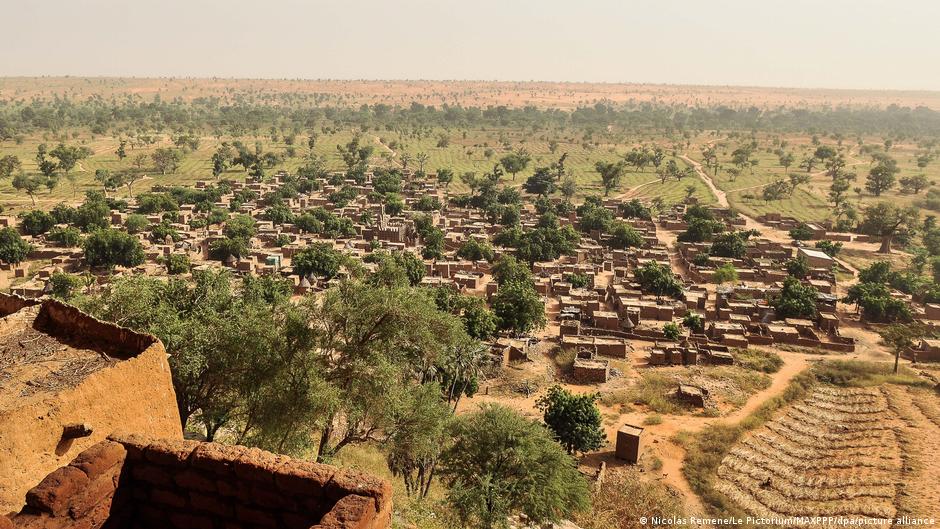
In Mali, thousands of displaced people have decided to go back to their homes in the Bankass district, located in the central region. This return became possible after local agreements were reached between village communities and JNIM, the Group for Support of Islam and Muslims, an Al Qaeda affiliate.
Villagers can now reclaim their houses and fields, but under conditions imposed by the jihadist groups. These include mandatory veiling for women and a ban on Western-style education in schools.
School closures and mandatory veiling
The conditions affect dress codes and prayer rituals. Men must wear short pants, public schools are shut down—meaning Western education is prohibited—and women are required to wear the veil.
In return, the villagers, mostly Fulani and Dogon, are now allowed to carry out their farming and herding activities as the rainy season begins in Mali, which started in June.
“We came back without our wives”
An educator from the village of Bare Darsalam in Bankass district, who preferred to remain anonymous, returned after seven years away due to the conflict. He came without his wife and children. He commented on the public school and dress code imposed by JNIM:
“Our school was destroyed by terrorist armed groups when the village was displaced in 2019. They broke everything. Even if we were asked to rebuild the school immediately, we would not agree. We resumed our activities after the guarantees given by the mayor of Bankass. We have not yet started wearing short pants. Nor have we brought our wives back, to know whether we have to wear the Islamic veil or something like that.”
Farming restarts
According to Allaye Guindo, mayor of the urban commune of Bankass, the signing of agreements between village communities and armed groups has enabled a significant return of displaced people.
“Thanks to the signed agreements, people are returning to all the abandoned localities. The 13 villages receiving their residents include two villages of Kani Bozon, one village from the rural commune of Dimbal. The rest are villages from the Bankass commune. It is raining now, and many returnees have started cultivating their fields in safety. Everyone is satisfied.”
The terms of the local agreements state that customary authorities and notables must adapt to the rules set by the terrorist armed groups, which make the application of Islamic law, Sharia, the cornerstone of their collaboration with the villagers.