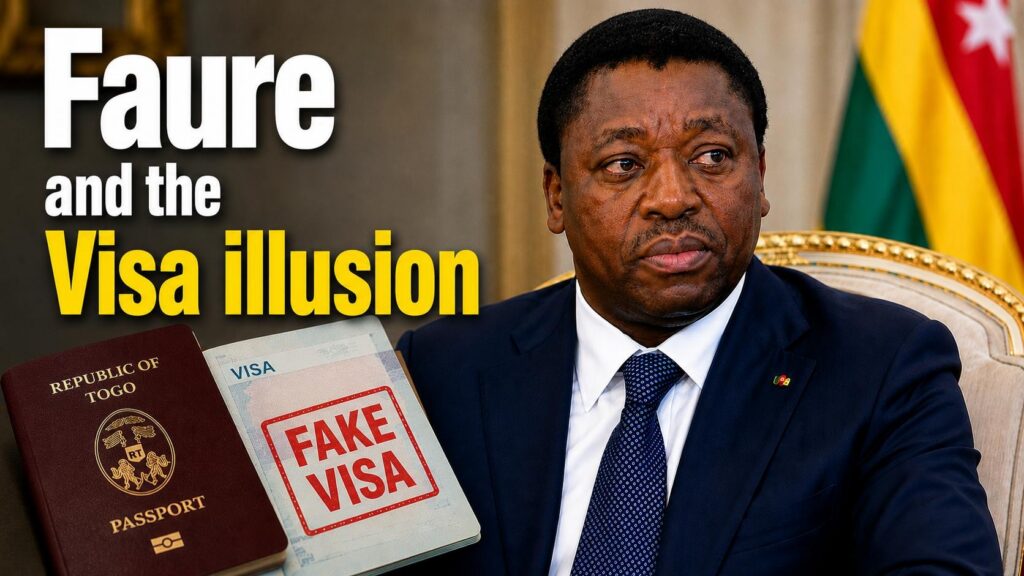
The announcement of visa-free entry for all African nationals arriving in Togo has been heralded as a bold step toward continental integration. Yet beneath the surface of this diplomatic gesture lies a carefully constructed system of digital oversight, raising questions about the true intentions behind Lomé’s initiative.
President Faure Gnassingbé has once again positioned himself as a champion of Pan-African unity, using the visa exemption policy to craft an image of progressiveness. While the measure appears to dismantle traditional barriers to entry, its implementation reveals a different narrative—one where administrative control remains firmly intact.
An illusion of freedom: the fine print of Togo’s visa policy
The official framework of the exemption outlines a seemingly inclusive policy:
- Eligibility: All African nationals holding valid passports.
- Duration: Maximum stay of 30 days.
- Entry Points: Theoretically applicable to all land, air, and sea borders.
At first glance, the policy aligns Togo with other forward-thinking nations such as Rwanda and Benin. However, a closer examination exposes a system where freedom of movement is conditional—not guaranteed.
From physical to digital barriers: the new frontier of restriction
The most contentious aspect of this policy is the shift from traditional visa requirements to a mandatory digital pre-screening process. Travelers must complete the following steps before arrival:
- Register on the official government portal voyage.gouv.tg at least 24 hours prior to departure.
- Submit an online travel declaration.
Critics argue that this system functions as an electronic travel authorization, akin to the ESTA system in the United States or the ETA in the United Kingdom. The government retains full discretionary power to approve or deny entry based on undisclosed criteria. Concerns persist that this digital gatekeeping could be used to exclude journalists, human rights activists, or political opponents under the guise of administrative irregularities or security concerns.
The dual objectives behind the policy
Far from a mere administrative reform, the visa exemption serves multiple strategic purposes for the Togolese government:
- Enhancing diplomatic standing: Following constitutional amendments that have drawn international criticism for consolidating power, President Gnassingbé seeks to reframe his image as a continental leader. Embracing visa-free travel positions Togo as a progressive actor in regional integration.
- Strengthening surveillance capacities: By centralizing traveler data through a mandatory online platform, the government gains unprecedented insight into the movements of entrepreneurs, journalists, and influencers entering the country.
Economic openness with strings attached
While the policy eliminates traditional visa fees, it replaces them with a burdensome digital bureaucracy. Entrepreneurs and media professionals, initially hopeful about the potential for seamless mobility, now face a system where freedom of movement is tightly controlled. The promise of economic dynamism is thus tempered by a regime of digital scrutiny.
In essence, Togo’s visa exemption is not the bold act of Pan-African solidarity it appears to be. It is a calculated blend of soft power and digital surveillance, where openness is permitted only under the watchful eye of the state. Faure Gnassingbé’s policy exemplifies a recurring theme of his leadership: progress is encouraged, but never at the expense of control.