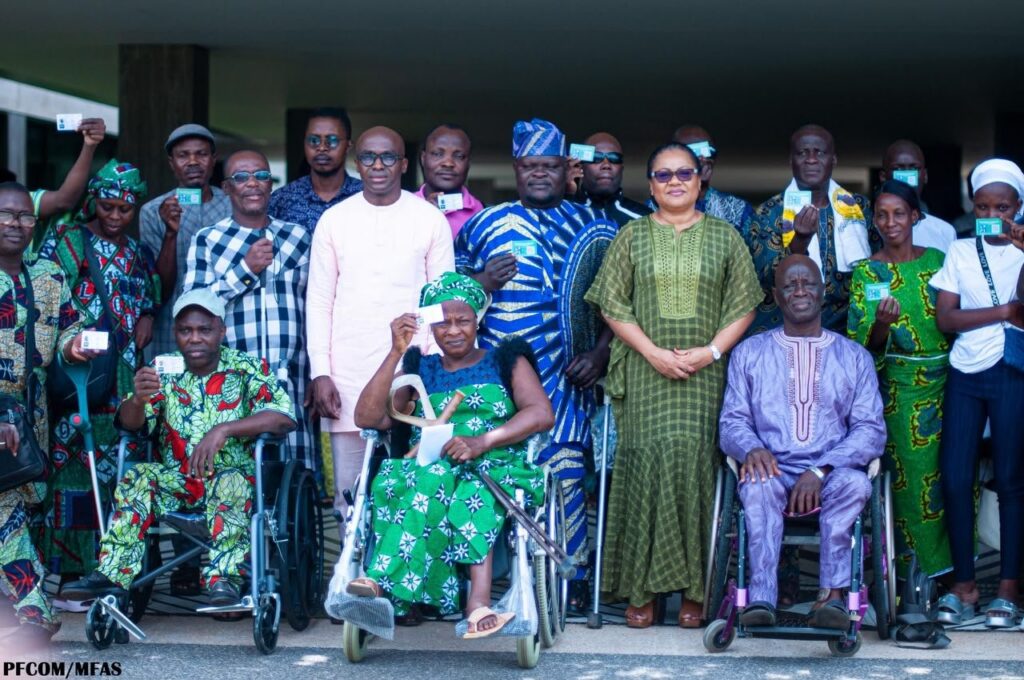
Can Benin turn its commitment to social equity into tangible change for people with disabilities? The latest handover of 1,422 chance equality cards suggests the government is trying, but the question remains whether these documents will truly unlock the rights they promise. The Minister of Social Affairs and Microfinance, Véronique Tognifodé, officially distributed the new cards to beneficiaries, bringing the total number produced by the National Agency for the Identification of Persons (ANIP) to over 6,100. These cards are now being rolled out gradually across the country.
What exactly does a chance equality card grant?
Established under Benin’s law on the protection and promotion of the rights of persons with disabilities, the chance equality card is far more than a simple ID. It is a legal and social tool designed to guarantee priority access to a range of essential services. The card opens doors to:
- Healthcare: Preferential rates and free specific care or orthopedic devices in public health facilities.
- Education and training: Exemption or reduction of tuition fees in public institutions, plus priority access to scholarships and vocational training.
- Transport and employment: Easier access to public transport and measures to encourage socio-professional integration in both the public and private sectors.
A promise to make vulnerable people ‘privileged’
During the ceremony, Minister Tognifodé reiterated that this initiative aligns with the government’s vision of making vulnerable people true ‘privileged citizens of the Republic’, breaking down barriers of stigma and economic exclusion. But the success of this vision hinges on whether the cards effectively translate into real-world benefits.
How reliable is the data behind the cards?
The issuance process relies on rigorous traceability managed in synergy with ANIP and the network of One-Stop Social Protection Shops (GUPS) deployed in communes. Each applicant undergoes a medical evaluation by state-approved doctors to formally establish the disability rate and nature before the card is issued. This ensures that only those who qualify receive the card, but it also raises questions about the speed of processing and the reach of the program.
What are the beneficiaries saying?
Representing the beneficiaries, the Federation of Associations of Persons with Disabilities of Benin (FAPHB) welcomed the continuity of the program while urging families and rights holders to take steps at the GUPS to claim their rights. The ANIP and the Ministry of Social Affairs continue to roll out distribution operations in all 12 departments of the country to cover thousands of pending applications. The key question now is whether this momentum will be enough to overcome the persistent challenges of access and inclusion.



More Stories
Is Burkina Faso’s anti-terror drive becoming a war on moderate imams?
KwaMakhutha massacre: can South Africa’s police stop the gang wars bleeding KwaZulu-Natal?
Can Burkina Faso truly claim food self-sufficiency while receiving 25,000 tonnes of Russian wheat?