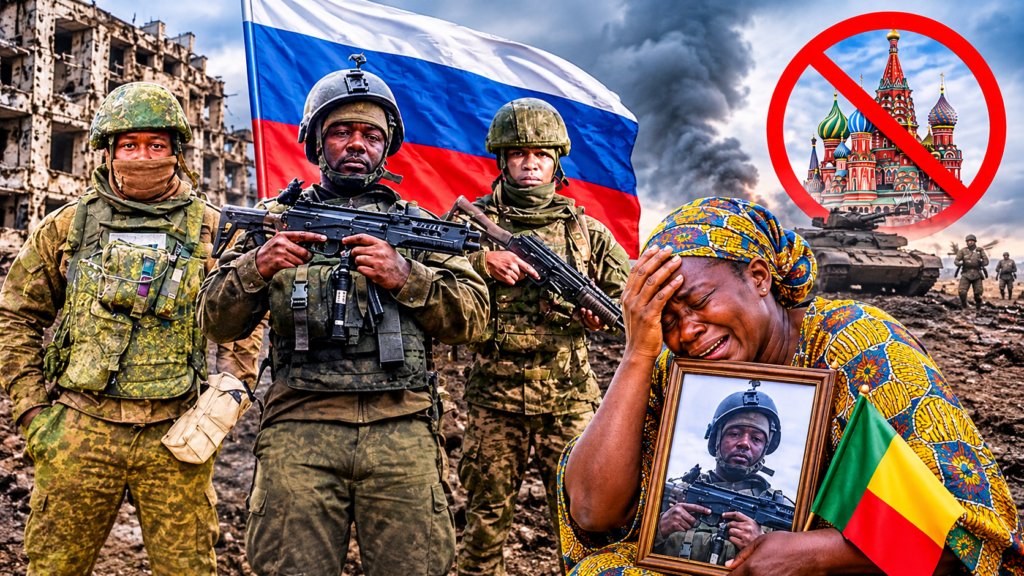
From educational aspirations to wartime casualties: a growing concern
The pursuit of higher education overseas has long represented a beacon of hope for young people across Africa. Yet, for some, this journey has tragically ended not in graduation ceremonies, but in the trenches of a distant war. The recent death of a Beninese student fighting in Ukraine has exposed the hidden dangers confronting African youth who leave their homes in search of academic and professional opportunities in Russia.
The fragile line between study and military obligation
Many African students are drawn to Russian universities by the promise of affordable tuition, technical programs, and international career prospects. Some pursue degrees in engineering, medicine, or IT, fields where Russian institutions maintain strong reputations. However, the ongoing conflict between Russia and Ukraine has introduced a disturbing variable: the reported recruitment of foreign nationals including African students into military service.
While not all students face this risk, documented cases have raised serious concerns. The circumstances under which students become involved in military activities remain unclear. Some may be misled by job offers or financial incentives, while others might sign contracts without fully understanding their obligations. Once engaged, their status as students offers no protection, leaving them vulnerable to combat, detainment, or worse.
How financial pressures and opaque agreements create vulnerabilities
The path to studying abroad is often paved with financial sacrifices. Families often sell property, take loans, or divert scarce resources to fund their children’s education. In return, the students carry immense pressure to succeed. Yet, far from home and with limited resources, some find themselves in precarious situations where they accept risky employment or unclear contractual obligations simply to survive or send money back home.
Such vulnerabilities are exacerbated by language barriers, limited access to legal advice, and reliance on intermediaries who may prioritize profit over student safety. A seemingly beneficial job offer one that appears to solve financial woes might later reveal itself as a front for military recruitment, with lethal consequences.
The consequences ripple across Africa
The tragic loss of a young Beninese life in Ukraine is more than a personal tragedy; it is a warning sign for African families and governments. As recruitment efforts reportedly target foreign students, entire communities are left grappling with grief and confusion. For many, the dream of a better future has turned into a nightmare, sparking fears about the safety of other students still studying or preparing to study in Russia.
This issue transcends borders. Parents in countries like Senegal, Nigeria, and Ghana are increasingly questioning whether Russian education remains a viable path to prosperity. Some are reconsidering their choices; others are demanding clearer information from educational institutions and governments about the true risks involved.
A call for transparency and responsibility
The responsibility to protect students does not lie solely with the host country. African governments, consular services, and universities must play a proactive role in safeguarding their citizens. This includes:
Providing pre-departure briefings on legal rights and military obligations
Monitoring recruitment agencies and intermediaries for predatory practices
Ensuring access to consular support in high-risk regions
Encouraging students and families to verify contracts thoroughly before signing
Educational institutions in Russia, too, must enhance transparency regarding student recruitment, employment opportunities, and military service exemptions. Students should never be left in the dark about the consequences of their choices.
What students and families must know before committing
Before setting foot in Russia or any foreign country prospective students and their families should investigate several critical factors:
Visa validity and exemptions: Ensure the visa does not implicitly or explicitly require military service.
Contract clarity: Any agreement involving employment, housing, or financial support should be reviewed by a legal professional familiar with both Russian and home country laws.
Institution reputation: Research the university’s track record with international students, including past issues related to recruitment or student safety.
Support systems: Confirm the availability of consular assistance and emergency contacts in Russia.
Ignorance of the risks is not a valid defense. Once a student crosses into a combat zone, the consequences are irreversible.
Learning from tragedy: the path forward
The death of the young Beninese student must serve as a turning point. For African youth, it underscores the need to ask hard questions before committing to any foreign academic endeavor. For governments, it highlights the urgency of implementing protective policies and educational campaigns. For educational institutions, it calls for greater accountability and transparency.
Studying abroad should never come at the cost of personal safety. A degree is not worth a life. The international community must work together to ensure that the promise of education remains just that a promise of opportunity, not of peril.
By Emmanuel Mbarga — Journalist