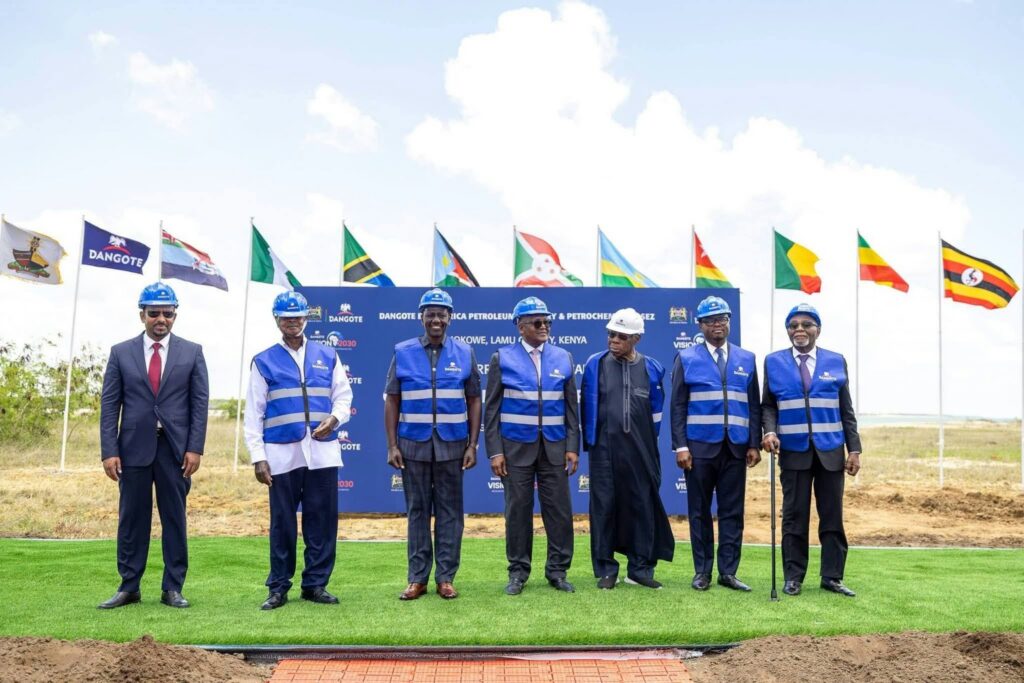
Lamu, Kenya — the ceremony on 30 September 2026 has come and gone, but the fallout is only beginning. Benin’s president, Romuald Wadagni, stood alongside several African leaders on Kenya’s northern coast to break ground on a refinery that could reshape the region’s oil landscape. Now the question on many lips is simpler: what happens next?
The high-profile gathering and its immediate aftermath
The launch event drew a roster of leaders that underscored the project’s continental ambition. Uganda’s Yoweri Museveni, Togo’s Jean-Lucien Savi de Tové, Ethiopia’s Prime Minister Abiy Ahmed Ali and Kenya’s William Ruto all joined Wadagni at the site. Their joint appearance sent a clear signal: this is not just a Kenyan project, but an East African one with wider implications.
For Benin, Wadagni’s participation was a chance to observe firsthand how large-scale industrial ventures are being structured elsewhere on the continent. It also sparked debate at home about whether Benin should pursue similar ventures or deepen cooperation with the partners involved.
A $16 billion bet and the numbers behind it
The refinery carries a price tag of $16 billion — roughly 8,960 billion CFA francs. Once operational, it is designed to process 700,000 barrels of crude oil per day. That capacity would make it one of Africa’s largest industrial complexes and, by the figures announced, the biggest refining project in East Africa.
These numbers matter because they reflect a broader shift: several African governments are trying to process more of their raw materials locally and cut reliance on imported refined products. The Lamu project fits squarely into that trend.
Why the ceremony had a distinctly African feel
The presence of West and East African leaders side by side was no accident. It highlighted a desire to turn the refinery into a project that transcends Kenya’s borders. For Benin, the event offered a window into new dynamics of economic cooperation between states — and raised questions about what such partnerships could mean for West Africa.
Energy infrastructure is increasingly central to African strategies for development, economic sovereignty and regional integration. The Lamu launch put that reality on full display.
Industry at the heart of African ambitions
With its eventual 700,000-barrel-per-day capacity, the Lamu refinery is billed as an exceptional undertaking. Its construction is expected to mobilise significant capital and spawn an industrial ecosystem around energy, transport and logistics.
The groundbreaking on 30 September 2026 was therefore a major moment for the leaders present. For Wadagni, it was an opportunity to stand with other African officials at a key juncture for one of the continent’s most talked-about industrial projects.
At Lamu, attention has now shifted to the future — an Africa striving to expand its industrial capacity and process more of its resources on its own soil. The debate over what that means for ordinary citizens and businesses is just getting started.


More Stories
Burkina Faso at a breaking point: Ibrahim Traoré’s four years of military power reach a decisive crossroads
Behind the scenes: why Air Senegal grounded its entire Dakar-Paris crew
Niger: is the silence over Moussa Kaka’s disappearance a threat to press freedom?