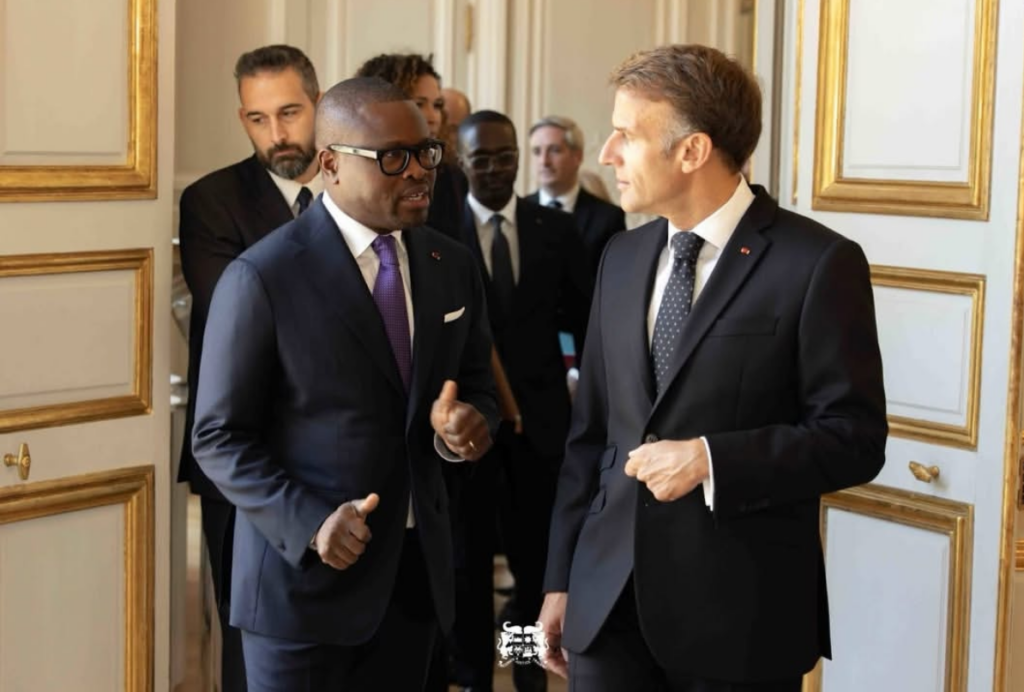
The ink has dried on the agreements, but the conversation is only beginning. At a ceremony held at the Élysée on Monday, October 5, 2026, Benin and France put forward a set of financial commitments worth a combined 65.5 billion CFA francs, aimed at backing major projects in electricity, agriculture and health. The announcement has prompted a wave of reactions and raised a central question: what comes next?
Reactions and the debate that followed
The scale of the financing quickly drew attention. Stakeholders, observers and the wider public have begun weighing what the funds could mean for Benin’s development trajectory. Supporters see a timely boost for sectors under pressure, while sceptics ask how quickly the money will translate into visible change on the ground.
Mobilised alongside French and European partners, the 65.5 billion CFA francs represent more than a headline figure. They reflect a shared intention to support structural projects seen as essential to improving living conditions and strengthening Benin’s economic capacity. Cotonou and Paris framed the agreements as a practical expression of their determination to deepen a partnership built around lasting investment.
Electricity: a priority under scrutiny
Energy sits at the centre of the package. Reliable access to power remains a decisive factor for Benin’s economic and social development, and the financing is meant to reinforce infrastructure and capacity in the sector.
For households, businesses, public services and productive activities, an improved energy supply is a significant lever. As Benin seeks to accelerate its economic transformation, investment in electricity is widely viewed as critical to sustaining growth, attracting new activity and raising the quality of essential services over time.
Agriculture and the outlook for rural livelihoods
Farming features prominently among the targeted areas. Agriculture underpins a large share of incomes, employment and food security in Benin, and the funds are expected to support efforts to build a more efficient and better structured sector.
The aim is to make agriculture more responsive to people’s needs while improving productivity, generating more value and opening fresh opportunities across production and processing chains. Because the sector touches daily life so directly, the results achieved here will shape how the wider agreement is judged.
Health and the well-being of the population
Health rounds out the three main focus areas. Investment in this field signals a commitment to placing people’s well-being at the heart of cooperation with Benin’s partners.
Strengthening the health system is vital as the population grows and demand for services rises. The resources mobilised are intended to support projects that can enhance the sector’s capacity and, ultimately, the quality of care available to citizens. By linking health with energy and agriculture, the agreements sketch a broad approach to development built on reinforcing essential sectors.
France, Europe and a wider partnership
Beyond the amount itself, the Élysée ceremony highlighted efforts to broaden and reinforce the partnerships mobilised around Benin’s development priorities. French and European backers are being brought together around structural projects, reflecting interest in the country’s ambitions and its development path.
For Cotonou, the financing offers a chance to speed up projects with direct or indirect effects on the population. For France and its European partners, it demonstrates a willingness to pursue cooperation anchored in concrete objectives and in support for priorities set by Benin.
What comes next: from commitments to results
Signing and presenting the agreements is only one stage. Their real significance will be measured by how effectively the projects are implemented and what they deliver on the ground.
Expectations run high in electricity, agriculture and health, three areas whose performance has direct consequences for people’s daily lives and for the country’s economic prospects. With these new commitments, Benin intends to press ahead with more sustained and inclusive development.
The ceremony at the Élysée marks a further chapter in relations between Cotonou and Paris. By mobilising 65.5 billion CFA francs for structural projects, both sides are signalling their ambition to turn the partnership into an instrument serving development, growth and the well-being of Benin’s people.