
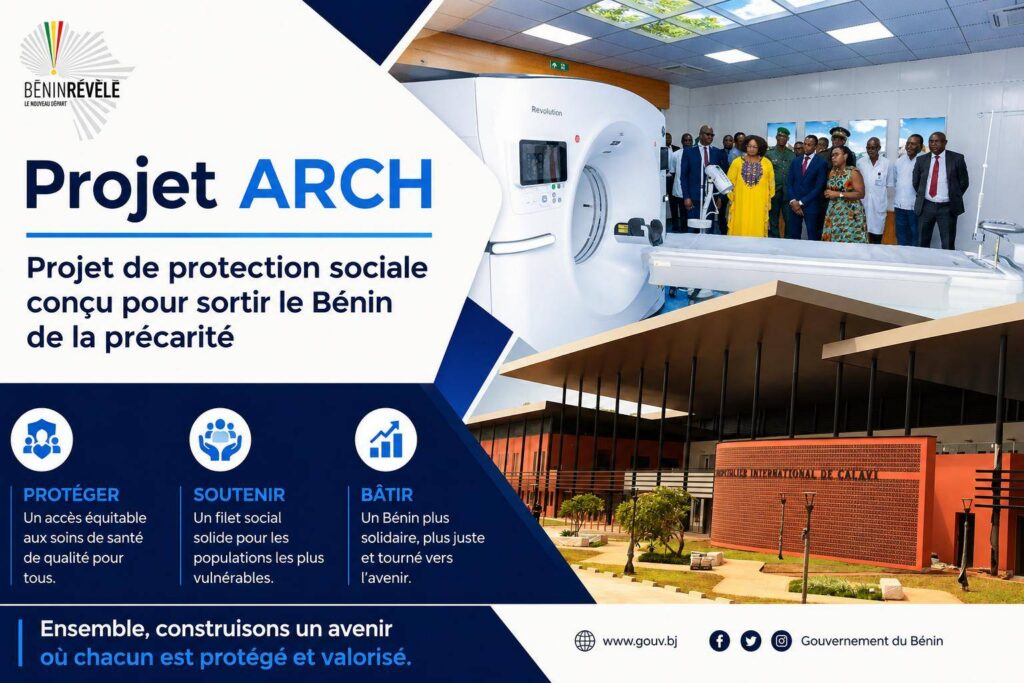
From crisis to care: Bénin’s radical health revolution
Over the past decade, Benin’s healthcare system has undergone a radical transformation, shifting from outdated infrastructure and chronic shortages to a modern, inclusive network of hospitals and services. At the heart of this change are four decisive pillars: stronger governance, state-of-the-art facilities, advanced medical technology, and a commitment to clean, ethical care. No longer will patients face opaque referrals abroad—today, world-class care is accessible within the nation’s borders.
The bold plan to rebuild the health system
For years, Benin’s health sector was plagued by crumbling facilities, outdated equipment, frequent strikes, and unregulated private clinics. But with the arrival of a new administration, a decisive break from past failures was made. Instead of patching problems, the government chose to rebuild from the ground up—legislatively, financially, and operationally.
Today, Benin is emerging as a leading medical hub in West Africa, attracting investment and setting new standards for quality, transparency, and accessibility.
Stricter rules, stronger oversight: ending the era of neglect
The first major step was restoring order and accountability. The creation of the Health Sector Regulatory Authority (ARS) marked a turning point: this agency enforces strict quality standards, accredits health facilities, and ensures that care meets national benchmarks. Gone are the days of unchecked private practices siphoning off public doctors. A landmark policy now prohibits public health workers from operating in the private sector, ensuring that qualified personnel remain in public hospitals where they are most needed.
Another decisive move was cracking down on illegal clinics—hundreds were shut down, removing dangerous options that put patients at risk. This sends a clear message: health care in Benin is not for sale; it is a national priority.
Building the hospitals of tomorrow
The transformation is visible across the country. The International Hospital of Calavi (CHIC) in Abomey-Calavi stands as a symbol of this new era, joined by the upcoming Togbin hospital complex. These facilities rival the best in Europe and Asia, offering advanced diagnostics, surgery, and specialized care without the need for overseas travel.
But modernization isn’t limited to new construction. Historic hospitals like the Hubert Koutoukou Maga National University Hospital (CNHU-HKM) in Cotonou, the Lagune Mother and Child University Hospital (CHU-MEL), and regional hospitals have undergone comprehensive upgrades. These renovations bring high-quality care closer to every community, reducing travel and improving outcomes.
Cutting-edge technology: the backbone of modern medicine
No health revolution can succeed without advanced medical technology. The government has invested over 198 billion FCFA in health infrastructure and mobilized an additional 275 billion FCFA for flagship projects. The results are transformative.
Hospitals now feature cutting-edge imaging systems, including 64-slice CT scanners, high-field MRI machines, and digital X-ray tables for precise diagnostics. Operating rooms are equipped with advanced anesthesia machines, multiparametric monitors, and minimally invasive surgical tools. Neonatal units now have modern incubators and 4D ultrasound systems. Laboratory processes have been automated, speeding up diagnoses and improving accuracy.
At the CHIC, a 115 billion FCFA investment has created one of the most advanced medical facilities in West Africa. It includes a dedicated oncology center with linear accelerators for targeted radiation therapy and sterile laminar flow hoods for safe chemotherapy preparation. A state-of-the-art cardiac surgery unit features digital angiography suites and heart-lung machines for open-heart procedures. Molecular biology platforms enable rapid, precise analysis of complex conditions.
Health for all: bridging the gap with universal coverage
A modern health system is only as strong as its reach. To ensure no one is left behind, Benin has expanded its health workforce, recruiting thousands of doctors, nurses, midwives, and technicians—especially in rural areas that were once underserved.
Central to this effort is the Human Capital Strengthening Insurance (ARCH) program, which provides free or subsidized health coverage to vulnerable populations across the country. The National Community Health Policy has also been revitalized, placing health workers directly in villages to offer prevention, early diagnosis, and primary care. Digital health platforms and telemedicine are connecting remote patients with specialists in Cotonou, breaking down geographic barriers.
Real results: safer care, better outcomes
Benin’s citizens are already feeling the difference. Public hospitals are regaining trust. Wait times are shorter. Essential medicines are more reliably available thanks to reforms in procurement. Maternal and infant mortality rates are declining, and public health spending is delivering greater value.
For the first time, the government has published a comprehensive national health report—reviewed with WHO support—offering full transparency. The data confirms progress: better care, more efficiency, and a system that works for everyone.
The road ahead
While challenges remain—such as maintaining high-tech equipment and ensuring ongoing staff training—the trajectory is undeniable. Benin has proven that with strong leadership, disciplined investment, and a commitment to equity, transforming a national health system is not just possible—it’s already happening. The future of healthcare in Benin is not a distant dream; it’s being built today, for every citizen, every family, and every community.



More Stories
Niger: Tiani faces fallout from special forces anger after Russian intervention
Crisis in Niger, IMF agreement in Sénégal, and Moroccan elections: Five essential stories
RDC-Israël : un rapprochement aux enjeux multiples