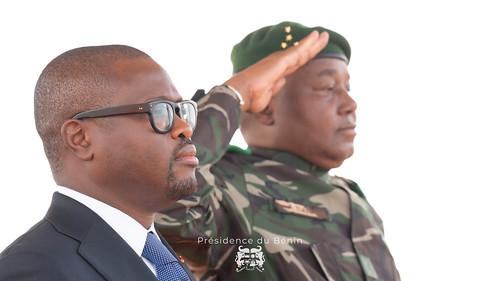
The tarmac of Cotonou International Airport echoed with diplomatic significance this past Friday, as an official Nigerien delegation landed under full protocol, signaling the resumption of long-awaited bilateral talks between Benin and Niger. For regional observers, this moment transcended ceremonial handshakes and protocol formalities—it marked the tangible revival of a dialogue many had presumed irreparably severed. The event followed a historic meeting in Niamey between Benin’s President Romuald Wadagni and Niger’s transitional leader, General Abdourahamane Tiani, where both leaders acknowledged the urgent need to break the deadlock.
From rhetoric to realpolitik: a pragmatic shift
Behind the scenes, two weeks of intensive closed-door negotiations preceded this pivotal encounter. Military officials, seasoned diplomats, and technical experts from both nations convened to dissect mutual grievances, identify flashpoints, and lay groundwork for their political principals. The objective was unambiguous: forge a comprehensive, lasting agreement to reopen the shared border, shuttered in the wake of Niamey’s political upheaval. While the weight of history and mistrust lingered, the atmosphere in Cotonou was described by insiders as a blend of gravity and constructive momentum—driven by the palpable urgency felt by both populations and economic actors.
The crippling cost of a closed border
Macroeconomic indicators tell a stark story: the prolonged closure has acted as a double noose on both economies, given their deep interdependence. For landlocked Niger, the Port of Cotonou is not merely a logistical asset—it is a lifeline. With the traditional trade artery severed, transporters and merchants from Niamey faced an existential crisis. Supply chains were rerouted through distant regional ports, forcing perilous detours across poorly maintained roads and adding weeks to transit times. The domino effect was immediate: spiraling transport costs inflated consumer prices in Niger’s capital, eroding already fragile purchasing power under the weight of international sanctions.
Benin, too, has paid a heavy price. The Cotonou-Niamey corridor is the beating heart of its economy, pumping vitality into one of West Africa’s most critical port hubs. A sudden halt in cross-border traffic triggered a sharp decline in customs revenues, draining a vital source of state financing for national development. The ripple effects extended far beyond ledgers and balance sheets. Small-scale traders, roadside eateries, and informal logistics workers—many of whom depend on daily border transactions—saw their livelihoods vanish overnight. What began as a political standoff has metastasized into a humanitarian crisis, with thousands of families on both sides of the frontier facing economic ruin.
Security first: navigating the sovereignty paradox
Yet the most intractable obstacle remains security. Since the rise of Niger’s military-led transitional government, Niamey has maintained an uncompromising stance: no economic concession can supersede national security or institutional stability. The talks in Cotonou have thus focused on highly sensitive technical files, including joint surveillance of the Niger River—a natural border notorious for illicit crossings—and the establishment of coordinated monitoring mechanisms to stem the flow of armed groups terrorizing the Sahel. Nigerien negotiators have insisted on robust guarantees, including real-time intelligence sharing, to prevent hostile actors from exploiting porous frontiers.
The challenge is monumental: designing a border management model that is impervious to asymmetric threats and illicit trafficking while preserving the fluidity essential for legitimate trade. Balancing the sovereignty demands of both states with the economic pragmatism demanded by their populations has become the linchpin of these negotiations.
Beyond the summit: reshaping regional relations
This prolonged engagement in Cotonou underscores a hard truth: geography and hard-nosed pragmatism inevitably outweigh ideological posturing when survival is at stake. The crisis erupted in response to sanctions imposed after Niamey’s regime change, yet the prolonged blockade has revealed an inescapable interdependence. However, a return to the status quo ante is unlikely. Trust has been irreparably eroded, and any future accord will likely be built on stricter controls, heightened vigilance, and lingering skepticism. Yet it will also be shaped by a shared realization: neither nation can thrive in isolation.
The stakes extend far beyond the Benin-Niger dyad. The Cotonou-Niamey axis is a linchpin of West African integration. The outcome of these talks will serve as a litmus test for the region’s ability—across ECOWAS and the Alliance of Sahel States alike—to prioritize economic stability and social cohesion over political divisions. For weary citizens who have endured months of uncertainty, the proof will lie not in official smiles for photographers, but in the swift, tangible lifting of barriers that have choked their daily lives.