Ouagadougou’s strategic pivot raises questions about true independence
Under the banner of severing colonial ties and diversifying partnerships, the transitional government of Burkina Faso has embarked on a policy that, while championing national sovereignty, may be consolidating a new form of dependency. Since Captain Ibrahim Traoré took leadership, the call for reclaiming autonomy has resonated strongly with a youth eager to distance itself from former colonial power France. Yet, the accelerated rapprochement with Russia is beginning to expose a paradox: rather than achieving self-reliance, Burkina Faso appears to be exchanging one form of tutelage for another.
The financial burden of asymmetric agreements
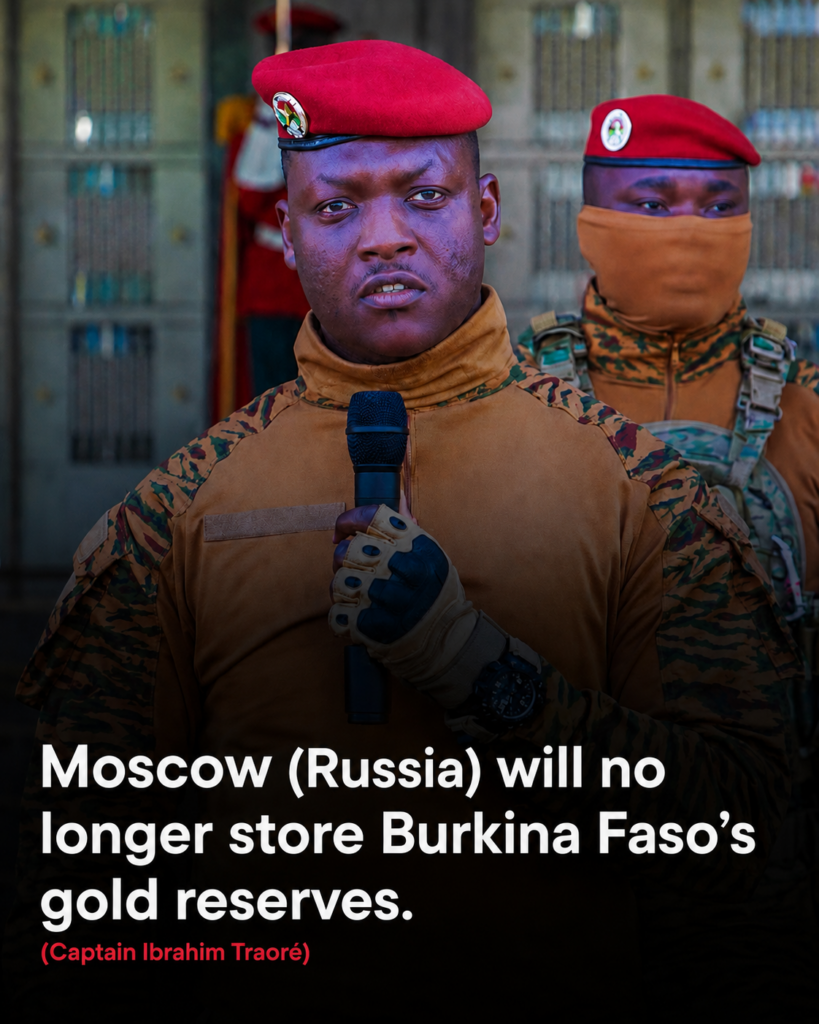
The recent negotiations surrounding the safeguarding and management of Burkina Faso’s most critical resource—gold, which accounts for nearly 80% of the country’s export earnings—highlight the nation’s economic fragility. By agreeing to Russian-backed financial and logistical terms that are disproportionately burdensome, Ouagadougou is undermining its own stability. Entrusting foreign entities with control over its natural wealth, under the pretext of shielding it from Western influence, represents a fundamental contradiction. True sovereignty is not secured by ceding control to another economic powerhouse; it is built through internal capacity and self-determination. Paying a premium to Moscow to protect Burkina Faso’s subsoil is no longer cooperation—it is extortion.
Security dependence: the cost of outsourcing protection
The shift toward Russia has also materialized in the form of military support, including the deployment of Russian instructors and paramilitary forces (formerly associated with Wagner Group, now operating under Africa Corps). While this assistance was meant to swiftly reverse the tide against armed groups, its financial strain on the state budget is unsustainable. Worse still, the promised stability on the ground remains elusive, as evidenced by the recent surge in violent attacks targeting Burkina Faso’s defense and security forces. By aligning Burkina Faso’s security fate with Russia’s geopolitical agenda—a country already stretched thin by its own conflicts—the nation risks placing itself in a precarious position of subordination. Should Moscow reallocate its priorities or escalate financial demands, what leverage will Ouagadougou have to resist?
From Françafrique to Russafrique: a change of masters?
The most glaring criticism of the current trajectory lies in its doctrinal inconsistency. How can the legitimate rejection of Western paternalism be reconciled with the uncritical embrace of Moscow’s opportunistic imperialism?
“Swapping one form of tutelage for another is not an act of liberation; it is an admission of powerlessness.”
Russia’s engagement in Africa is not rooted in altruism or anti-colonial solidarity. Its motives are strategic: circumventing international sanctions, securing critical resources, and gaining diplomatic leverage against the Western bloc. By turning to Moscow to escape Paris, Burkina Faso has not broken free from external control—it has merely traded one jailer for another.
A diplomacy of isolation
This exclusive partnership with Russia has left Burkina Faso increasingly isolated on both regional and international stages. By severing ties with traditional donors and straining relations with neighboring countries in West Africa, the transitional government has significantly narrowed its diplomatic options. A truly sovereign nation diversifies its alliances to balance influence; it does not lock itself into a one-sided relationship where it assumes the role of perpetual supplicant.
For the people of Burkina Faso, the reckoning may come sooner than expected. Sovereignty is not measured by the intensity of anti-Western rhetoric but by a country’s real capacity to chart its own future without requiring the approval of any foreign power—whether it originates from Paris, Washington, or Moscow. By mortgaging the nation’s crown jewels and outsourcing its security to Russia, the current regime risks mortgaging Burkina Faso’s concrete independence for decades to come.