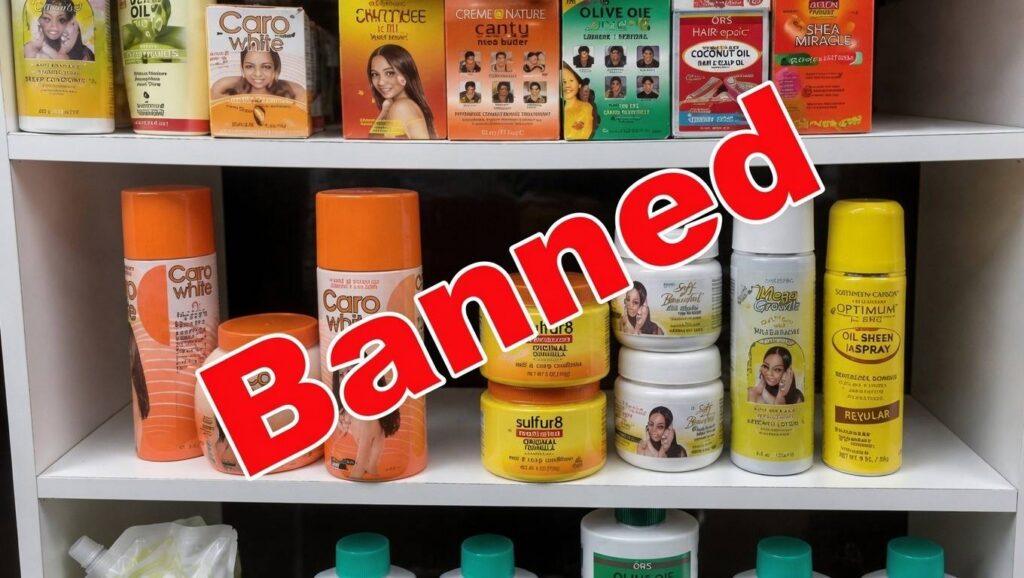
The Government of Bénin has initiated a decisive campaign against the widespread use of skin-lightening products. Effective May 5th, the sale of certain creams, lotions, and other skin-whitening substances is now prohibited nationwide. This stringent measure targets a deeply entrenched practice that has raised growing health concerns among public authorities.
Eradicating the « tchatcho » phenomenon
The proliferation of skin-lightening products—commonly referred to as « tchatcho »—has affected a significant portion of the Béninese population, transcending social and economic boundaries. These products, once readily available in bustling markets such as Dantokpa or through online platforms, are now subject to strict regulatory oversight.
In collaboration with pharmaceutical regulatory bodies, the Ministry of Health has compiled an exhaustive list of hazardous products. Enhanced monitoring measures have been implemented to dismantle supply chains, targeting both wholesalers and small-scale vendors. The objective is unambiguous: to sever the flow of a lucrative yet perilous trade, often fueled by contraband and unregulated artisanal formulations.
The mounting health risks of artificial depigmentation
The Government’s decision to enforce this ban stems from persistent warnings issued by healthcare professionals, particularly dermatologists, regarding the severe health repercussions of skin depigmentation.
Many of these products contain hazardous ingredients such as hydroquinone, potent corticosteroids, or mercury. Prolonged use of these substances can lead to severe skin damage, including thinning, deep stretch marks, impaired healing, and recurrent infections. Beyond superficial effects, these chemicals can infiltrate the body, increasing the risk of chronic renal failure, hypertension, metabolic disorders, and even skin cancers.
Beyond enforcement: addressing cultural and social dimensions
While the ban has been welcomed by the medical community, its implementation presents significant challenges. Authorities must contend with porous borders, the influx of contraband goods, and the adaptability of vendors who frequently alter packaging to evade detection.
The deeper challenge lies in the entrenched cultural preference for lighter skin tones, perpetuated by societal beauty standards and persistent social pressures. To achieve lasting results, this regulatory measure must be complemented by robust awareness campaigns aimed at celebrating natural skin tones and dismantling long-held prejudices.
By taking this decisive step, Bénin underscores its commitment to safeguarding public health. The success of this initiative will hinge on the synergy between rigorous enforcement and societal transformation, ultimately determining whether the « tchatcho » trend can be permanently curbed.