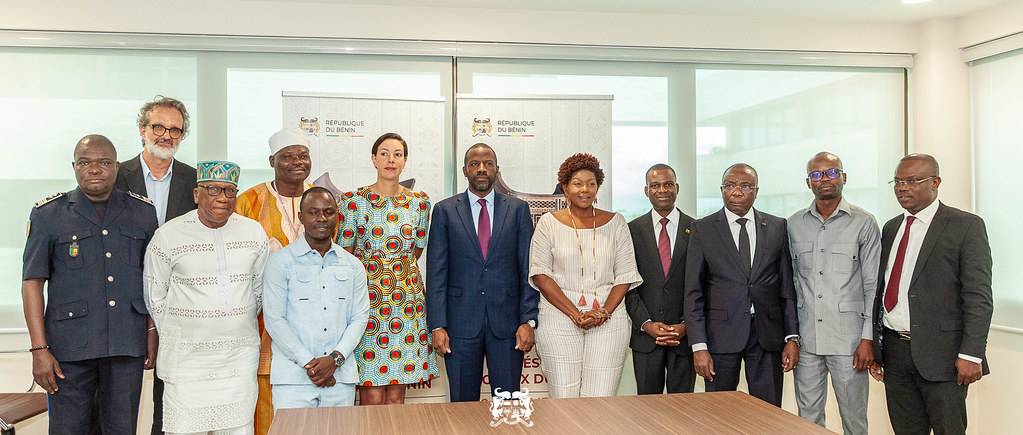
Following the monumental success of its initial cultural restitutions, Bénin is embarking on another pivotal phase. By officially establishing a National Scientific Committee on July 14, 2026, Cotonou is meticulously preparing for the repatriation of 35 additional cultural artifacts and invaluable colonial archives currently held in France. Beyond mere historical symbolism, this initiative forms part of a pragmatic strategy: to transform its restored heritage into a vibrant engine for a new tourism and cultural economy, fueled by enthusiastic local engagement.
A new chapter in Beninese cultural sovereignty
Bénin is not resting on past achievements. Having emerged as a leading advocate for the restitution of cultural property across Sub-Saharan Africa, the nation is now advancing to Act II of its heritage diplomacy. The Beninese government has formally requested from France the return of thirty-five significant artworks and essential archival documents crucial to its national history.
To meticulously manage this complex legal, historical, and scientific undertaking, a National Scientific Committee was officially instated in Cotonou on Tuesday, July 14, 2026. Comprising six distinguished experts and chaired by Alain Godonou, a revered figure in African heritage, this committee is tasked with strengthening Bénin’s advocacy and collaborating closely with the forthcoming Franco-Beninese Joint Scientific Commission.
During the inauguration of these experts, Yassine Latoundji, the Minister of Culture, Arts and Heritage, underscored the almost sacred nature of their mandate: « Your responsibility (…) demands intellectual rigor, independence of thought, collegiality, a commitment to the public interest, and unwavering fidelity to scientific truth. »
Economic impact: when heritage funds development
While the moral and political dimensions of this cultural restitution are undeniable, the Beninese executive primarily views it as a significant economic investment. In cities like Cotonou, Abomey, and Ouidah, culture is no longer perceived as a budgetary burden but as a major productive sector, capable of generating thousands of direct and indirect jobs.
International standard museums and infrastructure projects
To house these returned works under optimal conservation conditions, Bénin has initiated extensive construction programs nationwide. The upcoming Museum of Kings and Amazons in Abomey is designed to grandiosely celebrate the epic history of the Dahomey kingdom. In Porto-Novo, the International Vodun Museum aims to rehabilitate and elucidate a global spirituality often misrepresented. Concurrently, the extensive renovation of Ouidah’s historic forts will sustainably structure memorial tourism linked to the transatlantic slave trade. These world-class infrastructures act as magnets for foreign investment and cultivate local expertise in museography, cultural mediation, and art restoration.
The virtuous cycle of heritage tourism
The arrival of these thirty-five new cultural assets and archives will significantly enrich Bénin’s museum offerings. For the local economy, the anticipated benefits will be felt across multiple sectors. Hospitality and catering services are expected to see a considerable increase in overnight stays from both regional and international tourists. Artistic craftsmanship will experience a revitalization among guilds of bronziers, weavers, and wood sculptors, who draw inspiration from the rediscovered historical pieces to create contemporary works. Furthermore, the entire transport and service industry will benefit from the emergence of a dynamic ecosystem of tourist guides, drivers, and event management companies.
Local perspectives: pride rediscovered and hope for prosperity
In Cotonou, the formation of this new scientific committee has resonated deeply with the population. In the bustling districts of the economic capital, enthusiasm is intertwined with a genuine understanding of the stakes involved.
« For us, these objects are not mere museum pieces, » shares Séraphin, a bronze artisan from the Dantokpa market. « They embody the spirits of our ancestors, our craftsmanship that was torn away. To see them return is to reclaim a part of our soul. And if this can attract visitors from around the world to our workshops, it is the entire youth that will benefit. »
A similar sentiment is echoed by students at the University of Abomey-Calavi, for whom access to the repatriated national archives represents an academic revolution:
« Until now, to conduct in-depth research on our own colonial history, our scholars had to secure scholarships to travel to Paris or Aix-en-Provence, » explains Amélie, a history doctoral candidate. « The return of these archives to Cotonou is a scientific triumph. We will finally be able to write our history from our own land, in our own words. »
This widespread popular support is the true bedrock of the governmental project. The return of artworks is not solely an affair for elites or diplomats; it signifies a popular reappropriation that strengthens national cohesion.
Redefined and planned bilateral cooperation
By choosing to establish this committee on July 14, France’s national day, Bénin sends a powerful signal of a mature and confident partnership. This is no longer about confrontation but about equal, bilateral scientific collaboration. France and Bénin are forging a new model for post-colonial relations, founded on mutual respect, the exchange of knowledge, and shared expertise.
The subsequent phases of this partnership are already clearly outlined. The initial stage, launched in July 2026, focuses on the establishment of the National Scientific Committee under Alain Godonou’s leadership. By the end of 2026, Beninese experts will methodically consolidate the dossiers for the thirty-five artworks and archives, working in close consultation with French museum institutions. Finally, 2027 is set to mark the ultimate phase with the official validation of transfers by the future Franco-Beninese Joint Commission.
A model for 21st-century Africa
Bénin’s methodical approach demonstrates that the restitution of cultural property extends far beyond historical reparation. By scientifically structuring its requests and meticulously preparing for the reception of these treasures, Cotonou is transforming its heritage into a vehicle for political emancipation, an object of popular pride, and, crucially, a cornerstone of its future economic development. As the thirty-five new cultural artifacts and archives prepare to return to their homeland, Bénin unequivocally proves to the world that culture is indeed a wealth for the future.