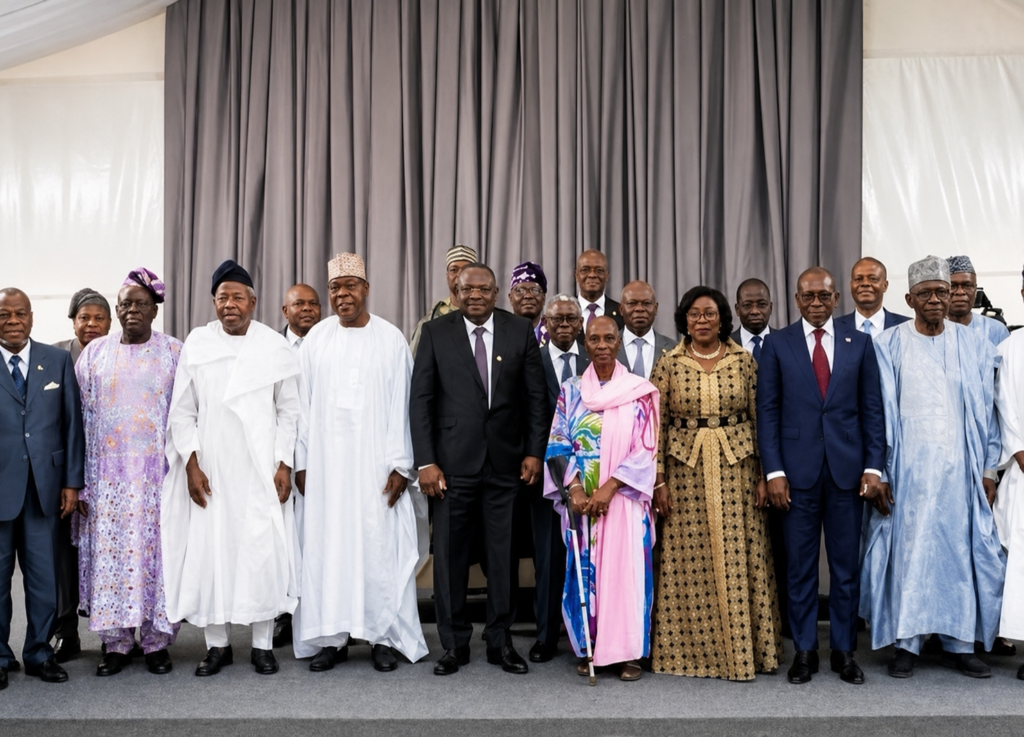
The official inauguration of the Republic of Bénin’s first Senate on July 30, 2026, followed by the election of former President Patrice Talon as its president on August 6, marks a pivotal moment in the nation’s institutional evolution. Born from the constitutional revision of December 17, 2025, this second chamber introduces a fresh dynamic into Bénin’s parliamentary architecture, redefining the balance of power within its democratic framework.
An institution rooted in constitutional law, not personal ambition
The Senate is not a construct tailored to Patrice Talon’s aspirations. Its creation stems directly from the constitutional amendments adopted in 2025, which transformed Bénin’s Parliament into a bicameral system comprising the National Assembly and the Senate. The new chamber’s composition, roles, operational rules, and competencies are all meticulously outlined in the revised Constitution, leaving no room for interpretation as a tool of individual influence.
The Senate’s existence is independent of the individual who presides over it. While critics may debate its necessity or structure, they cannot credibly argue that it serves as a mechanism for an ex-president to wield executive authority from afar. The Constitution provides clear limits and mandates, ensuring the Senate operates within a strictly defined legal framework.
Patrice Talon’s presidency of the Senate: influence without executive power
The election of Patrice Talon former head of state to lead the Senate has inevitably fueled speculation about his potential sway. As a former president assuming leadership of a newly established institution, his role invites scrutiny. Yet the distinction between political influence and constitutional authority remains critical.
Talon’s tenure as president ended in May 2026 with Romuald Wadagni’s inauguration following a landslide victory in the April elections. The seamless transition underscores that Talon’s new position does not equate to a de facto return to the presidency. The Senate’s president does not inherit the executive powers of the head of state. Unlike the presidency, the Senate’s role is legislative, not administrative. It does not govern, command state institutions, or direct policy. The Constitution vests executive authority solely in the president of the Republic, while the Senate functions as part of the parliamentary system.
The Senate’s role: regulation, not governance
Much of the current criticism stems from a misunderstanding of the Senate’s actual functions. While it holds significant responsibilities such as ensuring national unity, democratic integrity, political stability, and state continuity it does not exercise executive power. The Senate’s mandate includes oversight, mediation, and crisis prevention, but it cannot replace the government or the presidency. Its powers are consultative and regulatory, not administrative or directive.
The Constitution explicitly defines the Senate’s role in the legislative process, particularly for constitutional laws, electoral statutes, and regulations governing political parties. These must receive the Senate’s non-objection approval before enactment, a requirement that underscores its legislative weight. However, the chamber’s influence is conditional: objections require a two-thirds majority, and silence within a set period is interpreted as tacit approval. Additionally, the Senate may request a second review of certain laws passed by the National Assembly, excluding budgetary or financial texts, reinforcing its role as a deliberative body rather than an executive one.
A chamber of experience: balancing democracy with institutional memory
The Senate’s composition reflects a deliberate effort to integrate institutional wisdom into its operations. The Constitution mandates the inclusion of ex-officio members from high-ranking public service roles, as well as representatives from defense and security sectors. If necessary, additional members are appointed to meet the constitutional minimum of 25 senators. This structure positions the Senate as a platform for dialogue, mediation, and consensus-building functions that extend beyond mere legislative voting.
In a democracy, stability often depends on mechanisms that transcend partisan divides. The Senate’s design acknowledges this reality, providing a space for experienced leaders to contribute to national cohesion without resorting to coercive measures. Its success will hinge on its ability to mediate rather than dominate, to advise rather than impose.
Navigating the paradox of influence versus authority
The debate surrounding Patrice Talon’s presidency of the Senate is not without merit. An ex-president retains networks, institutional knowledge, and political capital, which naturally shape perceptions of his influence. Yet conflating this influence with constitutional authority is a misstep. The pertinent question is not whether Talon can wield political sway clearly, he can but whether the Senate’s structure allows it to eclipse the executive branch.
The answer is no. The Senate’s powers are circumscribed by the Constitution, which explicitly separates legislative, executive, and judicial functions. The president of the Republic remains the sole authority over the executive branch, while the Senate operates within the confines of parliamentary oversight and regulatory review. The distinction between influence and power is fundamental to understanding the Senate’s legitimate role.
Continuity versus institutional capture: a matter of governance, not speculation
The seamless transition from Talon to Wadagni with the latter securing over 94% of the vote in the 2026 presidential election has sparked discussions about political continuity. Wadagni, a former finance minister under Talon, represents the continuation of a governing agenda, a fact that invites political critique but does not imply institutional subversion. Continuity in governance does not equate to a hijacking of democratic processes. The true test lies in whether institutions function within their mandates, whether checks and balances operate effectively, and whether responsibilities remain clearly delineated.
For the Senate, the proof will be in its practice. Will it act as an independent chamber of review, or will it devolve into a rubber-stamp body? Can it foster meaningful dialogue with the National Assembly and the government? Will its members adhere to the constitutional obligation of political neutrality, avoiding partisan entanglements? These are the metrics by which its utility will ultimately be measured.
Dispelling myths through clear institutional roles
The most effective way to dispel unfounded fears is to clarify the division of responsibilities. The president of the Republic directs the executive, the government implements policy, and the National Assembly and Senate together constitute the legislative branch. The Constitutional Court serves as the final arbiter of constitutional disputes. Within this framework, Patrice Talon’s leadership of the Senate does not transform him into a shadow president. His political experience may shape debates, but it does not grant him the executive powers he once held.
The Senate’s legitimacy will be determined not by the personalities involved but by its adherence to constitutional principles. Does it enhance legislative rigor? Does it prevent institutional crises? Does it contribute to national stability? These are the questions that matter. The era of speculation must give way to evaluation. The Senate is now a living institution, and its performance will define its place in Bénin’s democracy.



More Stories
Can a Tripoli-Yaoundé air link take off without a clear aviation roadmap?
Can Burkina Faso’s security strategy hold after the JNIM’s Silmossin claims?
Washington lifts sanctions on General Olenga: a legal victory or a shift in American strategy in the DRC?