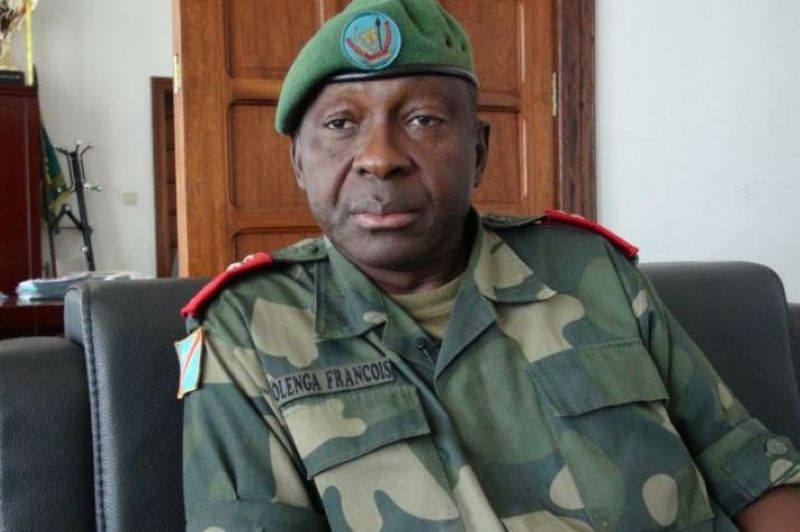
After nine years on the U.S. Treasury’s blacklist, retired four-star General François Olenga can now freely interact with American citizens and entities. His renowned Safari Beach complex, located in N’sele, is also cleared to welcome American visitors and conduct business with U.S. partners.
What does the removal of General Olenga from the U.S. sanctions list actually mean?
The decision, announced by his lawyer, marks the end of a long legal battle. The U.S. Department of the Treasury officially notified the removal of General François Olenga Tete and Safari Club from the Office of Foreign Assets Control (OFAC) sanctions list. The announcement was made in a statement dated September 23 and sent to our newsroom two days later.
A lawyer’s relentless fight in Washington
“This decision is the culmination of more than nine years of work, efforts, and advocacy, which took me to Washington several times to defend this case before U.S. institutions,” said Attorney Aimé Kilolo Musamba. “I have always maintained that the evidence in the file did not justify keeping these sanctions against my client. Today, this lengthy procedure has come to an end.”
For Me Kilolo, the outcome proves that an African lawyer can mount a defense at the highest international level, navigate the complex legal mechanisms of major powers, and make a client’s arguments heard. He also believes the experience holds lessons for all Congolese.
Why the DRC must build its own sanctions framework
The lawyer argues that the Democratic Republic of Congo (DRC) must shake off its lethargy when it comes to international sanctions. Faced with international crimes committed particularly in the eastern part of the country, he says, Kinshasa cannot continue to wait for individual and financial sanctions to come almost exclusively from the United States or the European Union.
“Our country, the DRC, must equip itself with a national legislative framework allowing its own institutions to adopt targeted sanctions—in compliance with the rule of law and the rights of the defense—against individuals and entities involved in international crimes committed on its territory,” he stated from Brussels, where he is currently staying. “Sovereignty is also a state’s ability to implement the legal instruments necessary to defend its population and fundamental interests. The law has no borders when a defense is mounted with competence, perseverance, and determination. But international justice should no longer be a responsibility that Congo abandons to others.”
The background: why was General Olenga sanctioned in the first place?
General François Olenga was placed on Washington’s financial blacklist in June 2017, while he served as head of former President Joseph Kabila’s close security detail. At the time, his assets in the United States were frozen, and he was banned from traveling to the U.S.
The U.S. administration accused him of obstructing the democratic process in the country, which had been plunged into crisis since Joseph Kabila remained in power after his mandate expired in December 2016. According to the U.S. Treasury, under his command, the Republican Guard allegedly harassed political opponents, carried out arbitrary arrests and executions, and hindered the work of UN observers.
Since then, General Olenga not only saw any potential assets in the U.S. frozen but was also barred from doing business with American entities or individuals. The measure had also hit his prestigious tourist complex, Safari Beach, located in N’sele.
What happens next for the general and for the DRC?
With the sanctions lifted, General Olenga regains the ability to travel to the United States, conduct financial transactions with American institutions, and welcome U.S. citizens to his Safari Beach resort. The case raises broader questions about how the DRC handles international sanctions and whether it will move toward its own targeted sanctions regime. For now, the general savors a legal victory that closes a nine-year chapter.
More Stories
Will Iran’s 7-day Hormuz reopening offer break the deadlock or deepen the crisis?
Burkina Faso’s debt dilemma: can Ibrahim Traoré’s anti-borrowing stance survive the 8,700 billion FCFA reality?
Can Benin’s upgraded police investigation capabilities counter the evolving terrorist threat?