
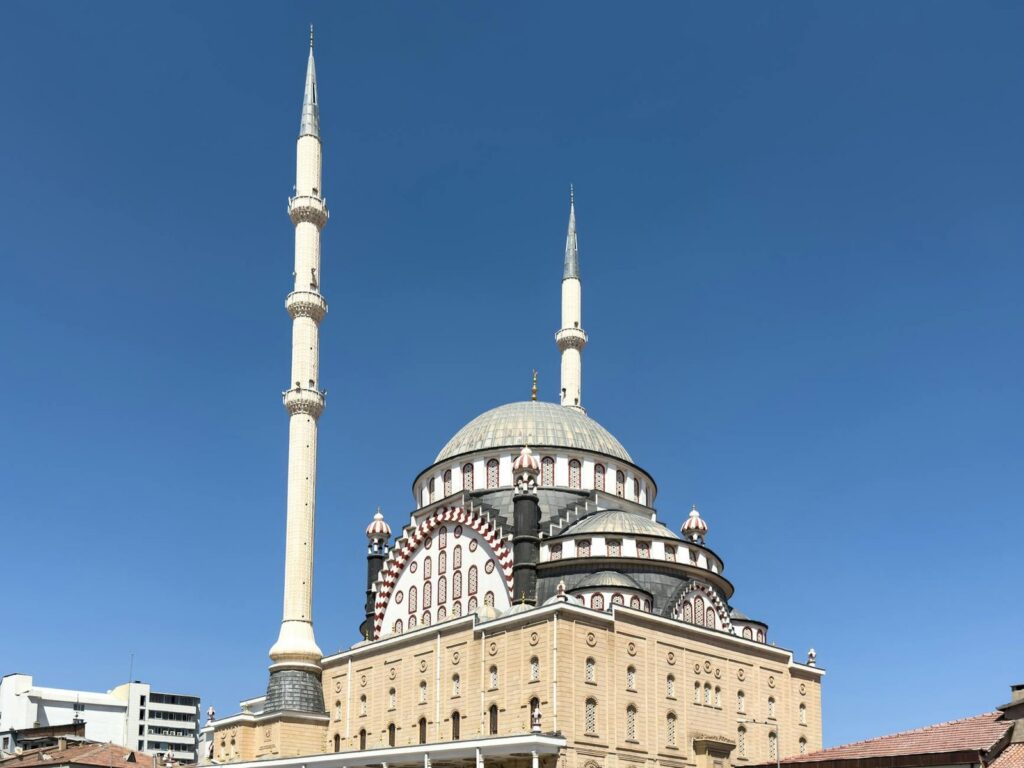
The grand Sunni mosque in Ouagadougou, one of the most frequented Islamic places of worship in Burkina Faso’s capital, has been cordoned off by police since May 29. The transitional government led by Captain Ibrahim Traoré has indefinitely closed the mosque, citing risks to public order. The area surrounding the building remains under heavy security, with officers deployed around the clock to prevent any gatherings near the premises.
This decisive action comes at a critical moment in the Islamic calendar, just before the Eid al-Adha celebration, locally known as Tabaski. On Tuesday evening, hundreds of worshippers had gathered outside the mosque, demanding answers about the whereabouts of their imam, who has been missing for several days. The protest, an unusual sight in a country where civic space has significantly narrowed since the September 2022 coup, appears to have hastened the government’s response.
One week of unrest over the disappeared imam
The closure of the grand Sunni mosque is not an isolated incident. It marks the conclusion of a week-long standoff during which the faithful mobilized to seek clarity on their spiritual leader’s fate. Authorities have provided no details about the imam’s disappearance, nor has any official statement confirmed a possible military-led detention.
In recent months, Burkina Faso has seen multiple cases of disappearances involving figures critical of—or perceived as such by—the ruling military authorities. Judges, journalists, traditional leaders, and civil society activists have faced military requisitions or prolonged detentions under an expanded legal framework justified by the government as part of the war effort against armed jihadist groups.
Political messaging on the eve of Tabaski
The timing of the mosque’s closure raises questions. By shutting down a site of such significance just hours before the country’s most important Muslim holiday, the authorities send a strong signal to a community that holds both demographic and symbolic weight in Burkina Faso, a nation where Muslims form the majority. The grand Sunni mosque is more than just a building; it is a central hub for the Sunni movement in Burkina Faso, particularly for those aligned with the Sunni Movement, and typically draws thousands of worshippers for major prayers.
The measure underscores the junta’s struggle to manage internal dissent while devoting most of its resources to combating armed insurgencies tearing through several regions. Since 2022, the military leadership has repeatedly demonstrated its resolve in quelling domestic opposition, whether from civil society, suspended trade unions, political parties, or now, religious groups. However, the closure of a mosque under public order pretexts remains a rare and contentious move, risking accusations of infringing on religious freedoms.
Preserving religious balance in Burkina Faso
Burkina Faso has long been hailed as a model of interfaith coexistence between Muslims, Christians, and followers of traditional religions. This delicate balance, already strained by jihadist violence that frequently targets places of worship across major faiths, could be further jeopardized by the direct confrontation between the central government and an organized religious community in the capital.
For observers tracking Burkina Faso’s transition, the next steps will be crucial. A swift reopening of the mosque, clarification of the imam’s status, and potential dialogue with Sunni leaders could serve as conciliatory gestures. Conversely, maintaining the current security lockdown risks deepening tensions within a community that has, until now, remained largely detached from public opposition to the regime. Worshippers continue to demand answers regarding their imam’s disappearance.

More Stories
Niger: Tiani faces fallout from special forces anger after Russian intervention
Mali : 17 morts dans les rangs des dozos, le JNIM accentue sa pression
Sahel : le pari des juntes tourne-t-il à l’échec sécuritaire ?