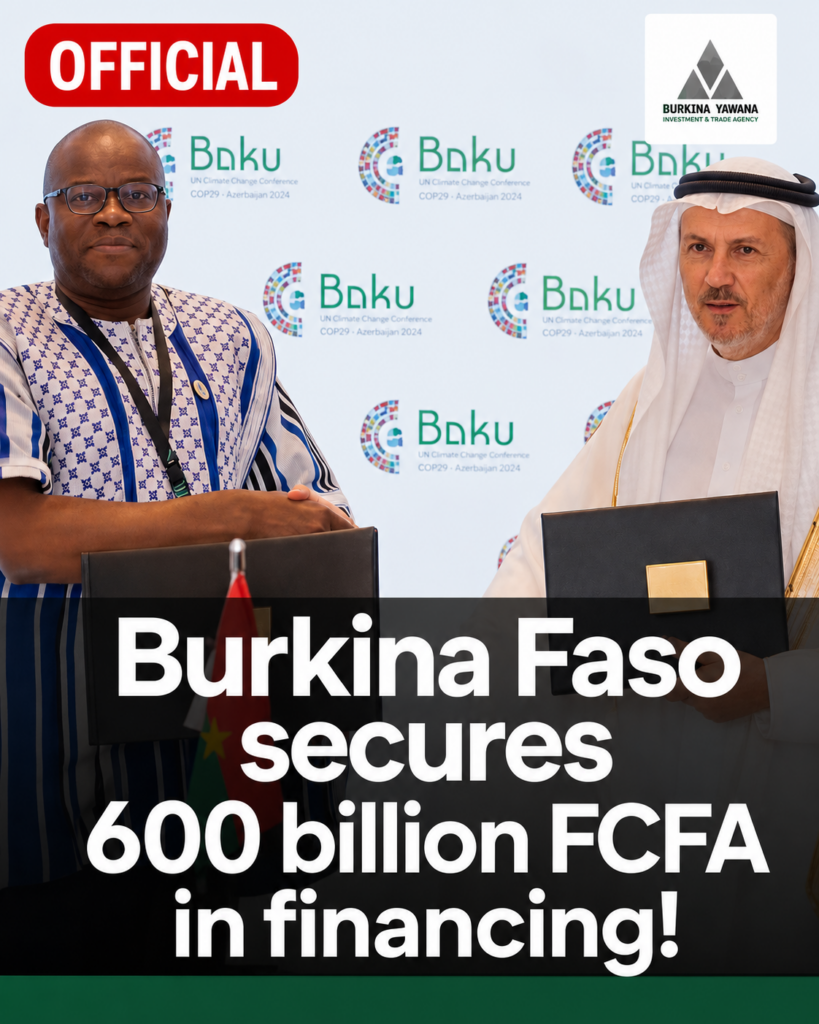
Burkina Faso’s financial reality challenges self-reliance claims
The signing of a new financing agreement between Minister Aboubakar Nacanabo and the International Islamic Trade Finance Corporation (ITFC) in Baku symbolizes a critical moment for Burkina Faso’s economy. This accord, centered on fuel, cereals, fertilizers, and SME support, injects vital liquidity into the national market, offering immediate relief while exposing the fragility of the country’s self-sufficiency narrative.
Though often overshadowed by high-profile political events, such financial arrangements are indispensable for stabilizing daily life in Burkina Faso. Without these funds, maintaining agricultural fertilizer stocks and preventing fuel price volatility would prove nearly impossible. The agreement underscores the government’s pragmatic approach to economic survival, even as it clashes with the government’s longstanding rhetoric of “no external credit.”
Between rhetoric and reality: the debt paradox
The government’s persistent emphasis on self-financing—often encapsulated in the slogan “no credit here”—has resonated with citizens weary of external dependence. Yet this position now faces scrutiny as Burkina Faso secures substantial financing agreements, such as the one finalized in Azerbaijan. The contradiction raises pressing questions: How can a nation publicly championing financial autonomy repeatedly turn to international financing?
The illusion of “zero debt” offers temporary comfort but risks severe long-term consequences. By glossing over the country’s accumulating liabilities, policymakers may be setting the stage for a future debt crisis. The stark reality is that Burkina Faso’s economic resilience remains heavily dependent on external funding, regardless of political messaging. Ignoring this dependency could lead to a painful awakening when debt servicing obligations escalate.
The economic imperative behind international financing
Policymakers must reconcile the necessity of external financing with the public’s growing skepticism toward debt. While the ambition to reduce reliance on foreign funds is commendable, the immediate needs of the population—affordable food, fuel, and agricultural inputs—cannot be ignored. The latest accord with the ITFC provides a lifeline, but it also serves as a reminder: Burkina Faso’s economic trajectory cannot be dictated by slogans alone.
As global economic pressures mount, the government faces a delicate balancing act—securing critical funds while managing public expectations. The financial lifeline extended by this agreement may alleviate short-term pressures, but it also highlights the urgent need for a sustainable economic strategy that aligns rhetoric with reality.