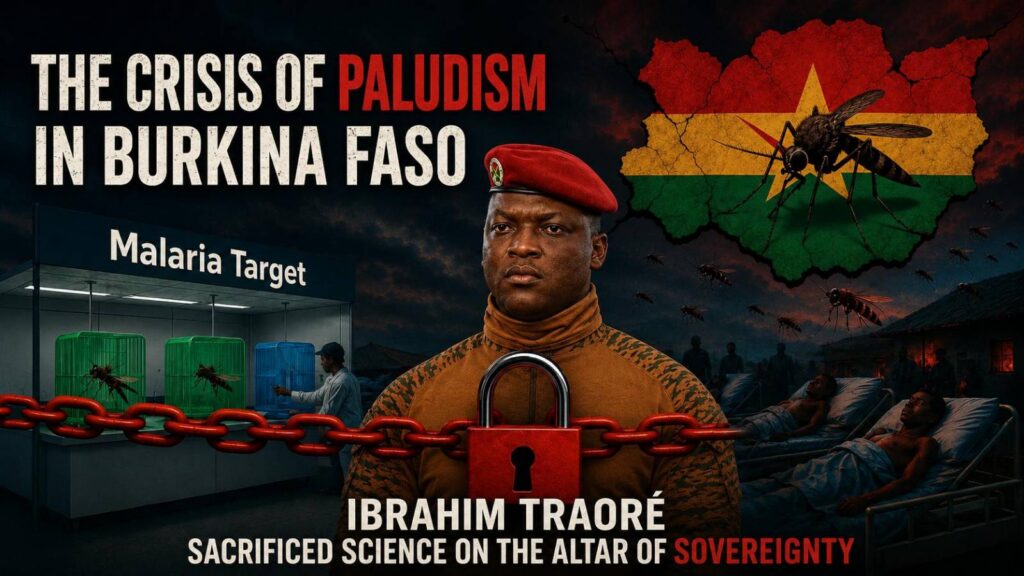
The recent decision by Burkina Faso’s transitional authorities to permanently close the Target Malaria research laboratories and destroy its genetically modified mosquito samples marks a pivotal moment in the country’s scientific and political trajectory. Under the leadership of Captain Ibrahim Traoré, Ouagadougou has embraced a stance of national sovereignty that extends even to the realm of medical research, raising critical questions about the nation’s future in combating endemic diseases like malaria.
Political symbolism overshadows scientific progress
The abrupt termination of the Target Malaria initiative—predominantly funded by the Bill & Melinda Gates Foundation—signals more than just a policy shift; it represents a deliberate break with international scientific collaboration. This move follows the suspension of the project in August 2025, a decision that now appears irreversible, culminating in a decade-long research endeavor being abruptly halted.
The regime’s justification of protecting national biological heritage has resonated with certain domestic NGOs and civil society groups, which have long expressed concerns over the ecological uncertainties of genetic modification techniques such as gene drive. However, this rhetoric of sovereignty masks deeper consequences for Burkina Faso’s scientific community and its global standing.
Consequences for local innovation and human capital
The closure of Target Malaria deals a severe blow to Burkina Faso’s research ecosystem. The project was a cornerstone for high-level local scientists, including those affiliated with the Institut de Recherche en Sciences de la Santé (IRSS), providing essential funding and access to cutting-edge infrastructure. Its sudden demise risks accelerating the brain drain, as researchers may seek opportunities abroad where scientific collaboration remains unhampered by political constraints.
For a nation grappling with the persistent scourge of malaria—particularly among children under five—the loss of this initiative is not merely symbolic but profoundly practical. The project represented one of the most promising avenues for innovative malaria control, leveraging genetic technology to reduce the fertility of mosquito populations, the primary vectors of the disease.
A seismic shift in geopolitical trust
Beyond the immediate health implications, Burkina Faso’s decision has sent shockwaves through the global investment and development community. It underscores a broader erosion of confidence in the Sahel region’s stability and reliability, with three key repercussions:
- Contractual security collapse: Prior to the 2022 transition, state agreements were generally honored, and long-term predictability was maintained. Today, unilateral decisions driven by political expediency have replaced this stability, prompting donors to freeze investments in research and development.
- Regulatory opacity intensifies: The former reliance on regional and international norms has given way to a governance model characterized by arbitrary decrees and sudden policy shifts. This legal unpredictability has led to capital flight as investors seek more stable environments.
- Collaboration in R&D faces existential doubt: Partnerships that were once celebrated as catalysts for development are now viewed with suspicion, accused of serving as fronts for foreign interference or espionage. This climate of distrust has isolated Burkina Faso from the global flow of scientific innovation.
The paradox of self-reliance in disease eradication
While Ouagadougou champions the protection of its ‘biological heritage,’ the feasibility of achieving malaria eradication through isolation remains questionable. Malaria does not respect national borders, and its elimination demands sustained transnational cooperation, substantial financial investment, and access to advanced medical technologies. Burkina Faso’s current trajectory risks consigning its population—particularly the most vulnerable—to the margins of these global efforts.
For stakeholders across West Africa and beyond, this episode serves as a cautionary tale. A misguided pursuit of technological autarky could further marginalize the Sahel from the critical resources and advancements needed to address pressing public health challenges. The ultimate question remains: Will the nation’s political posturing come at the expense of its people, who bear the heaviest burden of this preventable disease?