
Four years into the transition, frustration mounts over unmet promises
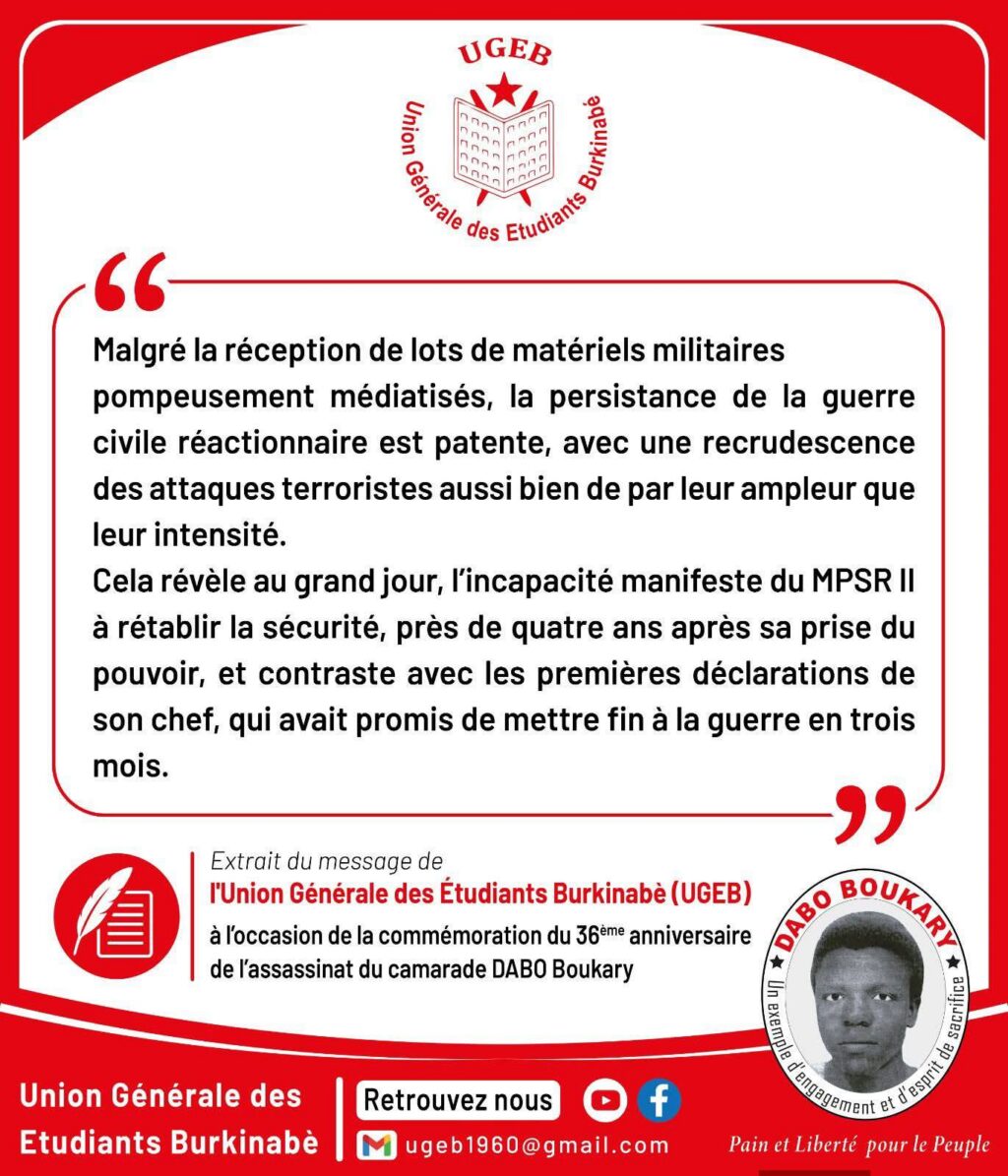
Almost four years after the MPSR II seized power in Burkina Faso, the security situation shows no signs of improvement. In a recent statement, the Union générale des étudiants burkinabè (UGEB) delivered a scathing assessment of the transition led by Captain Ibrahim Traoré, highlighting glaring shortcomings in the government’s approach. From relentless militant attacks to a deepening humanitarian crisis, the student union’s report underscores the stark disconnect between official rhetoric and ground realities.
The illusion of swift victory fades into prolonged conflict
When Captain Ibrahim Traoré took charge in late 2022, he ignited hopes among a weary population by suggesting the security crisis could be resolved within months. Yet nearly four years later, the UGEB’s findings are damning. The union emphasizes that militant violence has not only persisted but intensified, with attacks growing in both scale and frequency. The dream of a quick resolution has evaporated, leaving behind a protracted conflict that shows no signs of abating.
Military spending overshadows strategic failures
The UGEB criticizes the government’s reliance on flashy military acquisitions—drones, fighter jets, armored vehicles—as a substitute for effective counterterrorism strategy. While state media has hailed these new assets, the student union argues that overwhelming firepower alone cannot compensate for flawed tactics on the ground. Communities across Burkina Faso continue to endure violent incursions, with little respite from the relentless tide of attacks.
A humanitarian and economic collapse in the making
The persistent insecurity has triggered one of the worst displacement crises in recent memory. Millions of Burkinabè have fled rural areas for urban centers, abandoning livelihoods and homes in the process. This exodus has exacerbated economic hardship, with soaring inflation pushing essential goods beyond the reach of ordinary citizens. The UGEB highlights how the war has crippled local economies, particularly in regions under militant blockades, where food shortages and skyrocketing prices have become the norm. The purchasing power of families—and students—has plummeted, deepening the nation’s vulnerability.
New alliances, old struggles
Since breaking away from traditional defense partnerships, Burkina Faso has pivoted toward new allies, most notably Russia and fellow members of the Alliance of Sahel States (AES). While the government touts these shifts as a path to greater sovereignty, the UGEB remains unconvinced. Despite the influx of foreign trainers and support for national forces, the security vacuum persists. The union contends that these strategic realignments have failed to deliver on their promises, leaving the country’s territorial integrity still under threat.
A call for accountability
The UGEB’s critique serves as a stark reminder of the widening gap between government claims and the lived experiences of Burkinabè citizens. With displaced families struggling to survive and inflation eroding livelihoods, the union insists that bold action is overdue. Burkina Faso’s leadership must move beyond symbolic victories and deliver tangible security and economic stability to its people. The time for excuses has passed—the nation’s future hinges on turning promises into progress.


More Stories
Niger: Tiani faces fallout from special forces anger after Russian intervention
Mali : 17 morts dans les rangs des dozos, le JNIM accentue sa pression
Sahel : le pari des juntes tourne-t-il à l’échec sécuritaire ?