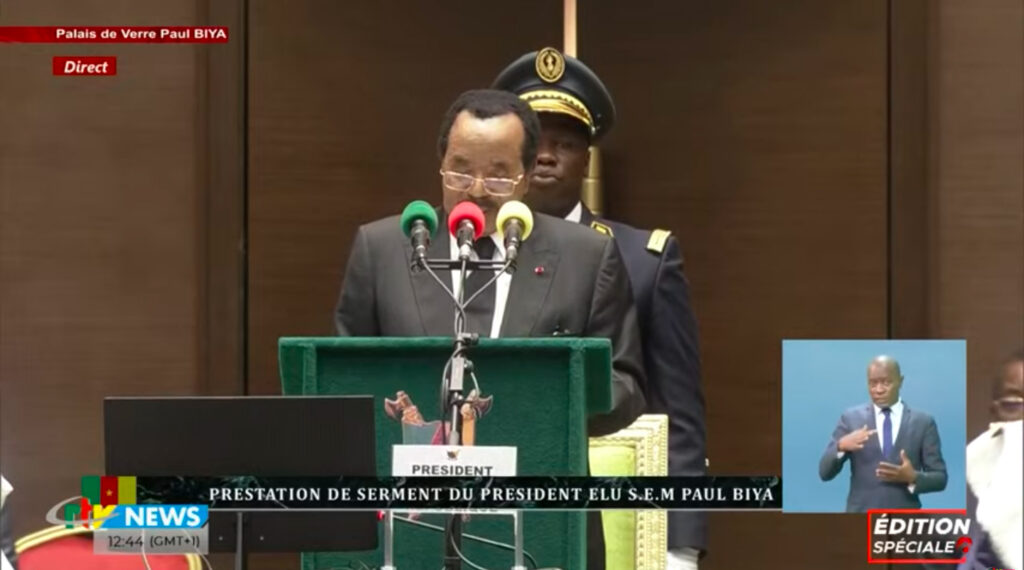
President Paul Biya signed a decree on 2 June 2026 appointing members to the Superior Council of the Magistracy, renewing ten of the fourteen members whose terms had expired a year ago. The council has not met since August 2020 — nearly six years without a session.
Lawyer and human rights defender Me Felix Nkongo Agbor Balla warns that this institutional paralysis has severe consequences for the rule of law, judicial independence, and public confidence in the justice system. The Superior Council of the Magistracy is constitutionally mandated to manage magistrates’ careers, discipline, integration, and ethical oversight.
“Its continued inactivity has paralysed these essential functions and significantly weakened the judicial sector,” Me Agbor Balla noted. He highlighted that magistrates graduating from the National School of Administration and Magistracy (ENAM) over the past six years have not been formally integrated into the judiciary. “They cannot take the oath or exercise jurisdictional functions. This unprecedented situation has created an alarming vacuum in courts across the country,” he said.
Cameroon now faces a critical shortage of magistrates, causing overloaded courts, excessive case backlogs, prolonged detentions, and widespread delays in justice delivery. The absence of council meetings also prevents filling vacancies caused by deaths, retirements, or resignations. “This vacuum has led to legally questionable appointments in some administrative jurisdictions, where judges have been designated without the prior advice of the Superior Council of the Magistracy, the only body competent for magistrates’ nominations and postings,” Me Agbor Balla added.
Disciplinary procedures are blocked, promotions suspended, and professional misconduct cannot be examined. “Honest magistrates are discouraged while corruption thrives in the absence of oversight,” he concluded. Given this alarming situation, convening the Superior Council of the Magistracy is an urgent necessity. The law requires the council to meet twice a year.