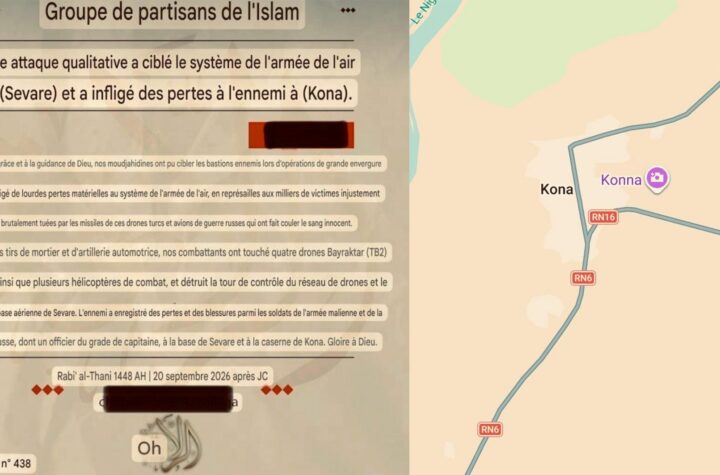
In a matter of days, Mali’s armed forces and their Russian allies came under repeated assault in Dioura and Sévaré, leaving roughly 150 people dead. The attacks, claimed by the jihadist group JNIM, have raised an urgent question: can the Malian military still hold its ground, or is the country sliding deeper into an uncontrollable security crisis? On Sunday, Assimi Goïta convened a high-level meeting in Bamako to confront the fallout, signalling that the pressure is being felt at the very top of the state.
What happened at Dioura and Sévaré?
The assaults targeted two separate locations, striking both Malian troops and their Russian partners. The coordinated nature of the operations suggests a level of planning and reach that goes beyond isolated hit-and-run tactics. JNIM has demonstrated it can hit multiple points in quick succession, forcing the army to react rather than dictate the tempo of the fight.
The human cost
The death toll stands at approximately 150 — a figure that underscores the scale of the blow. Each loss represents not only a military setback but also a psychological shock for a country already wrestling with years of insurgency. For the families of the fallen and for communities in the affected regions, the attacks deepen a sense of vulnerability that no official statement can easily erase.
Why Assimi Goïta called an emergency meeting in Bamako
The decision to gather top officials in the capital on Sunday reflects the gravity of the moment. A double strike of this magnitude demands more than routine condolences; it calls for a strategic reassessment. The meeting likely focused on how to reinforce positions, protect supply lines, and prevent further losses. But it also exposed a uncomfortable reality: despite years of counterinsurgency efforts, the jihadist threat remains potent and adaptable.
The Russian factor
The presence of Russian personnel alongside Malian forces has been a central pillar of Bamako’s security strategy. When those partners are killed in action, it complicates the narrative of an effective partnership and raises questions about the sustainability of the current approach. The attacks may push Mali’s leadership to reconsider how it deploys its foreign allies and whether that deployment is delivering the promised protection.
The wider stakes for Mali’s stability
Beyond the immediate battlefield, the Dioura and Sévaré offensives carry consequences for Mali’s political and social fabric. A government that cannot guarantee security risks losing legitimacy in the eyes of its citizens, especially in regions where the state’s presence is already thin. The attacks could also embolden JNIM to expand its operations, testing the army’s ability to defend key towns and infrastructure.
- Military dimension: The army must absorb a significant loss while preventing morale from collapsing.
- Political dimension: Assimi Goïta faces growing pressure to demonstrate that his strategy is working.
- Regional dimension: Neighbouring countries will watch closely, as instability in Mali rarely stays contained.
What happens next will depend on whether Bamako can translate emergency meetings into effective action on the ground. The question is no longer whether JNIM can strike — it is whether Mali can respond in a way that restores confidence and denies the militants the initiative. For now, the answer remains uncertain, and the stakes could hardly be higher.

More Stories
Rosenior to Chelsea: did Strasbourg lose their manager or their identity?
Can Cameroon withstand the era of permanent global insecurity?
Mali: can Assimi Goïta’s security strategy survive its own military setbacks?