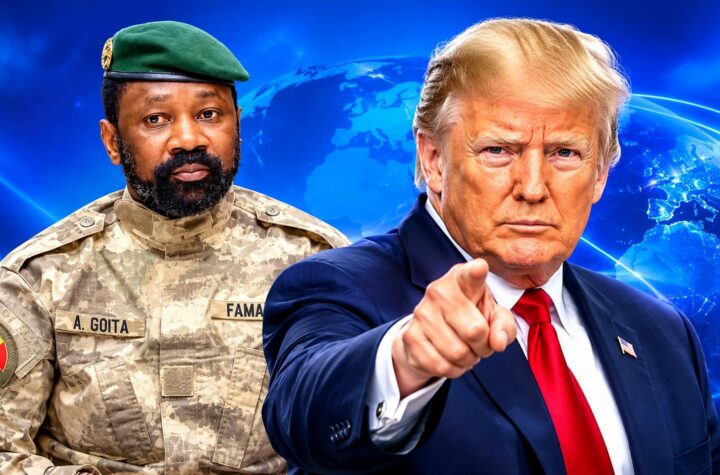
Could a $410 million financial package from Washington end up achieving something that years of diplomatic pressure could not: pulling the Sahel Alliance of States (AES) back toward pragmatic cooperation with the United States? That is the strategic dilemma now facing Bamako, Niamey and Ouagadougou as they weigh their stated ideological break with Western powers against a rare and badly needed influx of foreign currency.
The financial lifeline behind an unexpected diplomatic opening
The AES capitals have loudly rejected the traditional Western order, with Washington and Paris at the top of their list of grievances. Yet behind the scenes, diplomatic and economic channels with the United States have quietly stayed open. The reason lies in the mechanics of American financial diplomacy: a $410 million package (roughly €370 million) released by the U.S. administration to relocate migrant processing and reception to third countries.
A hunt for hard currency in a climate of isolation
Since transitional governments took power in Mali, Niger and Burkina Faso, access to traditional lenders such as the European Union and the World Bank has become increasingly strained. Earlier financial sanctions have drained public coffers, leaving little room to maneuver.
Against that backdrop, the American program promising a total of $410 million to countries in Africa and Latin America willing to host or process migrants expelled from the United States looks like a genuine lifeline. For governments grappling with heavy military spending and a shortage of foreign exchange, the appeal of capturing a share of that money outweighs anti-Western ideological considerations.
Why the checkbook approach has already worked elsewhere
Migration transfer agreements financed with tens of millions of dollars — already involving several African countries, including Cameroon, the DRC and Eswatini — show that Washington’s checkbook diplomacy can be remarkably persuasive.
For the AES capitals, the arrangement offers two clear strategic benefits:
- A direct budget opportunity: securing direct or indirect funding through specialized agencies to cover logistics and infrastructure equipment.
- A diplomatic bargaining chip: by positioning themselves as indispensable partners on security and global migration control, these governments are in fact confirming their financial dependence on the international stage, particularly toward Washington.
When sovereignty rhetoric meets monetary reality
The official AES narrative is built on reclaimed sovereignty and a rejection of foreign interference. But the stance taken toward Washington’s proposals exposes the limits of a strict independence line.
While American and European presence has been pushed out of the Sahel in the name of national dignity, the door remains wide open for bilateral talks with Washington over contracts worth hundreds of millions of dollars. This double standard shows that “monetary pragmatism” takes over once the sums involved reach a critical threshold. The pull of the $410 million migration outsourcing program demonstrates that economic realism remains the main barrier to alliances in the Sahel. Far from slogans of total rupture, the persistence of pragmatic ties between the AES and Washington confirms that the search for financial liquidity is still the real arbiter of geopolitical realignments in the region.