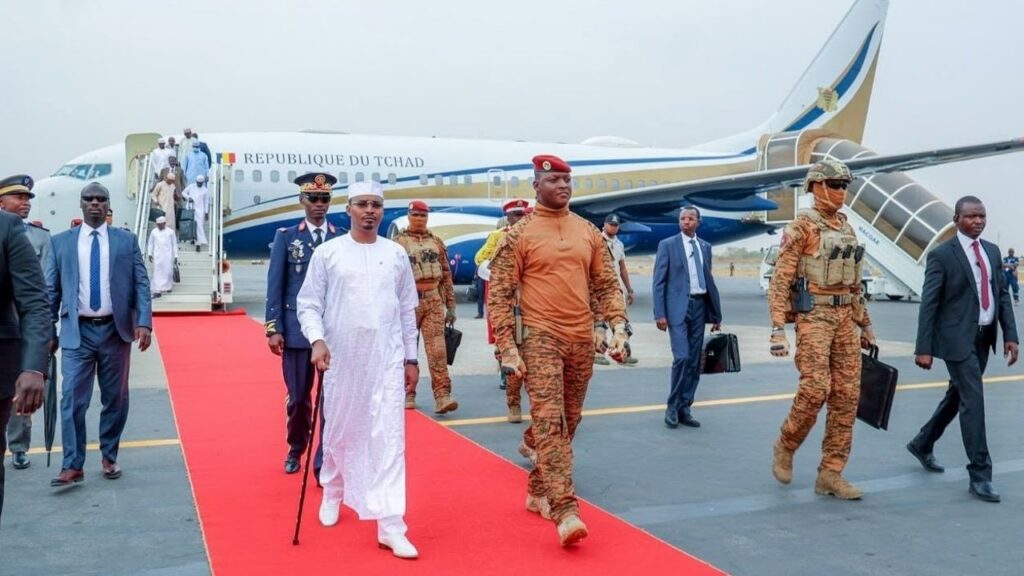
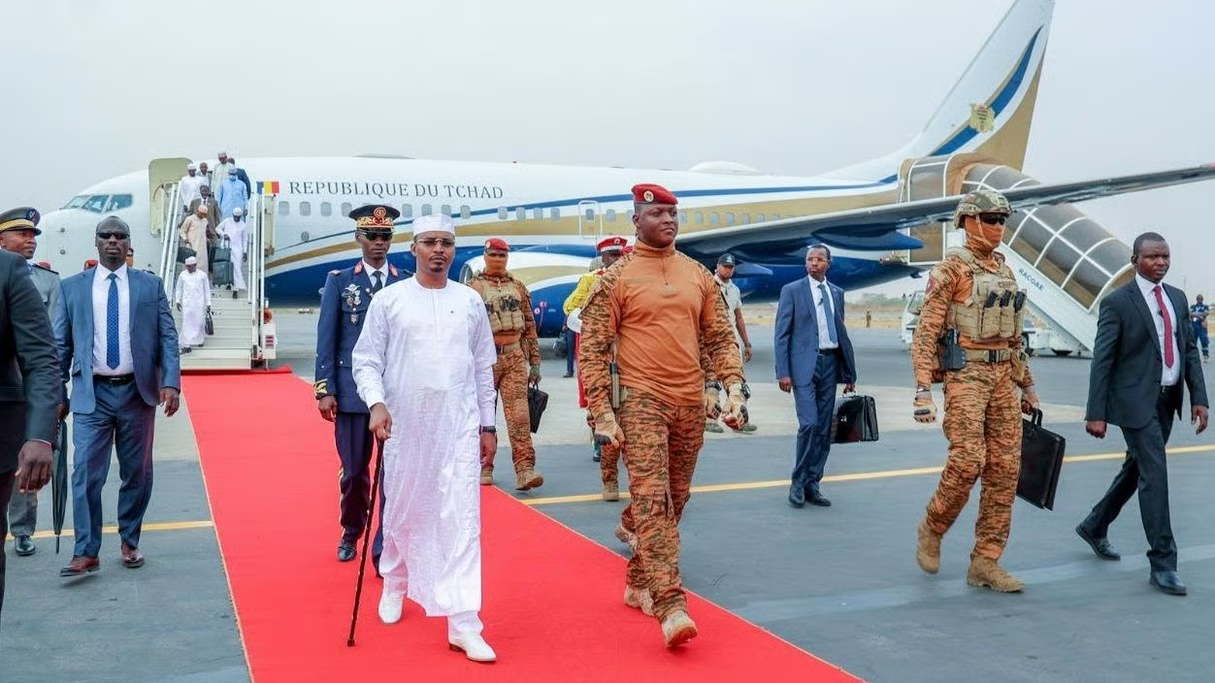
The political landscape in Chad continues to evolve under the leadership of Mahamat Idriss Déby Itno, sparking ongoing discussions about the true nature of his foreign policy and domestic agenda. A key question frequently raised by observers and analysts alike is whether the Chadian transitional president genuinely embodies a sovereignist approach, prioritizing national interests and autonomy above all, or if his actions reflect a more nuanced strategy of balancing various international and regional influences.
Regional dynamics and diplomatic engagements
Mahamat Idriss Déby Itno’s engagements within the Sahel region offer significant insights into his diplomatic leanings. A notable event saw him welcomed by the Burkinabè junta leader, Ibrahim Traoré, during his arrival in Ouagadougou on February 21, 2025. Such high-level meetings between regional heads of state, including figures like Mali’s Assimi Goïta, are often scrutinized for their potential implications on regional stability and the formation of new alliances, such as the Alliance des États du Sahel (AES).
These interactions are critical indicators of Chad’s positioning amidst shifting geopolitical currents in West Africa. While some interpret these gestures as a clear move towards greater regional self-determination and a departure from traditional external partnerships, others view them as pragmatic steps to secure Chad’s interests in a volatile environment, without necessarily committing to a full sovereignist doctrine.
International relations and strategic partnerships
Beyond regional ties, Chad’s international relations further complicate the assessment of Déby Itno’s sovereignist credentials. The nation maintains diverse partnerships, engaging with both historical allies and emerging global players. The presence of figures like Emmanuel Macron in the broader geopolitical context, alongside growing ties with nations such as the United Arab Emirates, highlights a multifaceted foreign policy.
This balancing act suggests a leader navigating a complex web of economic, security, and diplomatic considerations. The pursuit of new partnerships while managing existing ones could be seen as a strategic effort to diversify Chad’s options and reduce dependency, aligning with a sovereignist ethos. However, the extent to which these relationships genuinely empower Chad’s independent decision-making remains a subject of debate among those closely watching the nation’s trajectory under Mahamat Idriss Déby Itno, the successor to his late father, Idriss Déby Itno.