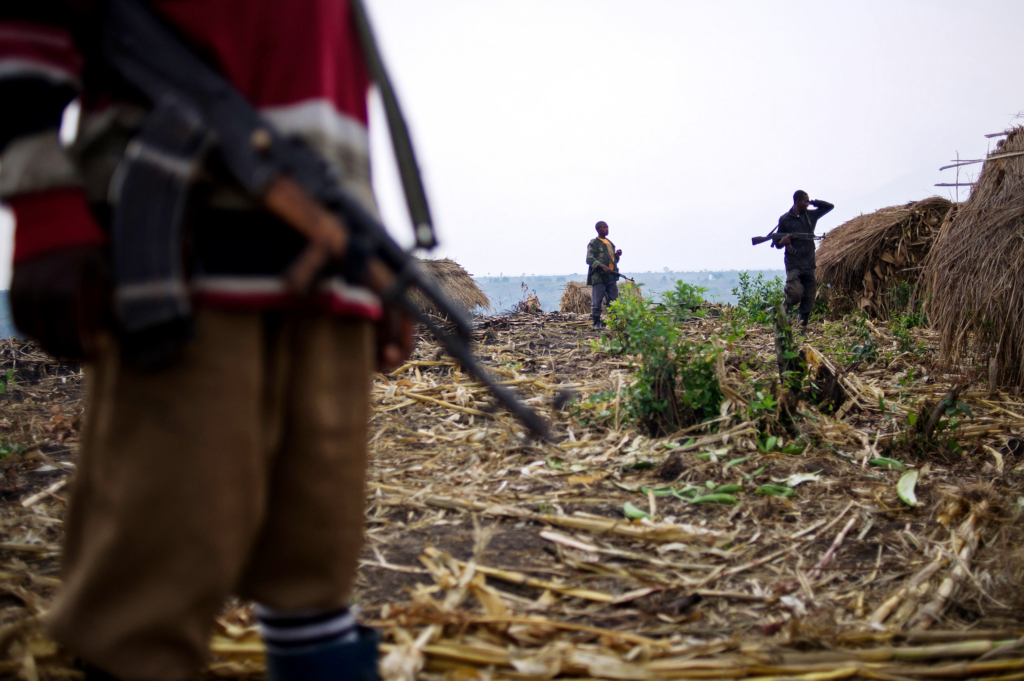
In the Rutshuru territory of the eastern République démocratique du Congo (RDC), a militia group backed by the national army (FARDC) has been implicated in a series of horrific abuses, including the murder and torture of civilians, widespread looting, and the abduction of women for sexual slavery. These findings highlight the devastating impact of using irregular forces as proxies in the ongoing conflict.
The Collectif des mouvements pour le changement-Forces de défense du peuple (CMC-FDP) operates as part of the Wazalendo, a loose coalition of armed groups that the Congolese military utilizes as auxiliary forces. They are currently deployed to fight the M23 rebels, who receive support from Rwanda. Much of the CMC-FDP’s activity is centered in the Bukombo area of Rutshuru, a region currently under the precarious control of the M23.
Civilians residing in and around Bukombo find themselves trapped in a deadly vice, caught between the aggression of the M23 and the predatory behavior of the CMC-FDP. In isolated zones where the militia operates with total impunity, the daily reality for residents is one of constant fear and suffering. While the RDC government frequently and rightly denounces the violence of the M23, it consistently turns a blind eye to similar atrocities committed by its Wazalendo allies. By failing to hold these fighters accountable, the state is effectively endorsing war crimes and failing its fundamental duty to protect its people.
Detailed investigations involving interviews with survivors and victims’ families have uncovered a pattern of violence occurring between June and December 2025. These reports include accounts of summary executions, the burning of homes, and severe physical abuse. Despite these documented cases, the CMC-FDP leadership has denied responsibility, claiming an adherence to discipline and human rights.
Systematic sexual violence and enslavement
The use of sexual violence as a weapon of war is a recurring theme in the region. One young woman recounted being kidnapped in May 2025 after her husband was accused of joining the M23. She was held for three months and forced to serve as a “wife” to a militia commander. She described a life of constant threat, where refusal meant death, and noted that other women were held in the same camp under similar conditions.
Another 22-year-old victim shared a similar ordeal, having been taken to the Mudugudu base in Bukombo in June 2025. She witnessed other civilians being held in underground cells for ransom, a practice that constitutes the war crime of hostage-taking. Many of these survivors now suffer from untreated infections and psychological trauma, yet they lack access to essential medical care in these remote areas.
International humanitarian law is clear: sexual slavery and rape during armed conflict are war crimes. The leadership of the CMC-FDP cannot claim ignorance of these acts; they are potentially complicit if they knew of the violence and failed to intervene.
Retaliatory killings and village terror
Vengeance appears to be a primary driver for the militia’s actions. In November 2025, during clashes in the village of Mashango, fighters discovered a group of people hiding in a banana grove. After looting their belongings and burning their homes, the militia members used machetes to kill several men, including a husband whose pregnant wife was forced to watch. She later gave birth alone in the forest while searching for her husband’s remains.
In the village of Kyahemba, the violence has been equally targeted. One mother described how a commander and several fighters entered her home looking for her 15-year-old son. When she could not explain his whereabouts, they shot her husband three times in the chest in front of their small children. Another resident, Elisabeth*, reported that former neighbors turned militia members executed her husband on the spot, accusing the family of collaborating with the M23 before stealing their livestock and household goods.
Extortion and the “peace tax”
The CMC-FDP has long imposed a forced tax known as lala salama, or “sleep peacefully,” on local populations. Ostensibly for protection, this system is a thin veil for extortion. Those who cannot pay or who are suspected of having relatives in rival groups face brutal consequences. One father, Innocent*, reported being beaten and having three houses burned down because he could not produce his son or the requested 300 USD in ransom money.
Ethnic profiling also plays a role. A woman named Justine* was targeted because of her appearance and accused of being a Tutsi. She was whipped and threatened with further violence unless she revealed her husband’s location. She managed to escape only when one of the fighters took pity on her infant child and allowed her to slip away.
State funding of armed groups
The collaboration between the RDC government and these militias was formalized in May 2023 through legislation creating the Armed Defense Reserve. This law paved the way for groups like the CMC-FDP to receive official support. Financial records suggest the state provides approximately 4 million USD per month to Wazalendo groups. Furthermore, internal documents indicate that the CMC-FDP received over 100,000 rounds of ammunition and dozens of rockets from the FARDC between late 2023 and early 2024.
The international community has begun to take notice, with the European Union placing sanctions on the CMC-FDP’s top commander, Dominique “Domi” Kamanzi Ndaruhutse, for serious human rights violations. Despite his long history of leading violent factions and collaborating with the FDLR, he remains a key partner for the Congolese army.
It is no longer tenable for the RDC military to maintain these alliances. The authorities must immediately sever all ties with the CMC-FDP and other abusive Wazalendo factions, ensuring that those responsible for these atrocities are finally brought to justice.
*Names have been changed to ensure the safety of survivors.

More Stories
Can Benin’s port workforce transformation hinge on a €15 million Luxembourg gamble?
Burkina Faso’s shrinking public payroll: a household burden as schools reopen
Can a Tripoli-Yaoundé air link take off without a clear aviation roadmap?