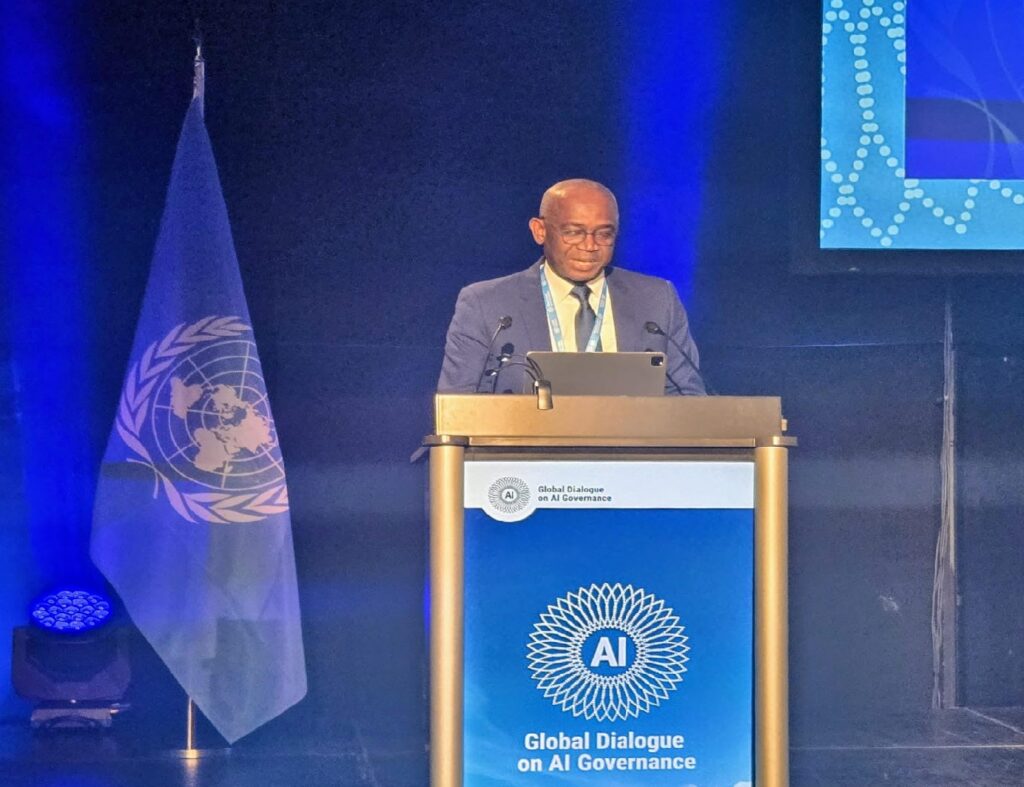
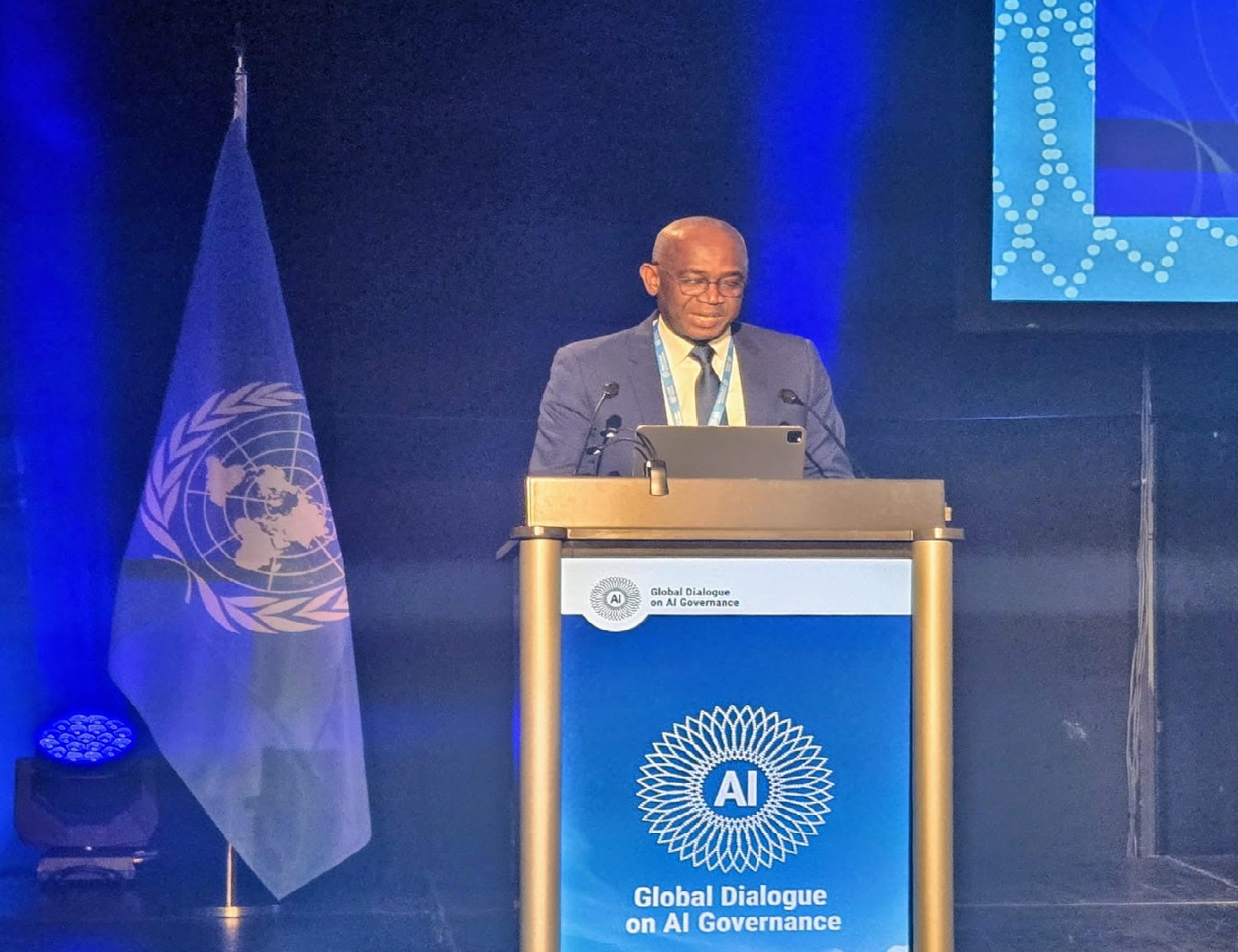
At the United Nations Global Dialogue on AI Governance in Geneva, Côte d’Ivoire asserted its strong stance, advocating for artificial intelligence that is both inclusive and universally accessible.
Representing his nation, Mr. Djibril Ouattara, Minister of Communication and Government Spokesperson, delivered a crucial message. He urged for a global governance framework for artificial intelligence that learns from past mistakes and strategically positions Africa at the forefront of this technological revolution. The Minister commenced by commending the UN’s initiative and conveying the Ivorian President’s profound message.
Acknowledging the immense implications, Mr. Ouattara underscored AI as a transformative force. Referencing a study by PricewaterhouseCoopers (PwC), he highlighted: “PwC projects that AI could contribute an astonishing $15.7 trillion to the global economy by 2030. However, a critical question arises: which economies will truly reap these benefits?”
For Abidjan, the answer is unequivocally clear: “Côte d’Ivoire believes that AI must not be the exclusive domain of a select few economies or platforms. Instead, it must serve as a catalyst for shared, ethical advancement for all.”
A National Digital Ambition and Five Key Initiatives
Côte d’Ivoire is leveraging digital transformation as a cornerstone of its aspiration to become a leading emerging economy. With a current broadband coverage of 95%, the nation aims for 100% to ensure “all government services are accessible online to every citizen.”
This comprehensive transformation is spearheaded by the Ministry of Digital Transition and Technological Innovation. Its strategic roadmap includes “a dedicated pillar focused on deploying an inclusive and ethical Ivorian artificial intelligence.” The overarching objective is explicit: “to harness AI as an engine for national sovereignty, enhanced productivity, widespread inclusion, and equitable social progress.”
Four Pillars for Global AI Governance
Côte d’Ivoire passionately championed a global artificial intelligence governance model built upon four fundamental pillars. The first is inclusion, ensuring “no country is marginalized by this revolution, and developing nations receive vital support in accessing essential infrastructure, data, and financing.” The second pillar is trust, cultivated through “transparent principles, robust cybersecurity measures, and stringent data protection protocols.”
The third pillar emphasizes interoperability, achieved via “open architectures and the secure flow of data crucial for development.” Finally, the fourth pillar advocates for cooperative digital sovereignty, which “empowers each nation to actively participate in defining regulations and adapting AI solutions to its unique national context and realities.”
The Minister stressed the imperative of supranational frameworks, stating: “Given that the digital realm inherently transcends borders, we are actively engaged in all supranational endeavors that can safeguard our citizens from potential biases and ideological influences in the deployment of AI.”
Paving the Way for an African AI School
Drawing upon Côte d’Ivoire’s rich experience within regional bodies such as OHADA, CAMES, and UEMOA, Mr. Ouattara issued a compelling call for greater regional cooperation and resource pooling. “Therefore, I seize this platform to urge for enhanced regional collaboration and the mutualization of efforts, projects, and investments.” The ultimate goal is to establish shared infrastructure, develop tools to preserve informational heritage, and critically, to foster talent through education and training.
His flagship proposal centers on the establishment of a regional African Artificial Intelligence School. This initiative, he affirmed, is indispensable for ensuring that artificial intelligence delivers tangible benefits “immediately to our populations in critical areas such as health, education, and food security.”
Côte d’Ivoire’s participation in Geneva notably underscored its fervent advocacy for an inclusive global governance of artificial intelligence. In closing, the nation welcomed “the adoption of the Pact for the Future and the Global Digital Compact” and reiterated “its unwavering commitment to contribute, alongside the United Nations, ITU, and UNESCO, to inclusive global governance (…) My country firmly believes that the future of AI must be forged collectively, serving as an instrument of shared progress,” he concluded.