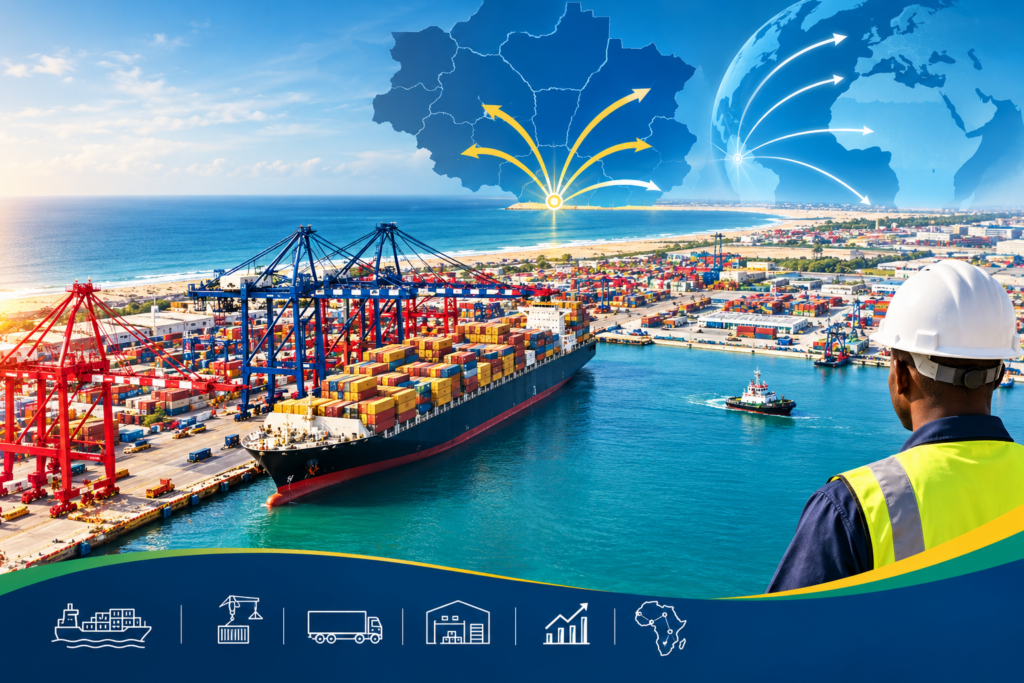
The Port of Cotonou is undergoing a profound transformation, and the reactions are pouring in. Once seen primarily as a gateway for landlocked neighbors, the port now finds itself at the center of a heated debate about Benin’s economic future and its role in West African trade. With traffic surging and diversification accelerating, stakeholders are asking: what does this mean for the region, and what comes next?
A shift in strategy sparks discussion
The port’s recent performance has ignited conversations among economists, logistics experts, and policymakers. In 2025, total traffic reached 14.7 million tonnes, up from 9.6 million in 2024 a 52% increase. Exports jumped 74.8%, while transshipment skyrocketed by 312.6%. Ship calls rose from 725 to 841. These numbers, set against a backdrop of regional tensions such as the Benin-Niger border closure, suggest a new resilience and a strategic pivot that is drawing attention.
Beyond the traditional hinterland
For years, the port relied heavily on trade with its hinterland Niger, Burkina Faso, and Mali. But the strategy is shifting. The Port of Cotonou is now actively courting redistribution flows, transshipment, and exports to other regional markets. This diversification is seen as a direct response to the vulnerabilities exposed by regional crises. “We are no longer just waiting for goods from the hinterland,” a port official explained. “We are building a platform that can redistribute goods to multiple destinations.”
Transshipment: a game-changer
The explosive growth in transshipment has been a focal point of debate. In the first half of 2026, transshipment volumes reached approximately 516,558 tonnes, up from 204,928 tonnes in the same period of 2025 a 152.1% increase. This indicates that Cotonou is positioning itself not just as an entry point for Benin, but as a redistribution hub for the sub-region. Analysts suggest this could reshape trade flows and challenge established ports.
Resilience amid regional shocks
The port’s ability to grow despite diplomatic and trade tensions has surprised many. The border closure with Niger disrupted traditional corridors, yet overall traffic continued to rise. This resilience is attributed to years of investment in infrastructure, digitalization, and logistics. The African Development Bank has backed these efforts with approximately 60 billion FCFA for Terminal 5, a centralized access point, and the Zongo parking area, aiming to boost efficiency and competitiveness.
Diversification: reducing dependency
The port’s strategy now focuses on multiplying outlets to reduce reliance on any single corridor. Its geographic advantage allows it to serve Benin, hinterland economies, and trade with Nigeria and other regional markets. In a world of increasing disruptions security crises, diplomatic tensions, border closures this diversification is seen as essential. “A performant port is no longer just one that handles a lot of cargo,” noted a logistics expert. “It’s one that can attract new flows, process them quickly, and keep operating despite shocks.”
Economic ripple effects
The port’s activity reverberates across Benin’s economy transport, handling, transit, warehousing, insurance, banking, customs, and more. Each traffic increase can stimulate multiple sectors. The modernization program, with over €450 million in medium-term investments, is viewed as a catalyst for national competitiveness. Improved port infrastructure reduces delays, enhances predictability, and facilitates access to international markets.
Exports and the GDIZ factor
Another key development is the rise in Benin’s exports. In the first half of 2026, exports via the port reached about 2.87 million tonnes, up 33.3% year-on-year. This is linked to increased industrial production and Nigerien crude oil exports. The Glo-Djigbé Industrial Zone (GDIZ) is boosting production capacities, giving the port a new role: supporting Benin’s shift from a re-export economy to one driven by production and processed exports.
Measuring success: beyond tonnage
The port’s true success will not be measured solely in tonnes. It will be judged by its ability to attract operators, secure supply chains, gain market share, and become an indispensable platform for West African trade. Early signs are encouraging: the World Bank and S&P Global’s Container Port Performance Index ranked Cotonou 303rd out of 403 ports in 2024, up from 402nd out of 405 in 2023 a jump of nearly 100 places.
Challenges and the road ahead
Despite the progress, challenges remain. Corridor fluidity, logistics costs, security, digitalization, and reclaiming hinterland markets are all on the agenda. Yet the direction is clear: the Port of Cotonou is no longer just defending its historical position it is seeking to conquer new ground. The surge in traffic, transshipment, exports, and infrastructure investment is redrawing the map of regional trade outlets. For Benin, the stakes go beyond port performance; it’s about consolidating a key economic lever and making Cotonou a lasting gateway to West African commerce.