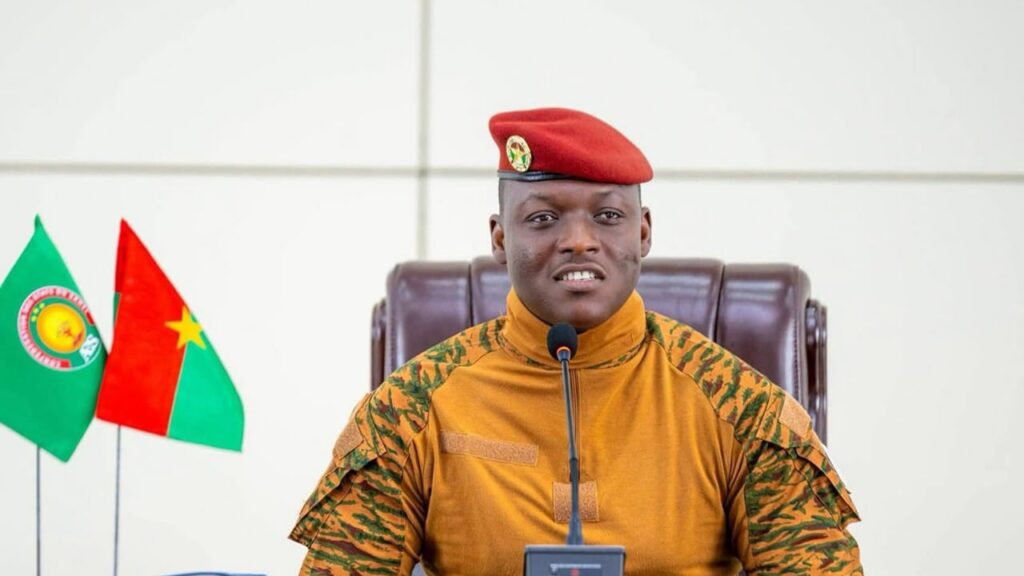
The unlikely ideological mirror capturing global attention
When Ibrahim Traoré, Burkina Faso’s young military leader, and Marine Le Pen, the veteran French nationalist, found themselves echoing strikingly similar language on sovereignty, the immediate shockwave was felt far beyond Ouagadougou and Paris. Their convergence — a shared suspicion of supranational bodies, a defense of national self-determination, and a rejection of external interference — has sparked fierce debate among citizens, diplomats, and analysts across the Sahel and Europe. What began as a rhetorical parallel has now become a full-blown public conversation about the future of alliances, the meaning of independence, and the price of defiance.
From rhetoric to reality: the fallout of a parallel discourse
The fallout is already tangible. In Burkina Faso, Traoré’s speeches invoking sovereignty and pan-African resistance have galvanized a segment of the population that sees in him a break from decades of foreign dependency. Meanwhile, Le Pen’s long-standing platform of national preference and anti-globalism has found an unexpected resonance in African debates about neocolonialism. The overlap has forced observers to ask uncomfortable questions: is this a genuine convergence of values, or a tactical coincidence? And what does it mean for the Alliance of Sahel States, the regional bloc that Traoré has helped to energize?
Public reaction has been polarized. Supporters view the alignment as a validation of their demands for a new world order where African nations set their own terms. Critics warn that the ideological proximity could isolate Burkina Faso further, especially as Le Pen’s movement remains a controversial force in French politics. The debate is no longer confined to academic circles; it is playing out in social media threads, town hall meetings, and diplomatic corridors.
What comes next: scenarios for a sovereignty-driven axis
Looking ahead, the trajectory of this convergence depends on several volatile factors. Traoré faces internal pressures to deliver on his promises of self-reliance, from security to economic policy. Le Pen, for her part, continues to court a French electorate weary of multilateral commitments. If their paths continue to intersect, the implications for West Africa’s security architecture and Europe’s influence in the region could be profound.
Three possible paths
- Deepening alignment: A more explicit partnership between Sahelian sovereigntists and European nationalist movements, challenging established diplomatic norms.
- Symbolic only: The convergence remains a rhetorical phenomenon, fading as domestic priorities diverge.
- Backlash and realignment: External powers push back, forcing Traoré and Le Pen to recalibrate, potentially reinforcing traditional alliances.
For now, the conversation is far from settled. The coming months will reveal whether this sovereignty script becomes a blueprint for action or merely a footnote in the shifting geopolitics of the Sahel. What is certain is that the debate it has ignited will not disappear quietly.