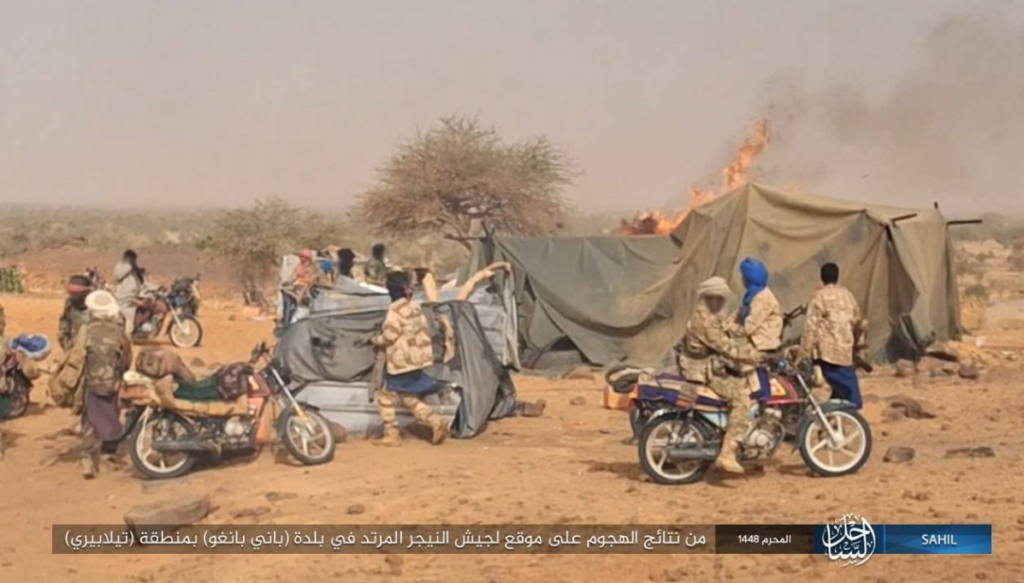
On Wednesday, 24 June 2026, Niger experienced a devastating security crisis. The Islamic State in the Sahel (EIS) claimed responsibility for two simultaneous strikes of extreme brutality targeting military detachments in Inates and Banibangou. The preliminary toll, reported by the attackers, indicates at least 80 dead, dozens of vehicles destroyed, and heavy equipment captured. Beyond these stark numbers lies a deeper reality: daily life and the local economy in these border zones are being strangled by terror.
A coordinated and deadly offensive
The timing of the attacks on 24 June 2026 leaves little doubt about the level of preparation of the terrorists. They struck when troop movements are hardest to predict, descending on positions held by Niger’s defence and security forces. In Inates, a locality tragically accustomed to high-intensity clashes in the so-called ‘three borders’ region (Niger, Mali, Burkina Faso), the blow was particularly severe. EIS claims at least 70 soldiers killed, 22 military vehicles destroyed, and 24 others captured. Minutes later, a second terrorist column launched a similar assault on Banibangou, leaving behind at least 10 dead, 16 vehicles destroyed, and 6 captured. Military analysts note that this twin offensive shows the armed group still possesses a worrying capacity for projection and freedom of movement, capitalising on porous borders despite joint operations in the area.
Economic impact: deserted markets and severed routes
Beyond the heavy toll on the Nigerien army, the attacks of 24 June dealt a dramatic blow to the economy of the Tillabéri region. Banibangou and Inates are not just strategic military posts; they are vital economic hubs for supplying civilian populations. ‘When weapons speak, markets fall silent. Cargo trucks stop moving, and basic food prices have doubled in 48 hours.’ The economic fallout from this double tragedy can be seen in three major areas:
- Paralysis of weekly fairs: These markets, the financial engines of the region, allowed livestock and grain exchanges. They now stand empty for fear of new raids.
- Blockade of road routes: The theft and destruction of nearly 70 vehicles (military and logistical) deprive the region of safe transport, further isolating these communes from the rest of the country.
- Abandonment of farmland: As the rainy season approaches, farmers and herders refuse to venture far from secure urban centres, directly threatening medium-term food security.
Mourning and resilience among local populations
In Niamey and Tillabéri, emotions run high. Victims’ families seek answers, while survivors from Banibangou describe apocalyptic scenes. EIS’s strategy aims not just at the state’s security apparatus but at breaking the people’s morale to force submission or exodus. Yet despite the fear, voices call for resilience and greater national solidarity. Blood donation appeals multiply in the capital’s hospitals to support evacuated wounded, and civil society urges the government not to abandon these peripheral territories to focus solely on urban centres.
What future for Niger’s security strategy?
The Inates and Banibangou attacks sharply raise questions about the effectiveness of surveillance and early-warning systems. For the ruling junta and military command, this setback demands a rapid reassessment of field tactics. The focus must be on regaining the trust of the population. Without minimal economic security and reopening of trade routes, military presence alone cannot stabilise the zone. The coming weeks thus present a dual challenge: repelling the terrorist threat through large-scale counter-offensives while economically injecting life into regions on the brink of financial collapse.