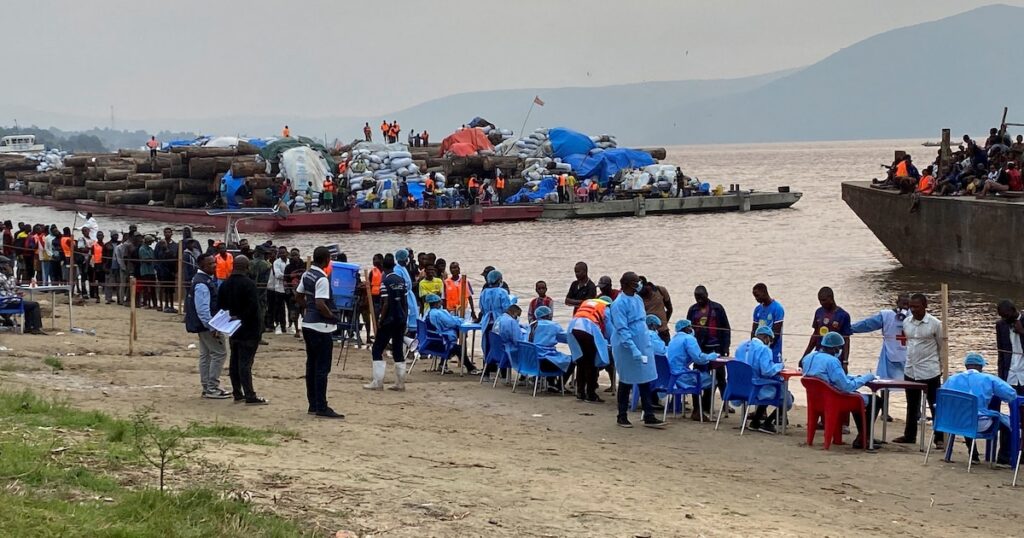
The Ebola outbreak in the eastern Democratic Republic of Congo (DRC) shows no signs of abating, with the latest figures revealing a grim trajectory. Health officials confirmed over 1,850 deaths out of nearly 4,000 cases since the epidemic was declared on May 15. The fatality rate has now exceeded 40%, a stark contrast to previous outbreaks of the Bundibugyo strain, which historically took more than a decade to reach comparable death tolls.
Experts warn this is the second-largest Ebola epidemic ever recorded globally, and the most rapidly expanding in the DRC’s history. The Bundibugyo virus, responsible for this devastation, has already claimed more lives in just two and a half months than it did in all prior outbreaks combined. Dr. Jean Kaseya, Director-General of the Africa Centres for Disease Control and Prevention (Africa CDC), admitted in late July that containment efforts remain far from fully effective.
Security threats and humanitarian collapse hinder disease response
The eastern DRC, particularly the Ituri province, remains a hotspot of violence and instability. Armed groups, including Uganda-based ADF militants and local militias, routinely disrupt medical operations. The neighboring North Kivu province, also heavily affected, has seen large areas seized by the M23 rebel faction—allegedly backed by Rwanda—further complicating government control. These conflicts have displaced millions, pushing communities into overcrowded camps with inadequate sanitation and healthcare access.
Early detection and contact tracing have been severely compromised. In Bunia, the outbreak’s epicenter, over 90% of admitted patients were not previously tracked as contacts. Across Ituri, only 59% of contacts were successfully monitored, far below the Africa CDC’s recommended coverage. With an estimated 134,400 people needing follow-up in urban zones alone, current efforts reach just 13% of the required scale. Tragically, 60% of fatalities occurred outside treatment centers, highlighting the collapse of community-based surveillance.
Vaccines and treatments offer hope amid limited resources
Despite the crisis, scientific progress is underway. Oxford University has launched a clinical trial for a novel Bundibugyo Ebola vaccine, with the first volunteer receiving the dose this month. The Coalition for Epidemic Preparedness Innovations (CEPI) is also funding a second vaccine candidate, developed by Singapore-based Hilleman Laboratories, aiming for rapid deployment in DRC.
In the absence of a targeted vaccine, health authorities are administering the existing Ebola Zaïre vaccine, which provides partial protection against severe symptoms. Early trials combining antiviral treatments are also underway, with over 40 patients participating. Additionally, Africa CDC has advocated for expanded use of remdesivir, an antiviral credited with reducing fatalities in neighboring Uganda, where the outbreak was swiftly controlled.
International aid arrives late as crisis worsens
The delayed response has been a critical setback. Following a 2025 decision by the U.S. administration to halt decades of health aid through USAID, the DRC’s fragile health systems were left vulnerable. It wasn’t until August 5 that Washington pledged $242 million in new funding, bringing total U.S. support to $512 million. While this enables the World Health Organization (WHO) and CDC to activate a six-month response plan valued at $518 million, critics argue the amount falls short of past humanitarian commitments. The U.S. remains the largest donor, significantly outpacing contributions from the European Union.

More Stories
Can Benin’s port workforce transformation hinge on a €15 million Luxembourg gamble?
Burkina Faso’s shrinking public payroll: a household burden as schools reopen
Can a Tripoli-Yaoundé air link take off without a clear aviation roadmap?