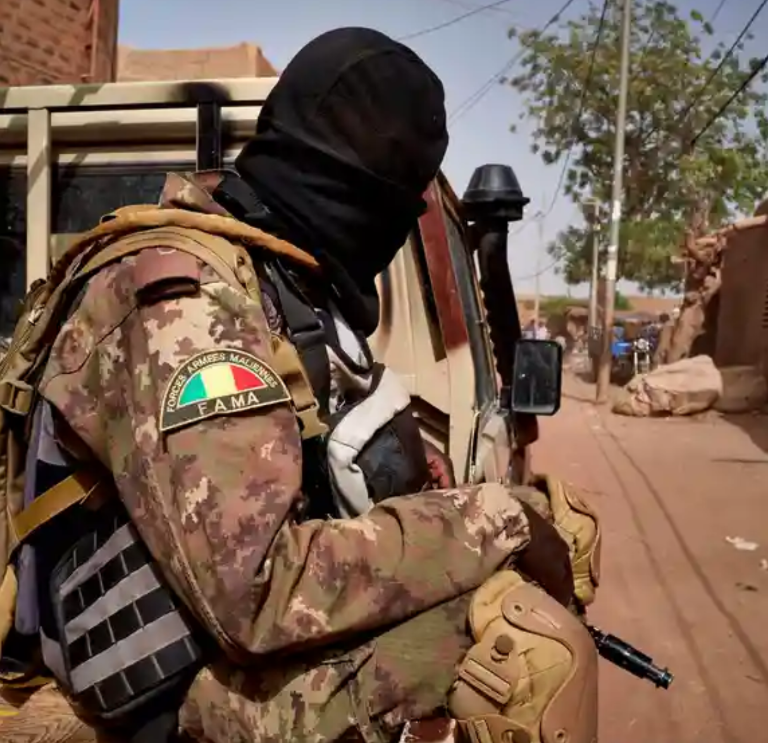
The Jama’at Nusrat al-Islam wal Muslimin (JNIM), an Al-Qaeda-affiliated armed coalition, has leveled serious allegations against the Malian Armed Forces (FAMa) and their Russian allies in Africa Corps of carrying out a deadly raid on Peul civilians in the Niono district of Ségou.
Niono under fire: civilians caught in the crossfire
The latest accusation, made public in a statement on May 31, underscores the escalating crisis in central Mali, where civilians are increasingly vulnerable to both counterterrorism operations and militant propaganda campaigns. According to the JNIM’s communication channel, a joint operation involving Malian troops and Russian paramilitaries from Africa Corps—the successor to the Wagner Group—targeted Peul communities, resulting in civilian casualties and property destruction.
The severity of the claims is compounded by the information blackout in the region, making independent verification nearly impossible. Yet the timing and nature of the allegations raise urgent questions about the tactics employed by both state forces and their allied partners.
Why the Peul community is a recurring target
The Peul, a predominantly pastoral ethnic group, have long been at the center of the conflict in central Mali. Historically, they have faced suspicion from national security forces, often accused of sympathizing with armed groups, while simultaneously being pressured by jihadist factions seeking to exploit their grievances for recruitment.
The JNIM’s latest accusations appear to be a deliberate strategy to amplify ethnic tensions. By framing the victims as Peul, the group aims to reinforce its narrative of defending marginalized communities against perceived injustices by the Malian government and its foreign allies. This tactic not only fuels communal distrust but also serves as a recruitment tool, positioning the JNIM as a protector in the eyes of disaffected groups.
The use of ethnic identity in propaganda has become a critical weapon in the broader struggle for legitimacy in the region.
Military operations and the shadow of controversy
From Bamako’s perspective, the military approach remains uncompromising: eradicating terrorist groups takes precedence, regardless of ethnic considerations. The Transitional authorities have repeatedly emphasized their commitment to human rights, while the FAMa, bolstered by the tactical and aerial support of Africa Corps, have escalated operations in the Ségou region to dismantle jihadist strongholds.
However, the involvement of Russian military personnel has intensified scrutiny over operational methods. Critics argue that the tactics employed—often criticized for their aggressiveness—pose significant risks to civilians. While Malian military officials dismiss such allegations as “Western propaganda” or “fake news,” the lack of transparency and restricted access for independent journalists and international investigators make it difficult to independently confirm or refute these claims. This opacity only fuels skepticism and allows competing narratives to thrive.
The imperative of civilian protection and truthful reporting
The latest JNIM statement serves as a stark reminder of the multifaceted crisis gripping Mali. As military pressure mounts, safeguarding civilians—regardless of their ethnicity—must remain the top priority to prevent the region from descending into irreversible interethnic violence.
For online media and observers, the challenge is twofold: maintaining impartial and rigorous reporting without inadvertently amplifying militant propaganda, while also exposing the harsh realities on the ground. Peace in Mali will not be achieved through force alone but through justice, accountability, and the restoration of trust among traumatized communities.