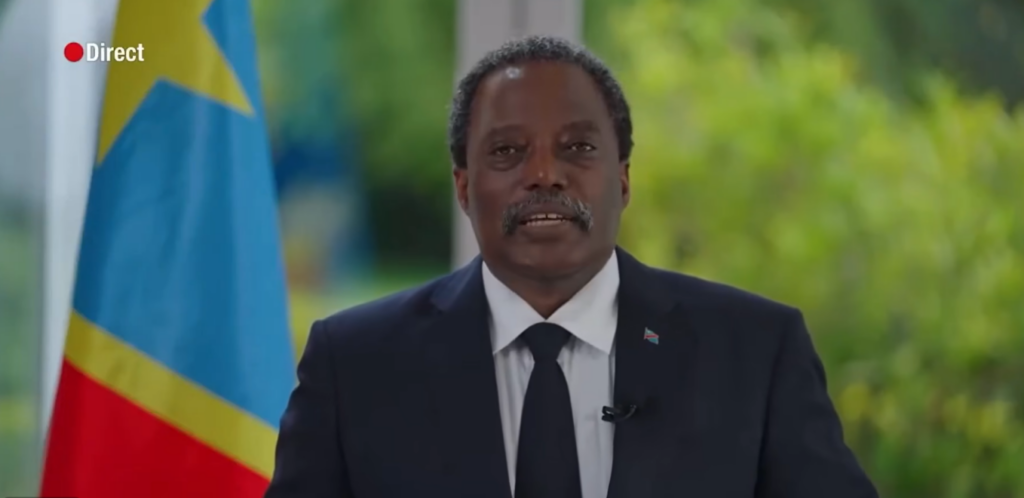
The Democratic Republic of the Congo (DRC) stands on the brink of deeper turmoil as former President Joseph Kabila, who led the nation from 2001 to 2019, officially assumes command of the Front pour la refondation de la nation (FRN), a coalition that unites the M23 rebel movement with the ex-Alliance fleuve Congo. This bold military maneuver, reportedly backed by Rwanda, shifts the conflict’s dynamic from a localized insurgency to a national crisis—one that could ignite civil unrest and economic catastrophe across Africa’s second-largest country.
From rebellion heir to rebel leader: Kabila’s shifting loyalties
Joseph Kabila’s political journey began under extraordinary circumstances. In 1996, his father, Laurent-Désiré Kabila, emerged from the shadows to lead the AFDL, a Rwanda-backed rebellion that toppled Mobutu Sese Seko. Once installed in power, however, Laurent-Désiré Kabila attempted to distance himself from Kigali’s influence, igniting the Second Congo War before his assassination in 2001. At just 29 years old, Joseph inherited the presidency in a nation still reeling from conflict.
For nearly two decades, he navigated a delicate balance between domestic militias, regional powers, and international pressures. Now, by openly aligning with proxies he once opposed, including the M23—a group long viewed as Rwanda’s armed wing in eastern DRC—Kabila is gambling with his legacy. His strategic pivot transforms a fragmented insurgency into a cohesive political force aimed not just at destabilizing local communities, but at challenging the authority of President Félix Tshisekedi.
Legitimacy versus legacy: how Kabila’s name becomes a rebel shield
The M23 has long struggled to shed its image as a Rwanda-sponsored ethnic militia protecting Congolese Tutsi interests. With Kabila at its helm, the group gains an unprecedented veneer of state legitimacy—one that could unify previously divided opposition factions under a single banner. This strategic alliance not only amplifies the FRN’s political reach but also elevates the conflict from a border skirmish to a full-scale battle for national control.
Political analysts warn that Kabila’s involvement is less about national liberation and more about consolidating power through proxy warfare. The FRN, now more than a rebel coalition, morphs into a political vehicle disguised as a liberation front, masking deeper geopolitical maneuvers driven by external interests and regional ambitions.
DRC’s mineral wealth: a double-edged sword under siege
The vast eastern provinces of Kivu and Ituri—home to some of the world’s most critical mineral deposits, including cobalt, coltan, gold, and manganese—have become both a prize and a curse. While the DRC sprawls over 2.3 million square kilometers, its eastern regions are plagued by chronic instability, allowing foreign actors to exploit its resources with impunity. Rwanda, though a fraction of the DRC’s size, has long been accused of channeling smuggled Congolese minerals through its borders, enriching its economy while Kinshasa reels from underdevelopment and insecurity.
Observers describe a paradox: while mineral-rich zones are heavily fortified by armed factions to secure extraction, surrounding communities suffer under a relentless cycle of violence. The region’s vast wealth feeds global supply chains, from smartphone batteries to aerospace components, yet local populations see little benefit. Instead, they endure displacement, mass violence, and systemic human rights abuses—making eastern DRC one of the most dangerous places on earth for civilians.
The human toll: civilians caught in the crossfire of power and profit
With nearly 150 armed groups operating across eastern DRC—ranging from self-defense militias to jihadist factions like the ADF-Nalu—the humanitarian situation is spiraling. Women and children bear the brunt of the crisis, facing rampant sexual violence, forced recruitment, and mass displacement. Analysts warn that Kabila’s decision to lend his name and political weight to the FRN could escalate the conflict, dragging the nation deeper into bloodshed and instability.
By transforming a localized insurgency into a national opposition movement, Kabila not only gambles with peace—he risks turning eastern DRC into a permanent warzone where civilians pay the ultimate price. As his alliance with the M23 reshapes the conflict’s scope, the question remains: can the DRC afford another cycle of violence—or will its fragile institutions collapse under the weight of greed and geopolitical opportunism?