The real-world divide behind Benin’s GDP growth figures
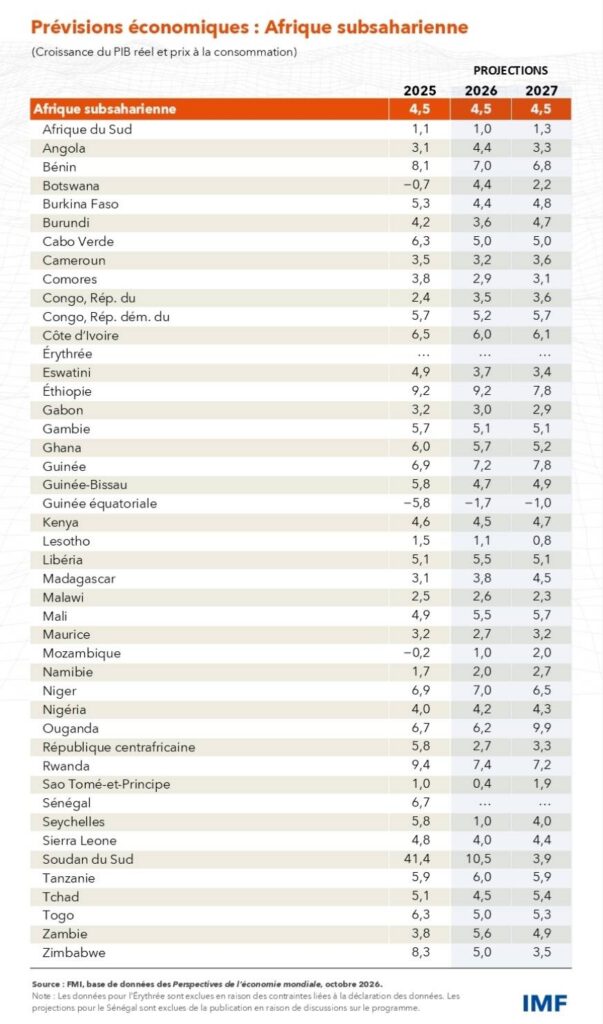
When Benin’s economy is forecast to expand by 7 % in 2026 more than two percentage points above Sub-Saharan Africa’s regional average households are asking why grocery prices still climb each month and why hiring notices for decent-paying jobs rarely appear in local newspapers. The mismatch between headline growth and daily experience is the hidden consequence of West Africa’s current standout performer.
While macroeconomic dashboards flash green arrows, the people living with those statistics often see red flags. Benin’s projected outperformance is real: after an estimated 8.1 % surge in 2025, the International Monetary Fund expects 7 % growth in 2026 and 6.8 % in 2027. Yet for market traders in Cotonou, truck drivers on the Parakou-Niamey corridor, and textile artisans in Abomey, the boom feels distant if it feels at all.
From growth ceiling to floor: how the numbers mask uneven floors
Benin’s growth surge is unquestionable on paper. The gap with the regional average is widest among West African peers, placing the country among the continent’s top three performers and the only West African nation in that bracket for both 2026 and 2027. Such figures normally attract foreign direct investment, upgrade sovereign credit ratings, and prompt infrastructure tenders in other capitals.
Unbalanced gains: the top decile of earners capture more than half the incremental income created by rising GDP, widening the ratio between urban professionals and rural subsistence farmers.
Job quality lag: growth in services and public administration masks contractions in manufacturing, leaving youth unemployment hovering around 35 % despite headline gains.
Inflation inertia: rapid domestic demand expansion is pushing food price inflation above 10 % annually, eroding purchasing power faster than the statistical average suggests.
Sectoral winners and losers: who actually benefits?
The port of Cotonou is the visible engine. Container throughput jumped 12 % last year, and customs revenue now covers more than 60 % of national health-sector spending. Shipping companies report double-digit profit margins, while dockworkers complain of stagnant wages and erratic schedules.
Agricultural households, who still account for 35 % of the workforce, are absorbing the downside. Cotton farmers benefited briefly when global prices spiked, yet local ginning plants closed after financing dried up, leaving them with unsold bales and no buyers. Maize and cassava producers face a different squeeze: bumper harvests are pushing farm-gate prices below cost of production, pushing many toward informal credit.
The informal sector, which employs two-thirds of the labour force, remains largely untouched by fiscal incentives aimed at formal businesses. Currency volatility and narrow banking penetration force most transactions into cash, limiting the transmission of official growth into household accounts.
The sustainability test: can growth outpace fragility?
For Benin to translate GDP acceleration into lasting prosperity, three structural barriers need addressing. First, diversifying revenue beyond port and re-export trade current account surpluses rely heavily on transit traffic from landlocked neighbours whose own economies are fragile. Second, retooling vocational education so graduates match skills demanded by expanding light-manufacturing zones in Sèmè-Kpodji and Tanguiéta. Third, strengthening social safety nets to shield the poorest from the inflationary side-effects of demand-driven booms.
Without these reforms, the current growth trajectory risks leaving behind the very groups it is supposed to lift. Benin’s distinction as West Africa’s fastest-growing large economy may soon become a cautionary tale if inclusive mechanisms do not catch up with headline figures.
What neighboring economies can and cannot learn
Regional policymakers are studying Benin’s numbers as proof that disciplined fiscal policy and port modernisation can deliver measurable results. Ghana and Senegal send delegations to observe customs reforms, while Niger and Burkina Faso watch cattle-export corridors hoping to replicate transit gains.
Yet Benin’s experience also reveals what cannot be imported wholesale: a dense network of rural cooperatives that aggregate smallholder output, a vocational system tailored to niche agro-processing, and a national savings culture robust enough to fund domestic industry. Copying the statistics without replicating the ecosystem could leave imitators with the same headline success and the same ground-level grievances.
The bottom line for citizens and investors
Benin stands at a crossroads. Its growth acceleration is statistically impressive, economically necessary, and politically rewarding. Yet the gap between GDP headlines and household ledgers is widening. If the country fails to channel the current boom into jobs, price stability, and rural uplift, the same statistics that elevate Benin today may tomorrow be used to question why promises outpaced performance.
By Emmanuel Mbarga — Journalist