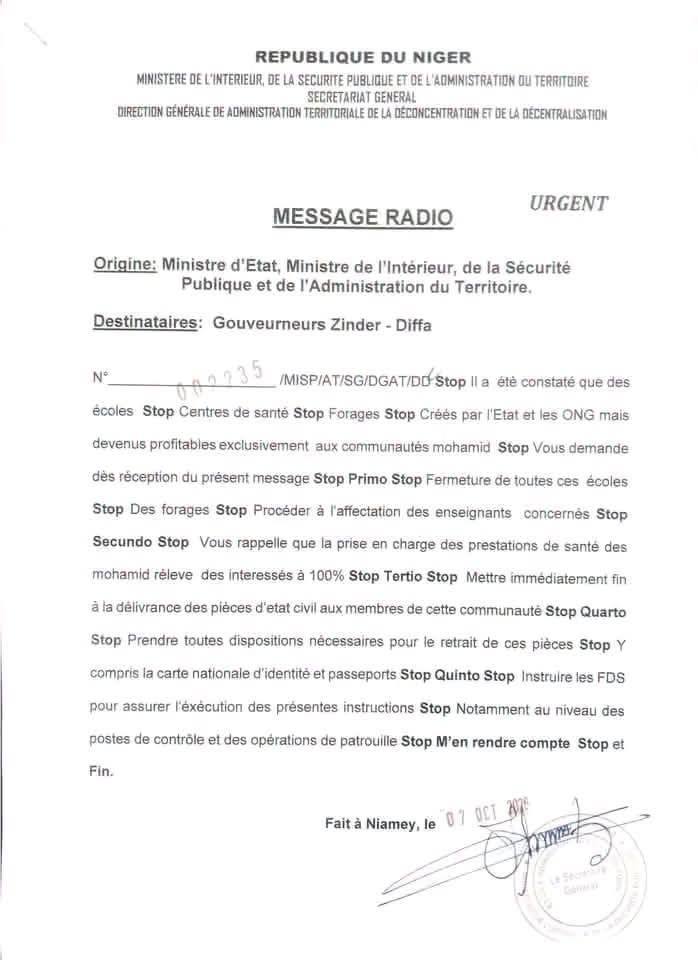
In a bold and controversial move, Niger’s Interior Ministry issued a directive in October 2026 instructing regional authorities to impose sweeping restrictions on the Mohamid community in Zinder and Diffa. Reported as already in effect, the measures include closure of schools and water sources used predominantly by the group, withdrawal of state-funded healthcare, and suspension of civil documentation—leaving families with unanswered questions and mounting consequences.
What the directive means for daily life
This is not an isolated policy debate. It is a real-world disruption affecting every layer of a community’s survival:
- Education at risk: Local schools serving Mohamid children are closed indefinitely, halting learning for hundreds of students and jeopardizing their future prospects.
- Water access threatened: Public boreholes identified as serving the Mohamid are shut down, threatening both families and livestock in a region where water is a lifeline.
- Healthcare in jeopardy: Public health centers that previously offered free or subsidized care—especially critical for low-income families—are no longer accessible, forcing residents into dangerous alternatives.
- Identity in limbo: Identity cards and passports are being revoked at scale, rendering individuals unable to travel, open bank accounts, or even register newborns—stripping people of their legal existence.
Security vs. collective punishment: where does Niger draw the line?
The government cites security concerns as justification for these measures. But can the entire Mohamid community—men, women, and children—be held collectively responsible for the actions of a few? Niger faces real threats from armed groups operating near Diffa, but collective restrictions based on ethnicity or identity violate both national law and human dignity.
Under international law and regional commitments, Niger is obligated to ensure equal access to education, water, healthcare, and legal identity for all citizens—regardless of background. The Interior Ministry’s directive risks normalizing discrimination under the guise of security, setting a dangerous precedent for arbitrary state power.
Economic ripple effects: when exclusion disrupts a region
The Mohamid are not isolated in their economic role. As traders, transporters, and livestock keepers, they contribute to local markets that support neighboring communities. When schools close, markets shrink. When water points shut down, herders face losses that ripple through supply chains. When identity documents are revoked, small businesses grind to a halt.
These are not abstract consequences. In Diffa and Zinder, the economic health of entire towns depends on the participation of diverse groups. Exclusionary policies do not