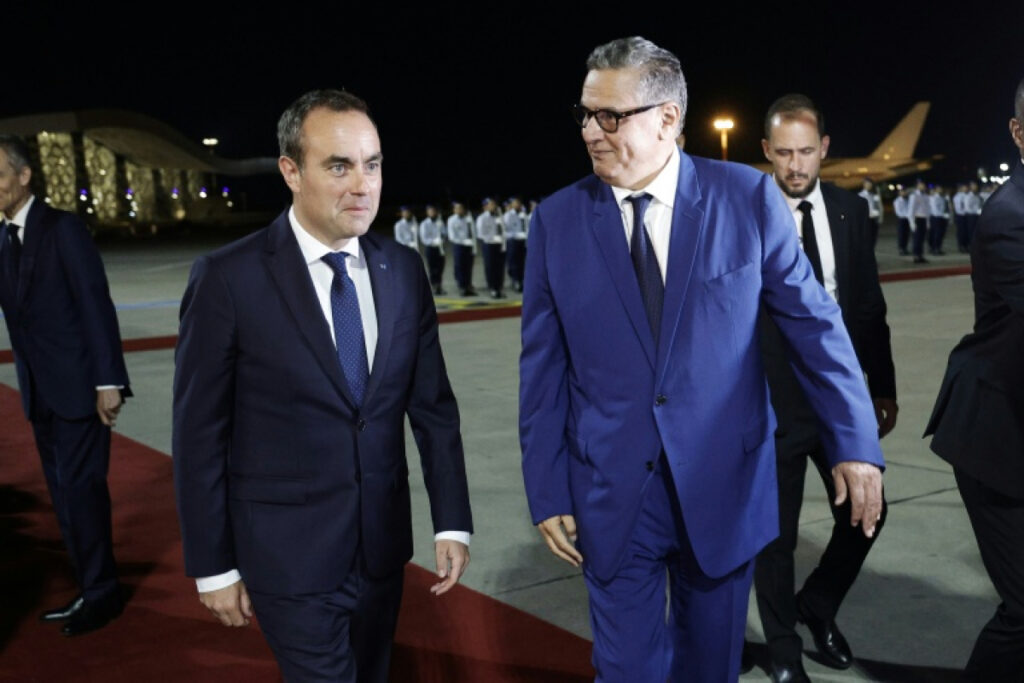
French Prime Minister Sébastien Lecornu concluded an official visit to Rabat on Thursday, marking a significant step in consolidating bilateral relations between France and Morocco. The visit, described as a pivotal moment, aimed to elevate cooperation across multiple sectors, including security, counterterrorism, and economic development.
During the visit, Lecornu underscored the need to “elevate the relationship to a new level,” aligning with the diplomatic momentum initiated by French President Emmanuel Macron and King Mohammed VI. A potential state visit by the Moroccan monarch to Paris is reportedly under consideration, following the normalization of relations after years of strained ties.
Relations between the two nations have improved markedly since mid-2024, when Macron formally recognized Morocco‘s sovereignty over the Western Sahara, a move that strained Algeria‘s diplomatic stance. The French leader’s subsequent state visit to Rabat in October 2024, marked by high-level discussions and the signing of an “exceptional enhanced partnership,” further solidified the thaw in relations.
Diplomatic engagement amidst espionage allegations
The visit took place against a backdrop of renewed scrutiny over cybersecurity concerns. Earlier this week, an international media consortium published investigations alleging the use of Pegasus spyware by Morocco to target high-profile individuals, including French officials. While Rabat has consistently denied such claims, the timing of the revelations added a layer of complexity to the discussions.
French government representatives and the Quai d’Orsay declined to comment on the allegations, with a presidential aide stating, “Our goal is to strengthen cooperation and trust with our Moroccan partners.”
Security and economic priorities take center stage
Lecornu was received with military honors upon his arrival and was accompanied by a delegation of twelve ministers, including the Ministers of Foreign Affairs and Interior. The visit culminated in high-level talks with Moroccan Prime Minister Aziz Akhannouch, where both sides emphasized the convergence of interests in Africa, particularly in combating jihadist threats in the Sahel.
The French delegation also proposed positioning Morocco as a “bridge” for its relationship with the European Union, highlighting the strategic importance of the North African nation. Akhannouch reiterated his commitment to accelerating the implementation of agreements signed in 2024, signaling a forward-looking approach to bilateral collaboration.
Among the key outcomes of the visit was the reinvigoration of the High-Level Meeting, a bilateral dialogue framework that had not convened since 2019. The leaders also paid tribute to the legacy of King Mohammed V and King Hassan II by laying wreaths at the Royal Mausoleum, a symbolic gesture underscoring the depth of historical ties.
Future prospects and bilateral agreements
Ahead of the visit, Lecornu hinted at the potential signing of a “groundbreaking friendship treaty” during a future state visit by King Mohammed VI to France, though no timeline has been set. The discussions also paved the way for approximately fifteen agreements covering economic, security, migration, and defense sectors.
Key projects include the development of a regional express rail network in Rabat and cultural initiatives, alongside defense cooperation discussions aimed at strengthening military partnerships. The shift in France‘s diplomatic focus toward Morocco reflects a strategic recalibration in the Maghreb, with Paris prioritizing collaboration with Rabat over maintaining a balanced approach with Alger.
In the Sahel, where jihadist threats persist, France is increasingly leveraging Morocco‘s intelligence and security capabilities, as Algeria remains hesitant to share critical information despite renewed cooperation with Paris.